
 For Boys
 For Girls
 For Kids
 Top Games
 My Games
 Top Games
 My Games


Valheim Base Defense Game Online
Description
Valheim Base Defense looks like a job for walls and spikes, but it plays like a lesson in terrain, spawn rules and knowing which raid you are facing. The wooden fence that held at the start of the game turns to kindling once the right message flashes across the screen.
How Raids Start in Valheim Base Defense
Raids are scripted events with a name on screen: The Forest is Moving, The Ground is Shaking, There’s a Smell of Sulphur in the Air, Skeleton Surprise and You are Being Hunted.
Most of these raids only happen where you are, and players commonly say your base cannot be raided while you are away. Community advice also holds that a spot counts as a base once a few crafted pieces such as a campfire, workbench, portal or bed sit together.
Knowing that changes how you plan.
Early Raids: Boars, Greylings and a Plain Wooden Fence
Early in the game, boars, Greylings and Necks are more annoyance than danger, and a plain wooden fence around the house is enough. The trouble starts when beginners treat that fence as a lifetime solution, because it stops working the moment heavier attackers show up.
Once you reach the Black Forest and chop Core Wood from the pine trees, you can add sharp stakes around the wall. Enemies that run into them die on their own, and in the morning you walk out and collect the loot.
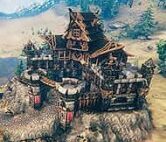
Builders who want a proper Viking fort will enjoy this stage most, because palisades and stake lines look the part even if they will not carry you past the first Troll.
The Forest Is Moving: Greydwarves, Shamans and Brutes
The Forest is Moving is the first raid most players meet, and it sends Greydwarves, Greydwarf Shamans and Brutes toward the base once Eikthyr is down. Shamans poison you from range, so the wall has to hold against melee while you stay out of the poison.
A common mistake is fighting in the open beside the wall. Draw the group toward a stake line or a gap you control, kill the Shamans first and let the Brutes walk into the stakes. Wooden fences hold against Greydwarves for a while, but a long raid will wear one down.
Solo players cope by keeping a bow ready and staying on the roof, which makes the raid slow but safe.
When the Ground Starts Shaking: Trolls Against Wooden Walls
The Ground is Shaking is the message that frightens new players, because several Trolls show up carrying tree trunks and head straight for your buildings. A Troll can demolish a wooden wall in one swing, so a fence that handled Greydwarves all night collapses in seconds.
Community advice keeps important structures well back from the outer wall, because a Troll with a log reaches farther than expected, and about 8 meters is the figure people quote.
Stone walls last longer against Trolls but are expensive to repair, which is why experienced players stop trusting walls and start trusting the ground itself.
Moats and Raised Earth Walls in Valheim Base Defense
Moats are the answer most players land on, and they work because of how enemy pathing behaves. Creatures look for the easiest route into the base, and when none exists they hit whatever is nearest, so a deep trench or raised ground leaves many of them standing around doing nothing.
A narrow walkway or a removable bridge gives you control, since a wide permanent bridge simply lets attackers in. These are the figures players tend to quote:
- About 4 meters wide is enough for most ground attackers
- Four to five pickaxe digs deep, so nobody wades out
- A gap of about 2 meters, or a bridge you can remove
This is also the divisive part. Moats make most raids trivial, and some players find that too easy or simply ugly, while others wanted real tower-defense play with traps and kills instead of enemies standing still. A raised earth wall behind palisades is how many people keep the look of a fort.
Workbenches, Campfires and Spawn Suppression
Not every attack is a scripted raid. Random spawns can still appear near the base, and the answer is coverage: enemies cannot spawn within range of a workbench or other base pieces such as campfires, so spacing a few workbenches around the courtyard closes the gaps.
Beginners often build one workbench, call the area safe and then find a stray spawn inside the yard. Overlapping coverage beats a single central station, and campfires near the edge push the spawn ring outward so you get warning time.
Server hosts who run shared bases care about this most.
Drakes, Deathsquitos and Archer Towers
Trenches stop ground attackers but do nothing against the sky. Drakes from the Mountains breathe frost at structures, and Deathsquitos from the Plains and Draugr archers ignore a moat completely. By the time you reach the Mountains, you want a small archer tower, since a bow shot from height is how most players handle them.
Roofs matter more than walls here. Overlapping Core Wood beams over chests and crafting stations take frost better than a thin roof.
Towers with windows also answer Shamans and skeleton archers, so a single tower earns its cost across several different raids.
Tamed Wolves, Fire and Late Raid Problems
Tamed wolves are the automated defense many players love: feed wild ones raw meat to tame them and keep them as a last line of defense. Taming is hard because wild wolves are dangerous, and You are Being Hunted raids target livestock quickly, so tamed wolves are best kept away from your spikes.
There’s a Smell of Sulphur in the Air brings Surtlings, whose fire ignites wooden structures, so stone and distance start to matter.
In the Ashlands, cinder storms and Charred raids are the hardest threats, and community guides name the Shield Generator as the only reliable counter. Players who push past Yagluth should expect the old moat to stop being enough.
Valheim Base Defense rewards the player who reads the raid message before building: a stake line for The Forest is Moving, a deep moat before The Ground is Shaking, and an archer tower waiting when the Drakes arrive. Build for the next named threat, not the last one, and your Viking fort will still be standing in the morning.

 1

















 2709


