
 For Boys
 For Girls
 For Kids
 Top Games
 My Games
 Top Games
 My Games


Trees Hate You Game Online
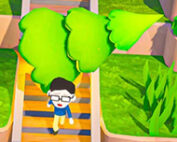
Description
Trees in Trees Hate You do not simply block your path, they actively react to your movement patterns from the moment you start navigating the forest.
| Genre | Survival Maze Arcade |
| Core Mechanic | Avoiding reactive trees while navigating shifting terrain |
| Perspective | Top-down |
| Progression | Endless survival scaling |
Movement Pressure in Trees Hate You
Trees Hate You builds its entire challenge around movement under pressure, where every step you take influences how nearby trees respond. At first, movement feels free, but within seconds you notice branches shifting slightly toward your path. The game tracks your direction and speed, creating subtle traps that only become obvious after you are already committed.
Early survival feels manageable because trees react slowly, but once density increases, even small turns can trigger multiple reactions at once. Players often describe this as being “boxed in,” where escape routes close without warning.
By the time you survive past the first minute, movement becomes less about speed and more about predicting how clusters of trees will react.
Reactive Tree Behavior in Trees Hate You
Each tree has a reaction radius that activates when you enter a certain distance, causing branches to extend or shift position. This behavior is not random, but it feels unpredictable because multiple trees can react at different speeds. The game forces you to think several steps ahead rather than reacting in the moment.
Players who move in straight lines tend to trigger chain reactions, while those who zigzag can reduce pressure slightly. However, overusing this pattern creates new problems once the forest becomes dense.
One detail players often notice is the slight delay between entering a tree’s radius and its full reaction, which becomes critical for tight escapes.
What Players Misjudge Early
Many beginners assume the trees are static obstacles with occasional movement, but Trees Hate You is designed around constant environmental reaction. Treating the forest like a normal maze leads to quick failure.
Another common mistake is panicking and sprinting through narrow gaps, which triggers multiple trees at once. This usually results in unavoidable collisions.
Once you understand that slowing down can actually improve survival, the game becomes more controlled.
Advanced Pathing and Survival
Experienced players learn to “feather” movement, briefly entering and exiting reaction zones to manipulate tree behavior. This allows them to open temporary paths that would otherwise remain closed.
Speed-focused players often struggle here because constant movement increases reaction density, while methodical players find more success by controlling space.
Long survival runs depend on reading tree clusters rather than individual trees, especially once the screen fills with overlapping reaction zones.
Why do trees suddenly block every path?
This happens when multiple reaction zones overlap, causing chain reactions that close escape routes. Moving too quickly through dense areas increases the likelihood of this happening.
Is there a safe movement pattern?
No single pattern works consistently because tree reactions depend on your exact positioning. However, controlled movement and short directional changes reduce chain reactions.
How do you survive longer than a minute?
You need to focus on spacing rather than speed, avoiding tight clusters and reading reaction delays. Surviving longer requires anticipating how groups of trees will respond together.
Trees Hate You becomes far more strategic once you recognize how overlapping reaction zones from multiple trees create invisible traps that only careful movement can avoid.

 92
92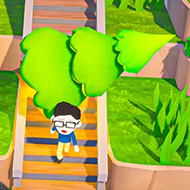
 For Boys
  For Girls























 2696
2696


