
 For Boys
 For Girls
 For Kids
 Top Games
 My Games
 Top Games
 My Games


Vampire Crawlers Game Online

Description
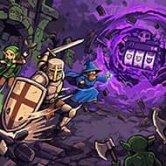
Vampire Crawlers looks like a Vampire Survivors reskin with a deck of cards bolted on, but it plays like a puzzle about sequencing mana. The Whip, Magic Wand, and Santa Water you remember are all back, yet nothing happens until you decide which card hits the table first, second, and third. The Turboturn system removes any time pressure, so you plan the whole sequence before committing to it. That shift tends to surprise Vampire Survivors veterans in their first few fights.
| Genre | Turn-based deckbuilder with roguelite progression |
| Perspective | First-person dungeon crawling |
| Core Resource | Mana, spent to play cards each turn |
| Between Runs | Village upgrades and new crawlers |
| Players | Single player |
How Mana and the Turboturn Shape Every Fight in Vampire Crawlers
Every run starts at the Inn, where you pick a crawler and step into a multi-floor dungeon explored in first person. Rooms of Skeletons, Lion Heads, and other monsters lead toward chests, loot, and a floor boss, and each fight is a hand of cards drawn from your deck. Vampire Crawlers turns the old weapons into cards, so Whip, Fire Wand, and Santa Water are things you draw and play instead of things that fire on their own. Even your crawler works like a card, since playing it triggers its own effect, such as Armor for Antonio or healing for Suor Clerici.
Mana is the ceiling on everything you do. Each card has a cost, and your mana count caps how much you can play in a turn, so a hand full of cards you cannot afford is a wasted draw. Balancing Armor cards against damage cards matters as much as raw power, because a turn spent only attacking can leave you exposed to whatever Medusa or the floor boss does next.
Players who treat mana as the real health bar of a run tend to get further than players who only watch their HP. That is why the game feels slower than its predecessor but never idle, since every turn is a small planning problem.
Ascending Mana Combos and Why Beginners Break Them
The combo rule is simple to state. Play a 0-mana card, then a 1-mana card, then a 2-mana card, and each step multiplies the effect of the next one. Push the chain four, five, or six cards deep and individual cards hit for many times their base value, with players reporting multipliers of 20x, 30x, and higher. The tutorial introduces the mechanic, but community guides agree it explains it less thoroughly than it deserves, which is why many first runs end with a hand full of cards that never chain.
Most early deaths come from drafting like a Slay the Spire player who grabs the biggest numbers. A pile of 2-mana and 3-mana cards cannot start a chain, because you have nothing cheap to step up from. Early drafting should fill the 0-mana and 1-mana slots first, then add payoff cards at higher costs. Newcomers from other deckbuilders often need a few runs to unlearn the instinct to take the strongest single card.
Wild cards are the escape hatch. A Wild card extends the stack without the strict cost-order rule, so jumping from a 1-mana card to a 3-mana card no longer breaks the chain. Wilds become more plentiful on later stages, and once they show up in numbers, they are some of the most valuable pickups whichever crawler you brought.
- Opening a turn with a 3-mana card and losing the whole ladder.
- Drafting five expensive payoff cards and no 0-mana or 1-mana starters.
- Burning a Wild card early instead of saving it to bridge a gap.
Evolutions, Gems, and the Wall Chicken Dilemma in Vampire Crawlers
Leveling up gives you new cards, and chests hand out gems you socket into them for extra effects, with names like Copy Gem, Countdown Gem, and Duration Gem. Evolutions are where a deck stops being a pile of cards and becomes a machine. Magic Wand becomes Holy Wand, Fire Wand becomes Hellfire, and Whip becomes Bloody Tear, and evolved cards are generally far stronger than even rare cards carrying good gems. Tome cards are plentiful early, which makes the Holy Wand path the easiest evolution to reach.
Evolving is almost always worth the cost, even for cards your whole deck leans on. Min-maxers can spend an entire run deciding which gem belongs on which card, but skipping an evolution to save a few coins is rarely the right call.
Then come the small dungeon decisions every player recognizes. Smashing torches and other light sources drops gold and items, and vending machines trade cards for stat boosts. The classic moment is standing in a corridor at nearly full HP with a wall chicken in reach, wondering whether eating it now wastes the heal. Guides advise breaking everything else in sight but holding the chickens back until you really need them.
Choosing a Crawler: Antonio, Imelda, Suor Clerici, and Mortaccio
Over twenty crawlers are on the roster, and most unlock through play rather than victories. Antonio, rescued early in Mad Forest, is the standard beginner pick because he generates Armor when played and adds 10% damage to red cards, which makes the combo ladder easy to learn. His Whip is where opinions split, since guides call it one of the weakest starting weapons, and many players move on from him within a few hours.
Imelda Belpaese is the usual second pick. Her Magic Wand evolves into Holy Wand quickly, and playing yellow cards raises her Growth stat, so she levels faster than most crawlers and stays useful many hours in. Newcomers who struggle to survive often do better with Suor Clerici, who heals 3 HP when played and restores more HP after fights through blue cards. She unlocks once you recover 1,000 HP across runs.
Mortaccio is the opposite of a gentle start. He unlocks by defeating 444 Skeletons, and his Bone-based kit demands deliberate deck construction, so most players meet him later. Check the Unlocks menu in the Town Hall regularly, because you are often closer to the next crawler than you realize.
Gold, the Power Ups Shop, and Difficulty Across the Stages
Gold from every run, win or lose, is spent at the Power Ups Shop on permanent upgrades, and dying never feels like wasted time because village progress carries over. You can reset those purchases with one click, so experimenting costs almost nothing. The cash out option trades a risky push for guaranteed gold, which is the sensible choice when a run is going badly and the next boss looks out of reach.
Early in the game, Mad Forest teaches the loop, and the stages that follow, including Furious Forest and the Inlaid Library, ask for sharper decks. By the time you reach Gallo Tower you are usually hunting for more than a clear, because a hidden coffin there unlocks Concetta. If a bad draw streak keeps killing you, grinding earlier stages for gold is a legitimate fix.
Completionists have plenty to chase, with well over 150 achievements asking for things like playing King Bible cards 99 times, destroying lots of Mine Carts, and evolving Whip. Those goals quietly steer you into decks you would never draft on instinct.
Questions Players Ask Before Their First Run
Do I need to have played Vampire Survivors first?
No. The weapons, monsters, and crawlers carry over as familiar names, but Vampire Crawlers is a separate turn-based card battler with a short tutorial. Knowing what Santa Water or Whip does helps a little, though the mana rules matter far more than any memory of the original.
How do I build a high combo?
Fill your deck with 0-mana and 1-mana cards so you can always start the ladder, then climb one mana cost at a time. Wild cards bridge gaps, and Armor-focused crawlers like Antonio make the rhythm easier to learn. Once the chain reaches four or five cards, multipliers of 20x or more become possible.
Which crawler should I unlock first?
Start with Antonio for Armor and easy red-card damage, then move to Imelda for faster leveling and the Holy Wand evolution. If you keep dying, Suor Clerici’s healing from blue cards and her Santa Water make long dungeon floors less punishing.
Vampire Crawlers rewards patience more than reflexes: a 0-mana opener, a clean climb through the mana costs, and a Holy Wand or Hellfire evolution waiting at the top of the ladder is the loop that keeps players coming back. Whether you start with Antonio’s Armor or chase Mortaccio’s 444 Skeletons, every run teaches one more way to bend the combo system. The game is generous with unlocks, so draft cheap, sequence carefully, and push one more floor before you cash out.

 1















 2709


