
 For Boys
 For Girls
 For Kids
 Top Games
 My Games
 Top Games
 My Games


Bottle Flip Game Online

Description
A single flick of the wrist decides everything in Bottle Flip — no combos, no upgrades to lean on mid-throw, just rotation speed and a landing surface that either forgives you or doesn’t.
| Genre | Physics timing game |
| Core mechanic | Flipping a bottle through the air and landing it upright |
| Win condition | Bottle lands standing on its base without tipping over |
| Platforms | Browser, mobile touch |
Rotation Speed Is the Only Variable That Matters
Bottle Flip strips its core mechanic down to almost nothing on purpose. The flip strength is the amount of force applied at the moment of release, and it’s the single input that decides whether your bottle rotates once cleanly or spins wildly out of control. Too little force and the bottle barely leaves the surface. Too much and it over-rotates past the landing window entirely.
New players tend to treat every throw the same way, using a fixed amount of force regardless of the target distance or surface. Regulars adjust force incrementally based on the specific level layout, since a table edge and a narrow ledge require noticeably different amounts of spin to land clean.
Once you understand that the bottle’s water fill level also shifts its center of gravity, throws stop feeling random. A fuller bottle rotates slower and lands more predictably, while a near-empty bottle flips faster and rewards more precise timing.
Landing Surfaces and Why the Table Isn’t the Hard Part
The actual challenge in Bottle Flip isn’t the flip itself — it’s sticking the landing on progressively smaller or more awkward surfaces as levels advance. Early levels give you a flat, generous table. Later levels shrink that target down to narrow rails, tilted ledges, or moving platforms where timing the release against the surface’s position matters as much as the flip itself.
This is where the game splits its audience. Casual players who enjoyed the simplicity of flat-surface levels sometimes find the later moving-platform stages a jarring difficulty spike, while players chasing high scores treat those same stages as the actual test of skill the earlier levels were building toward.
By the time you reach the harder surface types, the honest truth is that no amount of perfect flip strength guarantees a landing — surface angle punishes even a technically correct rotation, and accepting that is part of getting good at the game.
Reading the Bottle’s Wobble on Landing
A bottle that lands slightly off-center doesn’t automatically fail — it wobbles, and whether it settles upright or tips over depends on subtle weight distribution that becomes easier to read the more flips you watch. Players who’ve logged serious time with Bottle Flip describe developing a kind of intuition for which wobbles are recoverable and which are already lost the instant the bottle touches down.
That’s a skill you can’t shortcut by adjusting force alone. It comes purely from repetition and paying attention to how close-but-imperfect landings behave differently across water fill levels.
Frequently Asked Questions Answered Along the Way
A lot of players ask why identical-looking flips produce different results — the answer is almost always water fill level, since even a small difference in how full the bottle is changes its rotational momentum enough to shift a clean landing into a near-miss. Others want to know if faster flips are always worse; they’re not inherently worse, but they demand tighter release timing, so they only pay off once you’ve built consistency with slower, fuller-bottle throws first. And for players wondering whether score is based purely on landing successfully, it isn’t — cleaner landings with less wobble typically score higher than a landing that barely settles upright after a visible wobble.
Bottle Flip never adds more mechanics than the flip and the landing, and that restraint is exactly why a narrow ledge stage can feel harder than anything in a more complicated game — there’s nowhere to hide a bad throw when rotation speed and a steady hand are the only tools you’ve got.

 13
13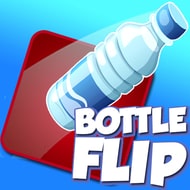
 1 Player






















 2681
2681


