
 For Boys
 For Girls
 For Kids
 Top Games
 My Games
 Top Games
 My Games


The Well Is Not Empty (Full Game) Game Online
Description
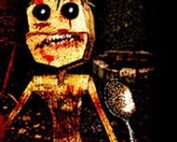
You crank the generator, watch the bulb sputter to life, and sprint before the light dies again. That’s the loop The Well Is Not Empty keeps handing you: borrowed seconds against something that hates being seen. The tunnels don’t explain themselves, and neither does the game — you’re just told the well went dry, and someone has to climb down and find out why.
| Genre | Horror, Adventure |
| Perspective | First-person |
| Mode | Single-player |
| Core Focus | Exploration, stealth, environmental puzzles |
The premise is simple on paper. Your water supply has failed, a rope goes around your waist, and you’re lowered into a shaft nobody in the village wants to talk about. What you find down there is an abandoned construction site — someone was building a prison in these tunnels, and whatever they meant to keep locked up didn’t stay put. The game leans into that discomfort instead of explaining it away, which is exactly why players keep bringing up its atmosphere in early discussions.
The Hand-Crank Generator and Managing Light
Early in the game you’re handed a backup hand-crank generator, and it becomes the single most important tool you carry. Cranking it buys you a window of light in rooms where something down here clearly prefers the dark. The catch is that the window closes fast, so you’re constantly weighing whether to power through a room or wait out whatever is pacing on the other side of it.
This mechanic is where the game separates cautious players from ones who’d rather bull through. If you’re the type who reloads a save rather than risk a hit, you’ll spend a lot of time listening before cranking. If you’re impatient, you’ll learn the hard way that a half-lit room is worse than a dark one, because you can see just enough to panic.
By the time you reach the deeper tunnels, generator placement gets sparser and rooms get bigger, so the tool stops feeling like a convenience and starts feeling like rationed ammunition.
The Rusty Spoon as Your Only Weapon
Your primary means of defense in the game is, unglamorously, a rusty spoon. It’s enough to knock back the rats infesting the tunnels, and there’s a dark comedy to clearing an underground horror set piece with kitchenware. Beyond crowd control, digging through rat nests occasionally uncovers notes and scraps that flesh out what happened here.
Players in early discussions tend to split on this — some find the spoon charming precisely because it’s so underpowered, others wanted something closer to a real weapon once the tunnels start feeling more hostile. That divide is fair; the spoon works, but it never stops feeling improvised.
There’s also a small moment worth noting for anyone unsure whether the mechanic is meant seriously: reviewers have specifically called out how the rats-and-spoon sequences land differently than the rest of the game’s tone, more frantic and less dread-driven.
Balance Sections and the Chasm Crossings
Not every threat in the game is a creature. Several sequences drop you onto narrow paths over massive chasms, and you lean left or right with the mouse to hold your footing. It’s a straightforward mechanic, but the punishment for failing it — a long fall — is immediate and unforgiving, which makes these stretches some of the tensest in the whole game even without an enemy in sight.
This is also where the achievement “Well Balanced” comes in, rewarding a clean crossing without a single misstep, and it’s become something of a benchmark players compare notes on.
The Prison Gate and Its Quick-Time Escape
Deeper into the ruins you’ll encounter the prison gate, behind which something is very deliberately kept. Get too close and you’re grabbed, triggering a quick-time event to break free before you’re pulled through the bars. It’s a short beat mechanically, but it’s the moment most player discussions point to as the game’s clearest scare, partly because there’s no telegraphing beforehand.
New players tend to walk into this blind the first time, since nothing earlier in The Well Is Not Empty trains you to expect a grab from a stationary object.
What the Rubble and Ritual Remnants Actually Mean
A common long-tail question players search is what the ritual remnants scattered through the tunnels actually connect to, and the honest answer is that the game doesn’t spell it out directly — you piece it together from notes, environmental details, and the state of the abandoned prison construction itself. Digging through rubble isn’t just busywork; it’s how the narrative gets delivered, since there’s very little dialogue carrying the story otherwise.
Players also frequently ask whether the horror here leans more toward jump scares or atmosphere, and it’s closer to the latter for most of the runtime, with the rat and gate sequences being the sharper exceptions. The mature content warning covering gore and mutilation is accurate but not constant — it arrives in concentrated bursts rather than throughout.
Do you need to fully explore each area?
Not to finish the game, but notes and scraps hidden in rubble and rat nests are the main way the story fills in, so skipping them leaves real gaps in what actually happened down here.
Is the balance mechanic difficult to learn?
It’s intuitive within a minute or two, but the stakes of a chasm fall make even a familiar mechanic tense every time you approach a new crossing.
What happens if you get caught near the prison gate?
You’re grabbed and have to clear a quick-time event immediately; fail it and you’re pulled toward whatever is waiting behind the bars.
The Well Is Not Empty doesn’t pad its runtime with filler — every crank of the generator, every step across a chasm, and every scrap pulled from a rat nest is doing something. It’s a tight, uncomfortable descent, and the rusty spoon somehow makes it stranger rather than sillier.

 35
35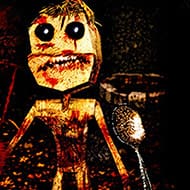



























 2694
2694


