
 For Boys
 For Girls
 For Kids
 Top Games
 My Games
 Top Games
 My Games


X Trench Run Game Online

Description
The Wall Destroyer power-up in X Trench Run does something most players don’t expect the first time they grab it: it clears your path completely, and your score barely moves. That one detail says a lot about how the whole game is built, because in X Trench Run, surviving and scoring well are two different skills that don’t always line up.
| Genre | Arcade space shooter |
| Objective | Survive as long as possible while collecting points in the trench |
| Controls | WASD or arrow keys to move, space bar or left mouse button to shoot |
| Session Length | Varies, ends the moment you take a fatal hit |
The Trench Doesn’t Wait for You in X Trench Run
There’s no ramp-up period to speak of. From the first few seconds, your fighter is already threading a narrow trench that keeps tightening, and the speed only climbs from there. Points accumulate the whole time just for staying alive, with extra points for squeezing through narrow gaps in the walls and for shooting down obstacles rather than dodging around them.
What catches new players off guard isn’t the shooting, it’s the geometry. The trench doesn’t narrow in a predictable rhythm, so a gap that was generous ten seconds ago can close down to almost nothing the next time one appears. Reacting late by even a fraction of a second is usually what ends an early run.
Hugging one wall for safety is a common instinct, and it’s the wrong one. Staying near the center gives you room to correct in either direction, which matters more the faster the trench moves.
Three Ways a Run Actually Ends
- Clipping a trench wall, which is by far the most common cause of death in the early stretch of a run
- Taking a hit from enemy laser fire, which becomes more dangerous as speed increases and your reaction window shrinks
- Losing a boss encounter, which only comes into play once you’ve survived long enough for one to appear
Each of these failure points teaches something different, which is part of why X Trench Run rewards repeated attempts instead of punishing them. A death against the wall teaches spacing. A death from enemy fire teaches timing. A death against a boss teaches pattern recognition.
Speed Down and Shield Aren’t Interchangeable
Speed Down and Shield look like they solve the same problem, but experienced players treat them very differently. Speed Down slows the entire game down for a short window, which is most useful the instant things start feeling unmanageable rather than held in reserve. Shield absorbs exactly one hit and then disappears, which makes it worth saving for a boss fight rather than burning on a stray obstacle you probably could have dodged anyway.
Wall Destroyer is the odd one out. It clears whatever’s directly ahead of you, and plenty of regular players deliberately avoid picking it up, since it quietly strips away the gap-based points that make up a chunk of a high score run. Whether that trade-off is worth it comes up often enough in player discussion that it’s clearly one of the more divisive design choices in the game.
Boss Fights Are Patterns, Not Reflex Checks
Boss ships show up after a stretch of survival, and they take noticeably more hits than the regular enemies that fire at you throughout the trench. What throws new players is that bosses fire in fixed patterns rather than tracking your position directly, so frantic, constant movement usually gets you hit more, not less.
Once you’ve faced the same boss two or three times, the pattern becomes readable, and dodging turns from panic into something closer to muscle memory.
By that point, a boss fight in X Trench Run starts to feel less like a threat and more like a checkpoint you’ve already solved.
Where Most Runs Quietly Fall Apart
The honest failure point for most players isn’t any single mistake, it’s the accumulation of small ones once speed passes a certain threshold. A slightly late reaction to a wall, a shot taken while off-center, a Shield burned too early — none of these end a run on their own, but together they compound fast.
Players who last the longest tend to describe their approach the same way: fewer big corrections, more small ones, made early.
Why do I keep dying against the trench walls instead of enemies?
Wall deaths are the most common failure point in X Trench Run because the gaps close unpredictably rather than on a fixed rhythm. Staying centered in the trench, rather than favoring one side, gives you the most room to adjust when a gap shifts unexpectedly.
Is it worth picking up every power-up I see?
Not always. Speed Down and Shield are almost always worth grabbing, but Wall Destroyer trades your score for safety by skipping the gaps that would otherwise add points, so some players skip it deliberately outside of emergencies.
How do I know when a boss fight is about to start?
There’s no on-screen warning, so most players learn to expect one after surviving a long enough stretch of the trench. Once a boss appears, steady, minimal dodging against its fixed pattern works better than reactive, constant movement.
X Trench Run isn’t really testing your reflexes as much as it’s testing whether you can stay calm while the trench actively works against you. Grab the Speed Down power-up when things spiral, save your Shield for whatever boss shows up next, and the run that looked impossible thirty seconds ago starts to feel manageable.

 21
21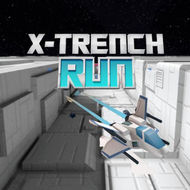































 2689
2689


