
 For Boys
 For Girls
 For Kids
 Top Games
 My Games
 Top Games
 My Games


Lep’s World Game Online
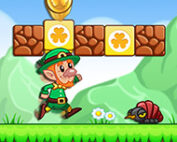
Description
You are running along a narrow forest ledge when a bee drifts down out of nowhere and clips your shoulder before you can react, and the clover counter in the corner of the screen ticks down a notch. That single moment explains why Lep’s World has stuck around for so long: nothing about the danger looks dramatic, but the timing punishes hesitation instantly. Lep, the small green wanderer at the center of the story, does not fight so much as dodge, hop, and squeeze through gaps while chasing his stolen gold across dozens of side-scrolling stages.
| Genre | Side-scrolling platformer |
| Core Mechanic | Precision jumping and hazard timing |
| Main Goal | Collect Gold Pots and reach the level exit |
| Best For | Players who enjoy short, repeatable runs |
Lep’s World and the Rhythm of a Single Level
Every stage follows the same underlying pulse once you learn to read it. You start with a fixed number of shamrocks, and each hit from a spike or a stray insect strips one away rather than ending the run outright, which gives new players room to recover from a bad jump without instantly restarting. What trips people up is that the game never slows down to explain this cushion, so early sessions often end in frustration before anyone realizes how forgiving the system actually is.
Casual players tend to treat the level exit as the only real objective, which is technically true but misses most of what a level is built around. Three Gold Pots are tucked into every stage, usually placed to reward a slightly riskier path than the direct route, and grabbing all three is the unofficial benchmark serious players chase before moving on. Speedrunners in the community talk about “clean pots,” meaning all three collected without losing a single shamrock along the way.
By the time you reach the later stretches of a world, the terrain starts stacking hazards instead of introducing them one at a time. A moving platform might sit directly above a spike patch, and a bee could be patrolling the landing zone at the same time.
Cloverleaf Pickups and Why Beginners Waste Them
The Cloverleaf is the item most new players misunderstand. Picking one up restores lost health rather than adding to a score total, and because it is scattered fairly generously through early worlds, beginners often grab them without any urgency and end up skipping past ones they will need two screens later. Completionist players learn to hold a mental map of where the last Cloverleaf sat, since backtracking is rarely an option once a level scrolls forward.
There is also a habit of players chasing every collectible on screen, which sounds efficient but often leads to unnecessary risk near spike clusters. The smarter approach, and one you will see repeated in comment sections, is to leave a Cloverleaf behind if grabbing it means crossing a hazard you are not confident about yet.
Pinecones and the Push Toward Lep’s World Tournament Mode
Pinecones function as the game’s booster item, and once you understand their timing, they change how you approach entire stretches of a stage rather than single obstacles. A well-placed Pinecone can carry you clean over a spike run that would otherwise require a precise double jump, and players who master this trade one kind of difficulty for another: reading ahead instead of reacting late.
Once Tournament Mode opens up, the format shifts from casual collection to timed competition against other results, and this is where the platforming fundamentals actually get tested. Speed-focused players gravitate here quickly, while players who prefer exploring every corner of a level tend to avoid it until they feel confident with the core movement.
- Six distinct world themes, each changing hazard placement and pacing
- Double jump as the primary tool for adjusting mid-air trajectory
- Nine enemy types spread unevenly across the early and late worlds
Where Lep’s World Gets Genuinely Difficult
The difficulty curve is not steep so much as it is cumulative. Early worlds mostly test whether you can time a jump against a single bee, while later worlds expect you to chain several of these reads together without a mistake. This is also where the in-app purchase system becomes a real talking point among players, since a fourth hit point requires spending real currency rather than being earned through play, and that split has divided the community for years between people who see it as fair monetization and people who find it intrusive in an otherwise skill-based game.
Once you clear a handful of worlds back to back, the muscle memory starts to carry you further than conscious thinking does.
How many levels does Lep’s World actually have?
Across the main entries in the series the level count runs into the hundreds, spread over twenty separate worlds with each world introducing its own visual theme and hazard pattern. The exact number shifts slightly between individual releases in the series.
How do you get more Pinecones during a run?
Pinecones appear as fixed pickups placed along the level path rather than as random drops, so learning a stage’s layout is the most reliable way to know where the next one is waiting.
What happens when Lep loses all his shamrocks?
Once every shamrock is gone, the current attempt ends and you restart the level from its beginning, though any Gold Pots collected earlier in that same run do not carry over.
Lep’s World rewards the kind of player who is willing to lose a run over a single Pinecone timed wrong and try again anyway. Between the Cloverleaf pickups, the hunt for a clean set of Gold Pots, and the creeping difficulty that never quite announces itself, it stays a game people return to for one more level far more often than they intend to.

 4
4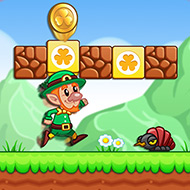
 1 Player





























 2668
2668


