
 For Boys
 For Girls
 For Kids
 Top Games
 My Games
 Top Games
 My Games


Grim Whispers of Childhood Game Online

Description
You’re walking a muddy country road with cicadas humming somewhere behind you, and the silence where your little brother’s voice should be is the only clue Grim Whispers of Childhood gives you before it starts closing in.
| Genre | Psychological Horror, Adventure |
| Perspective | First-Person |
| Player Role | Bo Ming |
| Setting | A rural Chinese village, 2002 |
Searching the Village as Bo Ming
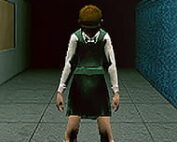
Grim Whispers of Childhood puts you in the shoes of Bo Ming, searching a quiet rural village in 2002 after younger brother Xiao Ming walks to school and never comes home. The opening chapter keeps its scale deliberately small and grounded: muddy country roads, foggy cornfields, and abandoned farm yards make up the explorable space, with the outskirts of a deserted school hinting at where the real answers are waiting. Nothing about the setting reads as overtly supernatural at first glance, which is exactly why the wrongness underneath it lands so hard once it surfaces.
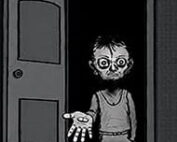
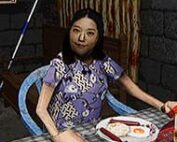
The village itself functions almost like a character. Empty homesteads still have laundry hanging out to dry, farm equipment sits mid-use, and doors are left open in ways that suggest people left in a hurry rather than simply moved on. Bo Ming reads these details as a local would, someone who grew up around this countryside and knows exactly how unusual it is for a place this small to feel this abandoned.
New players often move through the map too quickly, treating it like a straightforward corridor between objectives, which is the most common beginner mistake. A cornfield you rush past on your first pass may hide the exact clue that unlocks a mechanism puzzle later, and Grim Whispers of Childhood rarely marks these details with an obvious prompt.
Mechanism Puzzles and Clue Deduction
The puzzle design leans on environmental mechanism puzzles built around ordinary countryside props — well pulleys, farm tool assemblies, rigged gates — rather than abstract logic grids, which keeps the setting grounded even as the supernatural elements creep in around the edges. Clue collection feeds directly into basic story deduction segments, where piecing together what happened to Xiao Ming requires connecting details scattered across separate locations instead of finding one obvious answer sitting in a single room.
This is where the game’s pacing becomes a genuine skill test rather than pure atmosphere. A note found near the abandoned farm yards might only make sense once you’ve also examined something on the school’s outer fence, and the demo expects you to hold multiple loose threads in your head at once rather than solving each area in isolation.
Deduction-minded players tend to backtrack constantly, cross-referencing earlier clues the moment something new surfaces, while players chasing the horror atmosphere itself push forward faster and accept that some connections will only click in hindsight.
The Weeping and the Bouncing Ball
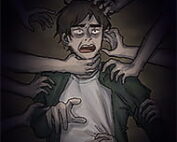
Sound carries more weight than jump scares for most of the opening chapter. Faint children’s weeping drifts across empty fields at seemingly random points, and an oddly persistent bouncing basketball sound recurs throughout the village — both used as ambient cues that something in this hamlet isn’t behaving the way an empty countryside should. Neither sound announces a direct threat, which is part of what unsettles players in community discussion of the demo: you’re never quite sure whether you’re supposed to investigate the noise or get away from it.
By the time you’ve worked through the farm yards bordering the school, the game has usually introduced its first proper chase sequence, and the shift from quiet investigation to being actively pursued is one of the sharpest tonal turns in the demo. Community threads describe this transition as the moment Grim Whispers of Childhood stops feeling like a mystery walk and starts feeling like a survival horror game.
Left-Behind Children and What the Village Is Hiding
Underneath the supernatural framing, Grim Whispers of Childhood is telling a specific and fairly grounded story: the loneliness and safety struggles of left-behind children in early-2000s rural China, and the lasting trauma of unreported school bullying. Xiao Ming’s disappearance is the inciting mystery, but the notes and environmental details Bo Ming uncovers point toward something the whole village has quietly agreed not to talk about.
That thematic weight is also the most divisive part of early reactions. Some players appreciate that the horror is grounded in a real, specific social issue rather than a generic haunting, while others feel the demo’s short runtime doesn’t give the theme enough room to land before the chase sequences take over.
- Who is the player character in Grim Whispers of Childhood? You play as Bo Ming, searching a 2002 rural village for younger brother Xiao Ming, who disappeared on the way to school.
- What kind of puzzles does Grim Whispers of Childhood use? The demo focuses on environmental mechanism puzzles tied to ordinary countryside objects, paired with clue collection that feeds into basic story deduction rather than standalone logic puzzles.
- Does the full version of Grim Whispers of Childhood expand on the village map? Yes — the demo only covers the opening rural village chapter, while the full release adds the school campus, underground tunnels, and hidden homesteads tied to the complete story.
What makes Grim Whispers of Childhood linger isn’t a single scare but the accumulation of small wrongness — a basketball bouncing with no one around to bounce it, a cornfield too quiet for the season — all pointing Bo Ming toward a truth about Xiao Ming that this village has clearly decided to keep buried.

 12
12




























 2689
2689


