
 For Boys
 For Girls
 For Kids
 Top Games
 My Games
 Top Games
 My Games


Terrible Lizards Game Online
Description
What happens when the thing chasing you can climb faster than you can run? That’s the question Terrible Lizards keeps asking, over and over, from the moment your car dies outside a dead roadside attraction.
| Genre | Action, Adventure, Indie |
| Perspective | First-Person |
| Setting | Dalton’s Dinos, Route 66, New Mexico, 1992 |
| Combat | None — movement only |
Why Your Car Dies Outside Dalton’s Dinos
The setup is simple and it’s meant to be. It’s 1992, there are no cell phones, no rideshares, and no help coming — your car has broken down miles from anywhere near Dalton’s Dinos, a once-popular Route 66 attraction now baking under the New Mexico sun. The staff are gone. The gates should be locked. They aren’t.
Terrible Lizards leans hard into that isolation instead of explaining it away. There’s no radio chatter, no convenient stranger with a truck, just you and a building that used to be a tourist stop and is now something else entirely.
Inside, a telephone rings with a voice on the other end begging for help finding a missing child — and that single hook is what pulls you past the front gate and into the parkour loop that defines everything after.
Movement and Spatial Control in Terrible Lizards
This is a horror parkour game first, and the horror only works because the movement does. Running, jumping, climbing, wall-running, bouncing, and sliding all chain together, and the game expects you to read terrain on the fly rather than memorize fixed routes in advance.
Because combat isn’t an option, spatial awareness becomes the entire skill tree. Every ledge, gap, and collapsed walkway inside the attraction is either an escape route or a dead end, and Terrible Lizards rarely tells you which until you’re already committed to the jump.
Speedrun-minded players are going to gravitate toward chaining wall runs into slides without losing momentum — early footage already shows this movement style has room for serious mastery beyond just surviving a chase.
The Creatures Hunting Dalton’s Dinos
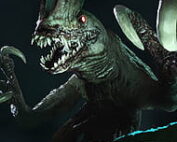
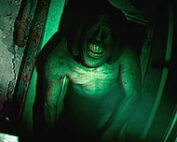
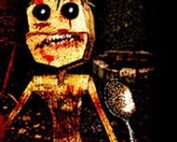
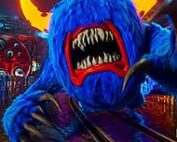
The monstrous creatures that stalk the depot don’t behave like typical horror enemies with a fixed patrol pattern. They shamble when they think they’re alone and charge the instant they spot you, which means the safest path through a room can flip into the most dangerous one in seconds.
With no weapons available, outsmarting them is the only option — using verticality, blind corners, and the parkour toolkit to break line of sight rather than trying to fight your way clear.
That single rule, no combat, is what separates Terrible Lizards from a lot of chase-horror games that eventually hand you a weapon as a safety net.
What Beginners Get Wrong Early in Terrible Lizards
New players tend to freeze the first time a creature charges, trying to plan a perfect route instead of committing to the nearest climbable surface. That hesitation is usually what gets you caught, not a lack of skill with the movement itself.
The second common mistake is ignoring environmental storytelling in favor of just running for the next objective marker. Tapes, notes, and recordings scattered through Dalton’s Dinos exist to explain what happened to the attraction, and skipping them makes later story beats land with less weight.
- Freezing up during a chase instead of committing to a route
- Skipping collectible tapes and recordings that explain the attraction’s history
- Trying to fight or block a creature instead of breaking line of sight
- Underestimating how fast momentum bleeds off after a missed jump
Collecting Tapes, Notes, and Recordings
Environmental storytelling carries most of the plot weight in Terrible Lizards. The tapes and recordings scattered through the depot aren’t optional lore for completionists — they’re how the mystery of the missing child, and what Dalton’s Dinos was actually hiding underneath its dinosaur models, gets pieced together.
Exploration-minded players will likely spend as much time backtracking through side rooms for these collectibles as they do running from active threats, which creates a rhythm the game seems to want: sprint, breathe, search, sprint again.
By the time you reach the lower levels of the attraction, the story context from those recordings starts changing how certain rooms feel to move through.
Fast-Paced Chases Without Combat Options
Removing combat entirely is a divisive design choice, and it’s one players are already debating. Some find it liberating — every encounter becomes a pure movement puzzle instead of a fight to manage. Others expected at least a way to fight back and find the total powerlessness frustrating during longer chase sequences.
Either way, it forces a different kind of tension than most survival horror titles built around ammo conservation. Here, the resource you’re managing is stamina and nerve, not bullets.
It’s a demanding pace to hold for an entire playthrough, and that’s clearly intentional.
Terrible Lizards earns its tension by taking away the usual horror-game safety nets — no weapons, no phone, no easy way out — and replacing them with a parkour system built to be mastered rather than merely survived, all while Dalton’s Dinos keeps its worst secrets buried just a few rooms further in.

 12
12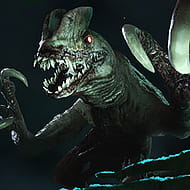





















 2689
2689


