
 For Boys
 For Girls
 For Kids
 Top Games
 My Games
 Top Games
 My Games


Nate Hand Gesture Game Online
Description
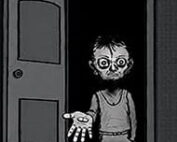
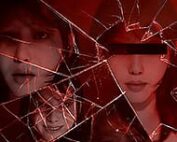
What happens when the entity waiting behind the elevator door stops playing fair? That’s the actual question at the center of Nate Hand Gesture, a short visual novel built entirely around a rock-paper-scissors match you cannot simply out-skill your way through, because the opponent isn’t following the odds.
Reading the Room Before You Play Nate Hand Gesture
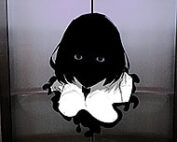
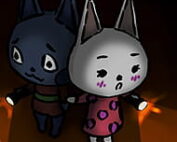
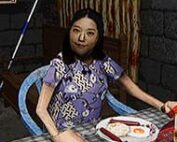
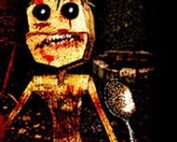
The setup is deceptively small: an elevator door opens onto somewhere that isn’t a floor of any building, and a feminine-shaped figure is waiting there, introduced only as Nate. She wants to play a game with you — rock, paper, scissors — and frames it as a formality rather than a threat, which is exactly what makes the early minutes unsettling.
There’s no combat system to learn, no inventory, no map. The entire experience runs through dialogue choices and the outcome of each round, which puts unusual weight on tone and timing rather than mechanical skill.
New players tend to assume the odds are genuinely fifty-fifty. They aren’t, and figuring out why is most of the game.
Rock, Paper, Scissors, and Her Mood
Nate’s mood is the real mechanic hiding behind the hand gestures. Depending on how the conversation has gone, she’ll either let a round go the player’s way or make every throw lose regardless of what’s picked. This turns a game of chance into something closer to a negotiation, where reading dialogue cues matters more than reading her hand.
Mood tracking: nothing on screen tells you numerically where you stand with her, so players rely on dialogue tone, small animations, and repeated playthroughs to build an intuition for when a round is winnable at all.
Story-focused players tend to linger on dialogue choices even when a loss seems obvious, chasing the version of Nate who’s actually enjoying herself rather than the one already bored of the game. By the time she proposes a second round, most of the outcome has usually already been decided by tone rather than by the gesture itself.
Once players internalize that the gestures are secondary, the whole encounter reframes itself: less a game to win, more a conversation to survive.
The Three Death Endings in Nate Hand Gesture
The current build contains three distinct death endings alongside several non-lethal outcomes, and players comparing notes across sessions consistently name the death endings as the more memorable branch. Each one triggers from a different failure point in the conversation rather than a single wrong gesture, so replaying with a different tone early on can avoid an ending a previous run hit immediately.
Completionist players tend to replay specifically to see how quickly a wrong tone can trigger one of the three endings, treating the shortest paths almost like a challenge run.
Save data persists through the registry rather than a local file, which means deleting the game doesn’t quietly reset progress the way players might expect. Some find this a clever touch consistent with Nate controlling more than just the game window; others find it an unwelcome surprise, especially alongside reports that the game resists closing through Alt+F4 during certain sequences.
That resistance to closing is one of the more debated details in player discussions — intentional atmosphere for some, an annoying friction point for others.
Why the Full Version Adds More Than a Rematch
The planned expanded release adds dating-sim elements, hidden object sections, and branching routes with additional playable characters beyond the original encounter, moving well past a single rock-paper-scissors loop. That shift matters because the demo’s tension comes largely from its narrowness — one figure, one rigged game, one room. Widening the scope risks diluting exactly what made the short version effective.
Players who found the demo compelling tend to be curious rather than skeptical about this, mostly because the core idea — an opponent who controls the rules of a game she invented — scales naturally into new routes and new victims without needing a different hook.
Whether the expanded structure keeps Nate’s presence as unsettling once there’s more game around her is the open question most discussions circle back to.
Nate Hand Gesture earns its reputation from restraint rather than length: one figure, one rigged game, and just enough dialogue to make losing on purpose feel like the safer choice. Between the three death endings, the mood system hiding behind every thrown gesture, and a save file that outlives deleting the game, this stays a short but genuinely unnerving watch to see through to any ending.

 13
13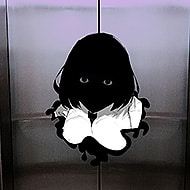
 For Boys
  For Girls















 2689
2689


