
 For Boys
 For Girls
 For Kids
 Top Games
 My Games
 Top Games
 My Games


Baldirooms Game Online
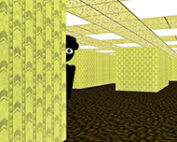
Description
You round a corner in what used to be a straight school hallway, and the walls don’t match anymore. The tile pattern repeats, the lighting hums the same flickering yellow in every direction, and the exit sign you swore you just passed is somewhere behind you again. This is the opening minute of Baldirooms, and it never really explains what happened — it just expects you to start collecting notebooks while the layout quietly stops making sense.
| Genre | Horror survival, exploration |
| Setting | An endless, shifting schoolhouse layout |
| Objective | Collect notebooks and locate a working exit |
| Notable Mechanic | Notebooks respawn over time in endless mode |
The Backrooms Layout in Baldirooms
The core idea behind Baldirooms is simple to describe and harder to sit with: take the familiar schoolhouse and stretch it into something closer to a liminal-space maze. Rooms repeat, hallways loop back on themselves, and the sense of a fixed map — something the original Baldi’s Basics leaned on heavily — is gone. You’re not memorizing a floor plan here, you’re reacting to whatever configuration you happen to be standing in.
Because the layout isn’t static, players who try to speedrun their usual route from the base game tend to get punished fast. Corners that should lead to the cafeteria might dump you into another identical block of yellow rooms instead. It’s disorienting on purpose, and that disorientation is really the whole pitch of the game.
What throws a lot of first-time players is the yellow door lock system scattered through the rooms. It doesn’t behave like a normal obstacle — there aren’t visibly swinging doors tied to it the way you’d expect, and its exact function is one of the more debated parts of the design among people who’ve played it multiple times.
Notebooks and the Endless Mode Loop
Collection is still the spine of the game: you’re after notebooks, and Baldirooms nudges the count up from the seven of the original to nine. That extra pair matters more than it sounds like on paper.
Because the developer locked the game to endless mode, notebooks respawn on a timer once they’ve been cleared out. This turns what looks like a straightforward checklist into something closer to a survive-the-clock loop — you’re not just hunting down nine fixed items, you’re managing a space where the objective keeps refreshing itself.
Early on, players commonly assume they need to hit an exact notebook count to trigger the ending, the same way the base game works. In practice, several players have reported clearing the game with different notebook totals showing on the end screen than what they’d actually collected, which suggests the win trigger is tied to something closer to elapsed time after your ninth pickup than a hard count.
Arts And Crafters, 1st Prize, and It’s A Bully
Character presence in Baldirooms is inconsistent by design, or possibly by bug — it’s genuinely unclear which, and that ambiguity is part of the game’s identity. 1st Prize shows up reliably enough that most players run into him during a session. Arts And Crafters is a different story: some playthroughs never encounter him at all, despite his portrait being visible in the principal’s office area.
It’s A Bully rounds out the roster, and his spawn behavior draws the most criticism from the community. Corner spawns are common, which means the character rarely poses real pressure, since players can spot and avoid him before he closes any distance. It’s a fair critique, and one the game hasn’t fully addressed.
Do the yellow door locks in Baldirooms actually do anything?
Players haven’t found visible swinging doors tied to the yellow locks, and the developer’s own comments suggest they may not be functioning as intended in this build. Treat them as environmental texture rather than a puzzle mechanic for now.
How many notebooks do you need to collect in Baldirooms?
Nine notebooks trigger the ending sequence, up from the seven in the base Baldi’s Basics formula, though the win condition appears to fire based on time elapsed after the ninth pickup rather than the count itself.
Why does It’s A Bully feel easy to avoid in Baldirooms?
His spawn points cluster in room corners rather than doorways or chokepoints, so most players can see and route around him well before he becomes a threat.
Baldirooms works best when you stop trying to map it and just let the loop take over — chase notebooks, dodge It’s A Bully when he shows up, and accept that the yellow door locks might just be scenery. It’s a rough, occasionally buggy take on the schoolhouse formula, but the endless respawn structure gives it a rhythm the original game never had.


 31
31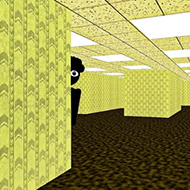
 For Boys
  For Girls
  Survival































 2669
2669

