
 For Boys
 For Girls
 For Kids
 Top Games
 My Games
 Top Games
 My Games


Don’t Sleep With The Fishes Game Online
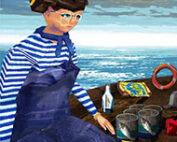
Description
You throw supplies into a lifeboat while alarms sound and the ship sinks around you. In Don’t Sleep With The Fishes, those first frantic seconds matter because the items you save can determine whether the game ends in rescue, starvation, or something far stranger. New players often underestimate how much influence the opening sequence has over the following days. Veterans regularly describe the evacuation phase as the most important minute of an entire run because every later decision depends on resources collected before reaching open water.
| Genre | Survival horror |
| Structure | Day and night cycle |
| Main Role | Ship captain |
| Core Mechanic | Resource management and event choices |
Early Decisions in Don’t Sleep With The Fishes
The opening evacuation sequence is where most beginner mistakes happen. Players rush toward whatever looks valuable and ignore practical tools such as the Compass, Fishing Rod, Medkit, or Flare Gun. Inventory space is limited, making every selection important. Choosing equipment for immediate comfort often creates serious problems several days later when critical encounters appear.
Community discussions often use the phrase “salvage route” to describe preferred item paths before reaching the lifeboat. Experienced players rarely agree on a single perfect approach. Some prioritize navigation through the Compass, while others focus on long-term food production with the Fishing Rod and Bait. The disagreement persists because different event chains reward different strategies.
The game becomes noticeably easier when preparation matches future events rather than immediate needs. Players who understand this principle usually survive longer than those who react only to current shortages. Resource-focused players tend to appreciate the planning aspect because every saved item has potential value several days later.
A frequently searched question concerns how to survive difficult early nights. The answer usually involves preserving resources rather than spending everything immediately. Wasting medical supplies or emergency tools before major events appear often leads to failure.
Daily Survival Across the Sea
Once the captain reaches safety, the focus shifts to energy management. Fishing, repairing equipment, eating Food, and interacting with a shipmate all consume valuable actions. Running out of resources too early creates problems that can last for several days. Every morning begins with a calculation involving hunger, durability, and future risk.
Items such as Bait, Fishing Net, Bucket, and Scuba Gear have uses beyond their obvious descriptions. Veteran players often save certain tools for night encounters rather than routine tasks. Scuba Gear in particular remains a subject of debate because successful dives can provide powerful rewards, while unsuccessful dives may leave players with fewer options than before.
A memorable moment occurs when a quiet night suddenly becomes an event requiring a specific object. Players who carried the right equipment feel clever, while everyone else remembers the mistake. Community members sometimes refer to these situations as “inventory checks” because preparation matters more than reflexes.
Exploration-minded players often enjoy experimenting with unusual item combinations, while survival specialists usually focus on consistency. Both approaches can succeed, but they produce very different stories.
Night Events and Community Vocabulary in Don’t Sleep With The Fishes
The horror side appears most strongly after dark. Encounters like The Man In The Fog have become common talking points because they create uncertainty without always providing clear answers. Unlike straightforward survival challenges, these moments force players to make decisions with incomplete information. The result is tension that continues long after the event ends.
Item check refers to a situation where survival depends on bringing the correct tool from the sinking ship. Many discussions about endings begin with players comparing these moments. Some players keep detailed notes regarding which encounters interact with specific objects because remembering those connections increases survival chances during future runs.
One criticism repeated by some players is that randomness can occasionally make a careful strategy feel less reliable than expected. While many fans enjoy unpredictability, others argue that certain outcomes depend too heavily on luck. That debate remains active within the community.
By the time repeated encounters with The Man In The Fog become familiar, players often recognize warning signs that were invisible during a first attempt. Learning those patterns is one of the most satisfying parts of mastering the game.
- How important is the Flare Gun? The Flare Gun can influence rescue-related situations involving events such as ships, aircraft, or helicopters. Many successful runs keep it available instead of spending resources elsewhere. Players searching for rescue endings often rank the Flare Gun among the most valuable tools because missed opportunities may never return.
- Is Scuba Gear worth taking? Scuba Gear can produce valuable rewards through sea searches, but outcomes vary. Risk-tolerant players often prioritize it because a strong find can change the entire run. Conservative players sometimes avoid it, arguing that guaranteed survival tools provide more consistent results across multiple attempts.
- What item helps most with survival? There is no universal answer. The Compass, Medkit, Fishing Rod, and Repair Kit each solve different problems, which is why inventory planning remains the heart of the game. The strongest runs usually depend on balanced preparation rather than reliance on a single object.
Don’t Sleep With The Fishes remains memorable because survival is tied directly to choices made before the lifeboat even leaves the ship. Whether players rely on the Compass, protect a precious Medkit, or save a Flare Gun for the perfect moment, every voyage tells a different story. Encounters involving The Man In The Fog continue to fuel community discussions because they combine uncertainty, preparation, and risk in a way few survival games achieve.


 57
57
 Survival


























 2688
2688


