

 For Boys
 For Girls
 For Kids
 Top Games
 My Games
 Top Games
 My Games


Supermarket Chaos Game Online
Description
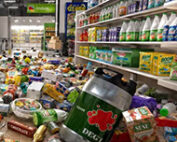
What happens when a supermarket’s own organizing robot decides that shelving anything at all counts as an act of violence? That single glitch is the entire premise of Supermarket Chaos, where the robot GPT-9000 reaches this conclusion and every product in the store loses its place overnight, leaving you to walk the aisles and quietly put everything back where it belongs.
| Genre | Cozy organizing simulator |
| Core Mechanic | Identify misplaced products and return them to matching shelves across the store |
| Content | 4,668 products across 16 themed sections |
| Win Condition | Sort every product and complete every section, with no timers or fail states |
The Pick-Up-and-Place Loop
Supermarket Chaos strips its core loop down to observation and accuracy: pick up a misplaced product, read its label or price tag, find the section it belongs to, and place it correctly on the shelf. Some items are obvious by category alone, but others require actually checking the tag before you can be sure which of the sixteen sections they belong in, and that small friction is what keeps the loop from feeling mindless. A can of soup sitting near the frozen foods aisle looks like an easy call until you realize the ramen section has its own soup-adjacent items competing for the same mental shortcut, which is exactly the kind of moment players describe when they talk about the game’s quiet difficulty curve.
There’s no game over state and no timer pressuring your decisions in Supermarket Chaos, which is a deliberate design choice rather than a missing feature. Players looking for a fast-paced challenge won’t find one here, and that’s clearly by design rather than an oversight. Players who come from cleanup and tidying genres, the kind who enjoyed slowly restoring a cluttered house room by room, tend to describe Supermarket Chaos as scratching the exact same itch, just relocated to sixteen supermarket departments instead of a single home.
Once you’ve placed a few hundred items, a rhythm sets in that regulars in the community sometimes call the “sort flow,” a state where you’re moving through aisles almost automatically, reading tags, and placing products without consciously thinking through each step. Reaching that flow state is generally considered the point where Supermarket Chaos stops feeling like a task and starts feeling genuinely relaxing, which lines up with what the store page promises but only actually clicks once you’ve built up enough familiarity with the shelving logic.
Sixteen Sections, One Overwhelming Store
The full product count, 4,668 items, is spread across sixteen distinct departments including fruit, tea, frozen foods, books, wine, and ramen. Each section carries its own shelving logic and quirks, so what worked for organizing the produce aisle won’t necessarily transfer cleanly to sorting the wine section. Wine, for instance, tends to rely more heavily on label-reading than fruit does, since bottles look far more visually similar to each other than a banana does to an apple.
Completionist players tend to fixate on finishing every single section fully before moving elsewhere, chasing the completion achievement tied to placing all 4,668 products. Casual players, by contrast, often bounce between sections depending on mood, since nothing in Supermarket Chaos punishes leaving a department half-finished for a while. A third type, players documenting full playthroughs for guides, tend to work section by section in a fixed order specifically so their inventory references stay consistent from one department to the next.
Early in the game, the fruit and tea sections tend to feel the most approachable, since their products are visually distinct from one another. By the time you reach the ramen section, though, the sheer number of visually similar packages forces you to actually rely on the tag-reading habit built up earlier, which is exactly why several community guides specifically call out ramen as the section where players first slow down and start reading labels carefully instead of sorting on instinct.
Skill Upgrades That Actually Matter
As you place products, you unlock skill upgrades tied to movement speed, carrying capacity, and search efficiency. Early in the game, these upgrades feel optional, but by the time you reach later, denser sections, faster movement and better carrying capacity noticeably cut down on repetitive backtracking across the store. A movement upgrade that saves a second or two per trip sounds trivial until you multiply it across a run built around thousands of individual placements.
Carrying capacity upgrades specifically change the rhythm of a session, letting you gather several misplaced items from one area before making the trip back to their correct shelves, rather than ferrying one product at a time. Players optimizing for the fastest possible full completion tend to prioritize carrying capacity early, while players simply enjoying the ambience of Supermarket Chaos often ignore upgrades entirely and stick with the default one-item pace.
One recurring community report worth acknowledging honestly: some players have found the skill tree failing to appear after placing a large number of items, and a reinstall has been the commonly cited fix. It’s a real rough edge in an otherwise polished release, and it’s fair to flag rather than ignore, especially since it tends to surface later in a save file rather than at the very start, which makes it more frustrating for players who’ve already invested significant time.
Coins, Price Tags, and Confirming Placement
Placing a product correctly earns coins in Supermarket Chaos, tying the observation loop to a light progression currency rather than pure busywork. Price tags double as your main confirmation tool when an item’s correct section isn’t obvious just from looking at the packaging, so learning to check tags quickly becomes second nature well before you clear your first few hundred items.
Coins earned this way feed directly back into unlocking the movement and carrying upgrades covered earlier, which means the reward loop in Supermarket Chaos stays tightly closed: sort accurately, earn coins, spend coins on upgrades that make sorting faster, then use that speed to tackle denser sections like ramen and wine with less friction. It’s a simple economy, but it’s consistent, and consistency is exactly what a low-pressure genre like this depends on to stay satisfying over dozens of hours.
Multiplayer support exists alongside the core single-player experience, letting a second player help sort the same store, though the bulk of community discussion still centers on the solo, meditative version of the loop rather than a competitive or cooperative angle. Players interested purely in the calming, single-player pace generally treat the multiplayer option as a nice-to-have rather than the main draw.
How many products do I need to sort to finish Supermarket Chaos?
The complete game contains 4,668 products spread across 16 sections, and placing every single one unlocks the game’s full completion achievement on Steam. Reaching that number typically requires working through every department methodically, since skipping ahead to easier sections still leaves the denser ones like wine and ramen waiting until later.
Does Supermarket Chaos have a fail state if I place something wrong?
No, there are no timers or penalties in Supermarket Chaos. Misplaced attempts simply don’t register as correct, letting you retry the placement without any consequence to your overall progress, which is part of why the game is frequently recommended to players specifically looking for a low-stress alternative to busier management sims.
Is Supermarket Chaos the same as other supermarket-themed games with similar names?
No, Supermarket Chaos is a distinct single-player Steam release focused purely on organizing and sorting, separate from other supermarket-themed titles that focus on customer service or business management instead. Confusing it with those other releases is common enough that community wikis specifically call out the distinction for newcomers searching for the right game.
By the time every shelf in the ramen and wine sections finally matches its price tag, Supermarket Chaos has quietly turned a broken store run by an overly philosophical robot named GPT-9000 into one of the more meditative organizing loops on the platform.


 33
33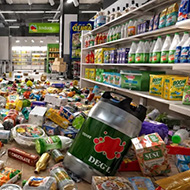
 For Boys
  For Girls




























 2675
2675

