
 For Boys
 For Girls
 For Kids
 Top Games
 My Games
 Top Games
 My Games


Dread Fields Game Online

Description
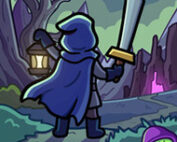
Nobody warns you that the cow needs milking before sunrise, and that small, mundane detail is the first sign Dread Fields isn’t going to play like a normal horror game. You bought an isolated farm to escape city life, and for the first stretch of a run, the biggest threat is forgetting to feed the chickens on time. That changes fast. Dread Fields spends its opening hour lulling you into rural routine specifically so the moment something crawls up through the soil actually lands.
| Genre | Folk horror farm sim |
| Setting | Isolated farm, late-1990s Ukrainian village |
| Run Length | Roughly 90 minutes on a first playthrough |
| Endings | Multiple, including a secret ending |
Buying the Farm From the Former Owner
The setup is deliberately thin on detail. A former owner, an old man with nothing offered beyond a name for the land itself, sells you the property and vanishes from the story almost immediately, leaving behind a farm that locals apparently call Dread Fields for reasons nobody explains upfront. That silence is the point. Everything you eventually learn about why the ground won’t stay settled comes from the objects scattered around the property, not from a character sitting you down to explain it.
The farm’s chores double as your only real source of lore in the early game. Milking the cow, chopping wood, carrying water from the well — each task nudges you further into rooms and corners of the property you wouldn’t otherwise have a reason to visit.
By the time the routine starts breaking, you’ve already absorbed most of what the farm is willing to tell you without saying a word.
The Daily Chore Loop
Dread Fields doesn’t let you set your own pace the way a typical farming sim would. There’s no open sandbox mode where you decide what to prioritize; the game hands you a fixed set of tasks each day and expects them done in roughly the order it wants. Recurring chores include:
- Milking the cow each morning before moving to other tasks
- Feeding the chickens and the cat around the property
- Chopping and gathering firewood before the day runs out
- Digging in the garden and mowing grass across the yard
- Carrying water from the well back to the farmhouse
The rigidity is intentional, and it’s also one of the more debated parts of the game — some players find the fixed task order repetitive by the second or third day, while others think the routine is exactly what sells the slow-burn dread once things start going wrong inside that same predictable structure.
Nightfall and the Spectres
Once the sun goes down, Dread Fields shifts registers, and the game’s female spectres become the clearest sign that the farm isn’t just haunted in a vague, atmospheric sense. One night in particular ramps this up directly, tasking you with keeping a fire going and gathering wood while watching the treeline, since letting the fire die is framed as an invitation for whatever’s out there to get closer.
It’s worth being upfront that this mechanic doesn’t escalate as much across the whole game as the setup implies — the fire-tending sequence mostly stays contained to that one night rather than becoming a recurring system, which is a point of mild disappointment some players raise even while praising everything around it.
The Cellar and the Forest
Two locations end up carrying most of the game’s tension outside the farmhouse itself: the cellar, where a basket you need for later objectives is stored, and the surrounding forest, where mushroom-gathering tasks pull you further from the safety of the house than almost anything else the farm asks of you. The forest in particular is where Dread Fields leans hardest into its folk-horror influences, layering traditional imagery over what would otherwise be a simple gathering errand.
Neither location explains itself outright. You’re left connecting the cellar’s contents and the forest’s atmosphere to the broader implication that the former owner’s secrets didn’t stay buried nearly as well as he hoped.
Returning to either location on a later day often reveals small changes, which is part of why replay-focused players comb through both spots more than once per run.
Multiple Endings and What They Reward
Dread Fields doesn’t gate its endings behind obscure trial-and-error; the outcomes depend largely on how curious you’re willing to be about the property’s stranger corners rather than any hidden stat you’re tracking. Players chasing the full picture, including the secret ending, tend to be the ones who deviate from the assigned chore order just enough to poke at details the game never explicitly points you toward.
The replayability angle matters because the base run is short. A single playthrough clocks in around ninety minutes, which is short enough that chasing a second or third ending doesn’t feel like a chore in itself.
What Players Debate About Dread Fields
The most consistent criticism is that the chore-based tasks repeat noticeably across days, with the objects you’re gathering and the routines you’re following not changing much in mechanical terms even as the horror content around them intensifies. Some players see that repetition as a feature that mirrors the monotony of actual rural labor; others simply find it thin by the second half.
The visual style is similarly split. The period-accurate, slightly rough presentation that recreates a Kuchma-era Ukrainian farm won’t be for everyone, and that’s a fair criticism players raise even when they otherwise rate the game highly.
What’s rarely contested is the atmosphere once night actually falls — even skeptics of the daytime routine tend to agree the spectres and the treeline dread land exactly as intended.
How long does it take to see everything Dread Fields has to offer?
A single ending typically takes around ninety minutes, but seeing the secret ending and the other outcomes usually means a second or third run, since Dread Fields ties its multiple endings to what you choose to investigate rather than to a lengthy separate playthrough.
Do the nightly spectre encounters get harder as the game goes on?
Not consistently. The fire-and-treeline tension introduced on one specific night is the most mechanically demanding spectre encounter in the game, and later nights don’t necessarily build on that system the way some players expect going in.
Is Dread Fields more farming sim or more horror game?
It leans horror despite the farming dressing — you have no control over which chores appear or when, and the farm sim elements exist mainly to set a rhythm that the folk horror content then interrupts.
What makes Dread Fields work is how ordinary it lets things feel before it doesn’t — the cow, the well, the basket in the cellar are all mundane on their own, and it’s only once you’ve spent enough evenings on this property that the ground beneath it stops staying quiet.


 30
30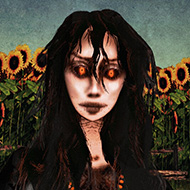
























 2678
2678


