
 For Boys
 For Girls
 For Kids
 Top Games
 My Games
 Top Games
 My Games


Foreborn Game Online

Description
What would you choose if you could watch your entire future before deciding whether to exist at all? That’s the question Foreborn opens with, and it doesn’t ease into it — the simulation starts almost immediately, and the choice it’s building toward sits at the very end of the run.
The Premise Behind Foreborn
Foreborn puts you in the position of an unborn consciousness offered a simulation of what your life would look like if you were born — specifically the first 23 years of it. You’re not playing a character with a name and a backstory already fixed; you’re watching one get built in front of you, scene by scene, and the game trusts you to sit with the discomfort of that rather than explaining it outright.
It’s the fourth entry in a horror anthology, and like the others in that set, Foreborn runs short by design — most players finish a full playthrough in around 25 minutes. That runtime isn’t a limitation so much as the format: the game is built to be replayed for different outcomes rather than extended into a long single sitting.
Players who go in expecting a jump-scare-driven horror game tend to come out surprised, since Foreborn leans much closer to psychological and philosophical unease than anything reflex-based.
Characters You Meet Inside the Simulation
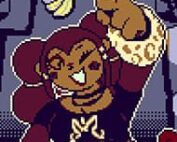
One of the more discussed figures in the simulated life is Mellow, a character whose role shifts significantly depending on choices made earlier in the run. Community discussion around Mellow tends to focus on how differently that relationship can play out — supportive in one version of events, a source of betrayal in another — which is part of why players compare notes after finishing rather than just moving on.
The simulation doesn’t hand you obvious markers for which choices matter. A conversation that feels like small talk in the moment can quietly determine how a much later scene plays out, and that delayed-consequence structure is something first-time players consistently miss until a second run.
Choices That Shape the Simulated Life
Early in the game, decisions feel low-stakes — small preferences, minor interactions — and it’s easy to click through them without much thought. That’s exactly when Foreborn is doing its quiet setup work. By the time you reach the later stretch of the simulated 23 years, the weight of those early choices becomes obvious, and players who rushed the opening scenes often find themselves wishing they’d paid closer attention.
- Early interactions establish relationship groundwork that pays off, or doesn’t, much later
- Mid-game choices tend to affect tone and mood rather than obvious branching
- The final decision — whether to be born — is framed by everything that came before it, not presented in isolation
Players often describe the last few minutes as the point where the game’s actual argument becomes clear, once the simulation has shown you enough of a life to make the final choice feel genuinely weighted rather than arbitrary.
Endings and Why Foreborn Rewards Replaying
Foreborn supports multiple distinct endings, and the community’s ongoing conversation is less about which ending is “correct” and more about which one a given playthrough earns honestly. Because the branching hinges on scattered small choices rather than one obvious fork, reaching a specific ending on a first attempt is rare, and most discussion threads exist specifically to help players understand what triggered the ending they got.
This is also where opinion in the community splits. Some players find the branching structure rewarding precisely because it resists being solved on a checklist; others find the lack of clear signposting frustrating, especially on a first blind run where the emotional weight of the ending can land without the player fully understanding why.
That divide is a genuine one — Foreborn isn’t trying to make its branching easy to reverse-engineer, and whether that reads as elegant or opaque depends a lot on what a given player wants out of a short horror game.
Translated Releases and Community Reception
Foreborn has been localized into several languages since release, which has widened its player base considerably beyond its original audience. Discussion around the game tends to cluster on two things: the strength of its short runtime as a complete emotional arc, and debate over specific late-game beats that some players feel arrive abruptly.
As part of a larger anthology, Foreborn also gets compared constantly to its sibling entries, with players frequently ranking where its central premise — watching an entire life before choosing whether to live it — lands relative to the anthology’s other stories.
- How long does it take to finish Foreborn? A single playthrough runs close to 25 minutes, though players chasing specific endings typically return for at least one more run to see how earlier choices change the simulation.
- Does Mellow appear in every ending of Foreborn? Mellow’s role changes substantially based on choices made earlier in the simulation, appearing as a very different presence depending on the path a given playthrough takes.
- Is Foreborn part of a series? Yes — it’s the fourth game in a horror anthology, and while it can be understood on its own, players familiar with the earlier entries tend to pick up on tonal threads that carry across the set.
Foreborn earns its short runtime by making sure the choice it ends on — shaped by Mellow and by everything the simulation quietly tracked along the way — actually feels like yours to make, not just a button to click.

 48
48




























 2696
2696


