
 For Boys
 For Girls
 For Kids
 Top Games
 My Games
 Top Games
 My Games


Taffy Tails 2 Game Online

Description
Taffy suddenly has more abilities than expected, which immediately defines how Taffy Tails 2 expands on the original idea. In Taffy Tails 2, movement is no longer just about reaching the end of a level, but about using stretching mechanics and transformations to solve layered puzzles.
Stretch Mechanics in Taffy Tails 2
The defining feature of the game is Taffy’s ability to stretch across surfaces, allowing players to interact with distant switches, platforms, and obstacles. Unlike standard platformers, this mechanic forces you to think about positioning before movement, because stretching too far can leave Taffy exposed or stuck.
Early in the game, stretching is used in simple ways, such as grabbing nearby levers. By the time you reach more complex stages, you must chain stretches across multiple surfaces while maintaining control over Taffy’s body position. This introduces what players call “stretch routing,” where efficiency depends on planning multiple moves ahead.
Failure often comes from overextending and losing control of retraction timing, which can drop Taffy into hazards or force a restart.
Puzzle-focused players tend to enjoy mastering these interactions, while action-oriented players sometimes struggle with the slower, more deliberate pacing.
Character Transformations in Taffy Tails 2
Taffy gains access to different transformations that alter how movement and interaction work. Some forms increase flexibility, while others reduce mobility but allow access to specific areas. These transformations are essential for progressing through later stages.
Each transformation changes how stretching behaves, requiring players to adapt their approach depending on the current form. Switching at the wrong moment can leave Taffy unable to reach critical points.
Players often debate whether certain transformations feel balanced, especially in levels where switching frequently interrupts flow.
Mastery comes from understanding when to commit to a form and when to transition quickly between them.
Level Structure and Progression
Taffy Tails 2 introduces more layered level design compared to the original structure. Instead of straightforward paths, levels contain multiple routes, hidden switches, and optional sections that reward exploration.
By mid-game, players encounter stages where solving one puzzle changes the layout of another area. This interconnected design creates moments where progress depends on revisiting previous sections with new abilities.
Some players appreciate this complexity, while others find it confusing without clear direction.
Exploration-driven players tend to discover shortcuts and hidden interactions that reduce backtracking.
Recognizable Player Challenges
One moment many players recognize is stretching toward a distant switch, activating it, and realizing there is no safe way to retract without falling. That miscalculation highlights how the mechanic requires full awareness of both extension and recovery.
Another common situation involves switching transformations too late, leaving Taffy unable to complete a puzzle sequence.
Even experienced players occasionally misjudge distances when combining stretch mechanics with moving platforms.
This creates a learning curve where mistakes feel logical rather than random.
How do stretching mechanics work in Taffy Tails 2?
Stretching allows Taffy to extend across gaps and interact with distant objects like switches and platforms. The key challenge is managing both extension and retraction, since overextending can leave Taffy vulnerable. Players must plan positioning carefully before committing to a stretch.
Are transformations necessary to finish levels?
Transformations are required in many stages because certain obstacles can only be solved with specific forms. Each transformation changes how Taffy interacts with the environment, making them essential for progression. Ignoring transformation mechanics usually leads to being stuck in later levels.
Why do some puzzles feel confusing in Taffy Tails 2?
Puzzles feel confusing because levels often contain interconnected systems that affect multiple areas at once. Activating one switch may alter a different part of the level, requiring players to think beyond immediate surroundings. This design rewards observation but can feel unclear without experimentation.
Taffy Tails 2 becomes most rewarding when you successfully combine stretching and transformations in a single sequence, especially when solving multi-step puzzles that initially seem impossible.

 67
67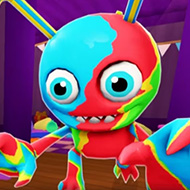
 For Boys
  For Girls






























 2697
2697


