

 For Boys
 For Girls
 For Kids
 Top Games
 My Games
 Top Games
 My Games


ReStory: Chill Electronics Repairs Game Online
Description
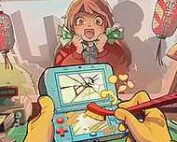
What actually happens when you hand a customer back a console that still has a rattling part inside it? That question sits at the center of ReStory: Chill Electronics Repairs, a shop-management sim where the satisfaction of a clean repair keeps bumping up against a much stranger plot running underneath the counter.
| Genre | Narrative shop management simulator |
| Setting | Akihabara, mid-2000s Tokyo |
| Core Loop | Diagnose, repair, and return devices while managing a small storefront |
| Perspective | Top-down and close-up repair bench view |
Running the Shop in ReStory
You inherit a cramped electronics repair store on the pre-tourist streets of Akihabara, back when the neighborhood was still full of hole-in-the-wall stalls instead of generalist anime shops. The previous owner is gone, and nobody in the game explains that up front — you just start fixing things because customers keep walking in.
The shop itself becomes a kind of second character. Shelves you organize, tools you upgrade, and a front counter that slowly fills with restored devices all track your progress in a way that feels more tactile than a typical stat bar. Community discussion around this game keeps coming back to how good it feels just to watch a dead console light up again.
Money earned from repairs goes toward better licenses, which unlock access to more device brands and rarer parts. It’s a slow-burn economy, not a grind — most sessions are built around finishing two or three repairs and calling it a night.
Devices, Brands, and the Repair Bench
Repairs cover game consoles, cell phones, music players, digital cameras, and small appliances, spanning a mix of officially licensed Atari hardware alongside in-universe stand-ins like Nony, Pokia, Nontendo, Mapple, Patento, Wertu, Unicorp, Blueberry, Autorolla, EgGoTcHi!, Palaloid, and the XI-box. Each brand has its own quirks on the bench, so a Pokia phone doesn’t open up the same way a Wertu unit does, and learning those differences is most of what the early game teaches you.
The centerpiece repair mechanic is the Update Firmware minigame, a small hacking-style puzzle that shows up whenever software rather than hardware is the actual problem. It’s simple on paper but timing-sensitive enough that rushing it usually means redoing the whole repair.
Sourcing Parts Through Haruhi
Haruhi is one of the recurring customers, and she frequently brings in items of noticeably dubious origin — parts that clearly fell off the back of a truck, as she puts it herself. You can also pay her directly for a box of spare components when your own stock runs low, which she justifies as just enjoying fiddling with electronics. The wink in that explanation is not subtle, and players in early discussion threads have already started treating her as the shop’s unofficial black-market contact.
Characters Behind the Counter
Beyond Haruhi, the cast includes Baketsu, Furutsuno, Hashimoto, and Kaito, each tied to their own thread of dialogue and repair requests that unfold as you keep the shop running. None of them dump their backstory on you in one sitting — it comes out gradually, tied to specific repairs, which is part of why players describe the writing as understated rather than plot-heavy.
What’s known so far is that there’s something darker moving under the surface of the neighborhood, hinted at through offhand comments rather than cutscenes. By the time you’ve handled a handful of Haruhi’s off-book requests, the shop starts to feel less like a side gig and more like it’s tangled in something bigger.
It’s a quiet approach to storytelling, and some players want more of it faster — the pacing is one of the more debated aspects of this game in early reviews, since the repair loop is so satisfying on its own that the mystery can feel secondary by comparison.
The Mega Mall Threat and Where the Story Lands
Later on, the neighborhood’s fate becomes tied to a mega mall development that threatens to flatten the block your shop sits on. The company behind it moves the demolition date earlier than expected, which puts real pressure on whether the local community can pull together enough money in time. It’s a strangely grounded stakes-raiser for a game built around soldering irons and cassette decks, and it reframes a lot of the earlier repair work as more meaningful than it first appeared.
This isn’t a game about winning a fight. It’s about whether a corner of Akihabara gets to keep existing the way its regulars remember it, and every device you fix along the way quietly counts toward that outcome.
What Makes ReStory Click as a Simulator
- Physical repair steps — Each device requires its own sequence of cleaning, part-swapping, and testing rather than a single generic repair button
- Branch-specific dialogue — Conversations shift slightly depending on how quickly and carefully you complete a customer’s repair
- Controls that reward patience — Holding down the mouse button through cleaning and repair actions is deliberate, though some players find it fatiguing over long sessions
Players who enjoy tactile management sims will feel at home almost immediately, since the loop rewards attentiveness over speed. Players drawn more to narrative-heavy games might find the early hours slow, at least until Haruhi’s requests start pulling the plot forward. And completionist-minded players will likely chase every brand license just to see the full device roster, which is a reasonable chunk of the game’s replay value on its own.
Frequently Asked Questions
- How does the repair minigame work in ReStory: Chill Electronics Repairs? Most physical repairs involve cleaning components and swapping parts by hand, while software issues route through the Update Firmware minigame, a timing-based puzzle that punishes rushing more than it punishes slow, careful play.
- Who is Haruhi and why does she matter? Haruhi is a recurring customer who supplies parts of questionable origin and can sell you spare components directly, making her the closest thing the shop has to a black-market contact, and a recurring thread in the game’s underlying mystery.
- What happens to Akihabara by the end of the story? The neighborhood’s future is threatened by a mega mall development that moves its demolition timeline earlier, putting pressure on whether the local community can raise enough support in time to save the block your shop sits on.
ReStory: Chill Electronics Repairs earns its “chill” label most of the time, but it never lets you forget that Haruhi’s next delivery might be more complicated than it looks. Between restoring a battered XI-box and figuring out what’s really going on in Akihabara, this game turns a repair bench into one of the more quietly compelling settings in recent simulation design.


 47
47
 For Boys
  For Girls






























 2694
2694

