
 For Boys
 For Girls
 For Kids
 Top Games
 My Games
 Top Games
 My Games


Water TD Game Online
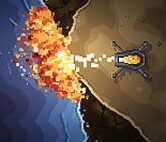
Description
The flood in Water TD does not follow a lane, and that single fact breaks most tower defense habits before the first wave reaches your base. Hundreds of thousands of drops pour downhill, piling up, finding gaps, and carving the terrain as they go.
| Genre | Tower defense |
| Perspective | Top-down, 2D pixel graphics |
| Pacing | Real-time |
| Mode | Single-player |
| Progression | Skill tree with well over 150 upgrades |
Why the Flood in Water TD Ignores Lanes
Classic tower defense sends units along a fixed path, and you stack towers beside it. Here the opposition is water itself, which flows over terrain, pools behind obstacles, and finds every gap in your line. That changes how you read a map from the very first minute of the game.
You build turrets along the riverbanks, and the water eats into those banks as it flows. A position that feels safe early can crumble later, so beginners who cluster everything beside the base often learn the lesson the hard way.
Watch where the water collects, not just where it starts.
Turrets and Their Two Branches
Every turret has two branches that change how it fights, so picking a branch is a real decision rather than a cosmetic one. Some turrets shoot the flood, burn it, or zap it, while others work on bigger scales.
Mortars shell the flood from range and suit players who like to hit a mass of water before it arrives.
Fans blow the water back, buying time when the line is stretched, and the black hole swallows it outright for players who enjoy dramatic, high-impact solutions.
Terrain, Erosion and the Moment the Line Breaks
Early in a level your defences usually hold, because the flood has not yet reshaped the ground. Once the banks start to give way, the water finds new routes and the layout you trusted stops matching reality. The store page puts it bluntly: do not expect the ground to hold.
Here is the honest part. Because the water is simulated, two attempts on the same map rarely play out the same, and a layout can fail for reasons that are hard to predict. Some players find that thrilling, while others find it frustrating, and both reactions are fair.
Planners who love tight builds and improvisers who react on the fly both have room to work, since the game rewards watching the water as much as placing turrets.
Abilities and the Skill Tree in Water TD
Every level earns you points, and you spend them on a big skill tree with well over 150 upgrades. You unlock new turrets and abilities, make them stronger, and choose a branch for each turret. That steady growth appeals to anyone who enjoys incremental progress.
When the line starts to break, you can throw a fireball, raise a wall of ice, call down lightning, or send the whole flood back the way it came. Save these for moments when the water is about to find a gap, not for a calm stretch.
Each level is a new map with its own flood, so the defence that held the last one will not necessarily hold the next. That keeps the game from settling into one comfortable routine.
Questions Players Ask About Water TD
How do you stop the flood?
Combine turrets that damage the water with turrets that move it, such as mortars and fans, and place them where the water collects rather than only near your base. Keep a fireball or a wall of ice ready for the moment the riverbanks start to erode.
Do all levels play the same?
No, every level is a new map with its own flood to hold back. A turret layout that worked on one map can fail on the next, so expect to adjust your branch choices each time.
What is the skill tree for?
The skill tree turns the points you earn into new turrets, new abilities, and stronger versions of both, plus a branch choice for each turret. Spending those points well is what lets you handle the bigger floods that appear in later levels.
Water TD rewards players who study how water settles, shifts, and breaks through the riverbanks, and who match turret branches to the flood in front of them. A well-timed wall of ice or a perfectly placed fan can save a base that looked lost, and that is why the next level always feels worth another try.

 1






























 2712


