
 For Boys
 For Girls
 For Kids
 Top Games
 My Games
 Top Games
 My Games


Guns ‘n Goblins Game Online
Description
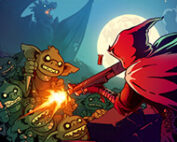
You crack open the gate, take one look at the horizon, and already regret it. Thousands of shapes are pouring toward your Bastion, and the only thing standing between them and the walls is you, a rusty starter weapon, and a bell you haven’t rung yet. That’s the opening minute of Guns ‘n Goblins, and it doesn’t ease up much from there.
| Genre | Action, Incremental, Horde Survivor FPS |
| Perspective | First-person |
| Setting | Dark fantasy, ruined kingdom |
| Player Role | The last Bell Ringer |
The Bell Ringer and the Last Bastion
Guns ‘n Goblins puts you in the boots of the last Bell Ringer, the sole defender of a single Bastion that survived the fall of a kingdom. Every other Bastion has already been overrun, which the game never lets you forget. There’s no squad, no reinforcements, no cavalry riding in at the last second. It’s just you, your Bastion, and whatever you can build up before the next wave hits.
The framing sounds grim on paper, but the game treats it more like a dare than a tragedy. You’re not just surviving as the Bell Ringer, you’re actively baiting disaster, because the core loop rewards aggression far more than caution.
Ringing the Bell in Guns ‘n Goblins
The bell is the whole game in one object. Instead of waiting passively for monsters to trickle in, you choose when to ring it, and every ring calls in a bigger, denser wave. Players in the community have started calling this bell spam, and it’s become the defining risk-reward decision of a run. Ring too little and your gold and experience gains crawl. Ring too much and you can get swarmed before your build is ready to handle it.
This single mechanic is why Guns ‘n Goblins reads as an action shooter but plays closer to an incremental. You’re constantly weighing short-term survival against long-term progression, and the bell is the lever for both. Early in the game the temptation is to ring conservatively, but most experienced players eventually push toward ringing early and often, since gold from monster kills is what funds every upgrade that follows.
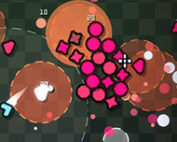
By the time you’ve rung the bell a dozen times in a single session, the screen fills with hundreds of enemies at once, and that’s arguably the moment Guns ‘n Goblins is most fun to talk about, since rendering that many hostiles without the frame rate collapsing is one of the things players bring up first when describing the game to friends.
From Apprentice to Dragon Hunter
Progression in Guns ‘n Goblins runs along a clear arc: you start as a vulnerable apprentice and work toward becoming a Dragon Hunter capable of taking down the game’s largest threats. That power curve is deliberate and it’s meant to be felt, not just read on a stat sheet.
- Weapon upgrades that turn a starting gun into something capable of clearing entire waves
- Passive perks and stat leveling that change how long you can sustain a bell-heavy playstyle
- Access to stronger tools as your Bastion itself gets rebuilt and reinforced
Build variety matters more than it initially appears. Some players lean into raw damage to end waves fast, others prioritize survivability so they can ring the bell more recklessly, and a smaller group focuses on crowd control to keep the horde manageable at range. All three approaches are viable, which is part of why the progression in Guns ‘n Goblins gets discussed so much on release.
Rebuilding the Bastion
Combat isn’t the only system in Guns ‘n Goblins. Between waves, you’re responsible for repairing and improving your Bastion, and neglecting this side of the game catches out a lot of newer players who treat it as optional. It isn’t. A Bastion left in disrepair means weaker defenses exactly when the waves start scaling up.
You can also recruit and train a skeleton army to help hold the line, which changes the rhythm of later runs considerably. Instead of every kill depending on your own aim, you’re managing a small force alongside your own combat, and balancing your attention between the two is one of the harder skills the game asks you to develop.
What Players Are Still Debating
Guns ‘n Goblins launched as a demo with a strong reception, but it’s not without friction. A recurring complaint in community discussions is the lack of proper control customization, particularly the absence of an invert-axis option for mouse and controller. For a first-person game built around fast, repeated engagements, that’s a rough edge some players find hard to look past, even when they otherwise enjoy the core loop.
That criticism sits alongside a demo that pulled in largely positive reception, with the vast majority of its several hundred user reviews landing favorably. It’s a useful reminder that even a well-received horde survivor FPS can have one glaring omission that colors the experience for a chunk of its audience.
How does the bell mechanic work in Guns ‘n Goblins?
Ringing the bell summons a wave of monsters on demand rather than waiting for them to arrive automatically. Each ring increases the size and intensity of the incoming horde, so it functions as both your main source of gold and experience and your biggest immediate threat.
What happens when you ring the bell too much?
Ringing repeatedly without a strong enough build or Bastion defenses can overwhelm you with more monsters than you can handle at once, since wave density scales directly with how often you’ve rung. Players who push bell spam too early tend to get swarmed before their weapons or skeleton army can keep pace.
How do you unlock new weapons in Guns ‘n Goblins?
New weapons and upgrades come from progressing through the leveling system, funded largely by gold earned from monster kills during bell-triggered waves. As you advance from apprentice toward Dragon Hunter status, your arsenal expands to include tools capable of handling the tougher threats later runs throw at you.
Guns ‘n Goblins earns its place among horde survivor games by making the bell the center of every decision instead of a side gimmick, and that’s what keeps players ringing it one more time even when their Bastion is barely standing. Whether you’re chasing a stronger skeleton army or just trying to survive long enough to see a dragon up close, the game is built around that same simple, repeatable dare.

 41
41
 1 Player






















 2697
2697


