
 For Boys
 For Girls
 For Kids
 Top Games
 My Games
 Top Games
 My Games


Little Ghost Game Online

Description
Little Ghost looks like a cozy indie curiosity, all pastel papercraft and cute character art, but it plays like a genuine metroidvania that expects you to remember which room had the ledge you couldn’t reach yet. That contrast is the whole appeal: a game gentle enough to hand to someone who’s never touched a platformer, built with the layered map logic that genre veterans actually respect.
| Genre | Metroidvania, Puzzle-Platformer |
| Developer roles | Design and art by Alan Abbadessa, programming by Law Jun Yan |
| Released | September 22, 2026 |
| Demo length | 2 to 3 hours |
| Combat | None |
| Platforms | Windows |
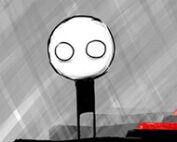
Playing as Little Ghost Through a Papercraft Office
You control the title character, an inch-high little lady dropped into a wind-blown home office that’s been turned into an interconnected collage world. A sketchbook, a grand bookshelf, and a labyrinthine computer all become traversable terrain, and the scale shift is constant: a stapler is a platform, a keyboard is a corridor.
There’s no currency and no combat here, which reframes how you approach every room. Danger comes from environmental hazards and precise platforming, not enemy encounters, so Little Ghost rewards patience over reflexes in a way most metroidvanias don’t.
Checkpoints are frequent, which matters once the office starts sprawling into its stranger corners. Losing progress to a missed jump would undercut the exploratory pacing, and the developers clearly designed around that.
The Float Mechanic Replacing Combat in Little Ghost
Instead of a fight button, Little Ghost gives you a float ability that behaves more like a soft-fall than a double jump. It’s paired with a grappling hook and a super-dash, both retro-inspired movesets that longtime platformer players will recognize instantly even without a tutorial spelling them out.
Beginners often try to use float as an offensive dodge, expecting it to counter threats the way a jump would in a combat-heavy game. It doesn’t work that way. Float exists purely for spacing and control, and treating it as anything else leads to overshooting jumps you’d have otherwise nailed.
Once you unlock the grappling hook, backtracking through earlier rooms reveals shortcuts and secret spaces that weren’t reachable on your first pass, the classic metroidvania loop done through a distinctly non-violent lens.
Prime Products Division and the Story Beneath the Collage
The mystery driving Little Ghost centers on Prime Products Division, a fictional corporation whose products apparently fill the very office you’re exploring. Piecing together what the division actually manufactures, and why, becomes the game’s version of lore-hunting, told through environmental detail rather than cutscenes.
Scattered occult practitioners populate the world too, some helpful and some deliberately unreliable narrators who grant power-ups while nudging your understanding of Prime Products Division in different directions. It’s a soft-spoken kind of worldbuilding that rewards players who read every interaction rather than skip through dialogue.
A few enemies-turned-allies show up as the story progresses, becoming new playable characters rather than obstacles to avoid, which reframes the usual metroidvania roster of “villains” into something closer to a found-family structure.
Tarot Cards, Power-Ups, and Collectables-as-Media
Tarot cards are the main collectable throughout Little Ghost, and many of them double as metroidvania-style power-ups rather than pure lore items. The full set runs to 78 cards in total, each illustrated individually, giving completionist players a genuinely large hunt to chase across the map.
- Cards found through normal platforming progress unlock new movement abilities
- Some cards are gated behind puzzle rooms rather than reflex challenges
- A handful require backtracking with a previously unlocked ability like the grappling hook
Music and podcasts are collected the same way, organized on a Tamagachi-like interface that turns soundtrack-hunting into its own side activity. Over 20 bands are represented, which is unusually ambitious for a game this size and gives audio-focused players a reason to explore corners that offer no mechanical reward.
What Beginners Get Wrong Early On
New players often rush the first open area expecting linear progression, then get stuck because Little Ghost is built nonlinear from the start. The correct move is usually to explore fully rather than push forward, since ability gates are scattered rather than sequential.
Because there’s no combat, some players mistake the early pace for a lack of challenge and stop paying attention to hazard placement. The platforming difficulty ramps up meaningfully once the bookshelf and computer sections open up, and careless jumping there gets punished even without enemies.
Exploration-focused players tend to have the smoothest first hour, while players used to combat-driven metroidvanias sometimes need a session or two to recalibrate what “danger” means in a game built entirely around platforming and float control.
How Long the Little Ghost Demo Actually Takes
The publicly available demo runs roughly 2 to 3 hours for most players, covering what’s effectively a first chapter of the full release. That’s enough time to get comfortable with float, grappling hook, and super-dash before the demo ends on a cliffhanger rather than a resolution.
The full version is planned to run well past 9 hours, with four playable characters total once the enemies-turned-allies unlock across the story. Players who finish the demo and want the complete arc will need to wait for that fuller release rather than treating the current build as the whole experience.
The Aesthetic Debate Around Little Ghost’s Collage World
Not every player responds the same way to the surreal, papercraft visual style. It’s divisive in exactly the way you’d expect: some find the uncanny mix of physical and digital textures mesmerizing, while others find the constant scale-shifting between rooms disorienting during faster platforming sections.
The float mechanic ties directly into this debate, since its floaty, low-gravity feel suits the dreamlike setting but occasionally frustrates players expecting tighter, more traditional platformer physics.
Why Little Ghost Stands Apart From Typical Metroidvanias
Dropping combat entirely is a bigger design risk than it sounds, and Little Ghost commits to it fully rather than treating the absence as a gimmick. Everything from checkpoint spacing to the tarot card power-up system is built around exploration and platforming skill instead of encounter difficulty.
Whether you’re chasing all 78 tarot cards, hunting down every podcast track, or just trying to understand what Prime Products Division is actually hiding, Little Ghost asks you to slow down inside its collage world and look closer, which is a rare enough pitch that it’s worth taking seriously.

 11
11
 For Boys
  For Girls
  Puzzle


























 2689
2689


