
 For Boys
 For Girls
 For Kids
 Top Games
 My Games
 Top Games
 My Games


Pinata Smash: Incremental Circus Game Online
Description
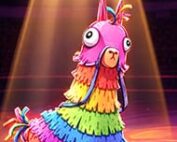
You never throw anything in Pinata Smash: Incremental Circus. You point a spotlight, the crowd in the stands does the rest, and within a couple of piñatas it’s obvious this isn’t the usual click-and-wait incremental formula — it’s something closer to conducting a riot.
| Genre | Casual, Incremental, Strategy |
| Perspective | Third-Person, fixed arena |
| Structure | Roguelite, run-based |
| Core Loop | Aim spotlight, smash piñatas, spend candy |
Pointing the Spotlight in Pinata Smash: Incremental Circus
The entire control scheme is one hand on the mouse. Wherever the beam lands, the crowd in the stands throws whatever they happen to be holding — footballs, baseball bats, occasionally a loaded gun — at the piñata caught in the light. There’s genuinely nothing else to learn mechanically at the start, which is exactly why the game leans so hard on what happens once the crowd starts multiplying.
The Crowd Does the Throwing, Not You
As a run continues, the crowd itself grows, and a bigger crowd means more simultaneous throws landing on whatever’s lit up. That’s the core escalation: you’re never clicking faster, you’re just recruiting more hands to throw for you. It’s a small twist on the incremental formula, but it changes the rhythm of a run considerably — instead of a single number climbing, you’re watching an entire arena’s throwing rate compound.
Candy Tiers and Why Not Every Piñata Pays the Same
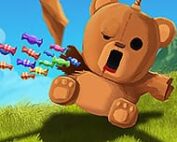
Smashed piñatas shower candy across the arena floor, and not all of it is worth the same amount — rarer candy pays out considerably more than the common stuff. At the end of a run, every piece gets itemized by type and totaled, and that total is what funds the next round of upgrades. Players chasing efficient runs learn fast to prioritize lighting up piñatas that look likely to drop the rarer tiers rather than just whichever one is closest.
JACKPOT Piñatas and the Payouts That Change a Run
Occasionally a JACKPOT piñata appears among the regular ones, and popping it delivers a payout well beyond what a normal target gives up. They’re rare enough that spotting one and getting the crowd’s attention onto it in time becomes its own small skill, especially once the arena is crowded with regular targets competing for the beam.
Footballs, Bats, and a Gun That Fires Mid-Air
Each thrown object has its own signature effect once enough skills are unlocked. Footballs start ricocheting between multiple piñatas instead of stopping at the first hit, baseball bats trigger home-run shockwaves that knock out everything nearby, and the thrown gun — yes, one of the crowd’s weapons is a literal gun — fires again in mid-air after it’s already left someone’s hand. With more than thirty-eight skills to unlock across a full playthrough, figuring out which weapon’s evolution fits your current run becomes most of the late-game decision-making.
Relics Like Shiny Crystal and Bigger Swarm
Relics stack on top of weapon skills rather than replacing them. Shiny Crystal adds attack speed for every piñata smashed, and pairing it with Bigger Swarm — which does exactly what it sounds like — turns a modest arena into something considerably more chaotic within a few piñatas. A few relics deep into a run, the specific combination you’ve assembled starts to feel less like a build you copied and more like one you stumbled into.
Tesla Coils, Black Holes, and the Late-Game Skill Tree
Deep enough into the skill tree, the upgrades stop feeling like simple stat boosts and start reshaping the arena itself. Tesla coils fork lightning across whole swarms of piñatas at once, black holes pull nearby targets into a void, and stacking effects like Shockwave and Sky Lightning on top of that can turn the last stretch of a run into something that plays almost by itself.
Casino Tickets and the Cash-Out Gamble
Smashed piñatas also drop casino tickets, which feed into a separate casino piñata sitting off to the side. Feeding it tickets makes it swell, and a multiplier climbs every second it keeps growing — right up until a hidden pop point that ends the gamble and costs you whatever you hadn’t cashed out. Banking early is safe but leaves obvious value on the table, since the piñata keeps swelling after you cash out so you can see exactly how much more you could have taken.
What Carries Over Between Shows
Individual runs are short by design, and every one of them ends eventually — but the skills and relics you’ve unlocked persist afterward, so nothing earned gets reset between shows. It’s this permanence, layered under short, snappy individual runs, that gives the game its one-more-show pull.
Early impressions from players who’ve tried the closed test have generally praised the reinvention of a genre that usually amounts to clicking and waiting, though the flip side is a fair complaint too — because the spotlight demands constant attention rather than running passively in the background, dedicated idle-game fans looking for something to leave open in a corner of the screen may find Pinata Smash: Incremental Circus more hands-on than they expected.
Frequently Asked Questions
How long does a single show last? Runs are intentionally short — the game is built around repeated, snappy sessions rather than long unbroken sits, with the persistent skill tree carrying progress forward between them. Do you have to keep clicking the whole time? No — beyond moving the spotlight, the crowd handles every throw, which is the mechanic that separates this from a typical clicker. Is the casino piñata worth the risk? It depends on how far into a run you are and how much you’ve already banked; cashing out early is safer, but the multiplier rewards nerve for players willing to watch it swell a little longer.
What makes Pinata Smash: Incremental Circus stand out isn’t any single mechanic — it’s how the spotlight, the crowd, the candy tiers, and the casino piñata’s cash-out gamble all feed into each other. By the time Tesla coils and black holes are firing across a packed arena, what started as pointing a light at a piñata has turned into something considerably harder to walk away from.

 11
11
 For Boys
  For Girls


















 2689
2689


