

 For Boys
 For Girls
 For Kids
 Top Games
 My Games
 Top Games
 My Games


RAGDORE – Euphoria Ragdoll Fight Game Online
Description
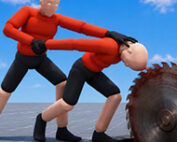
RAGDORE – Euphoria Ragdoll Fight looks like a joke physics toy for the first ten seconds — floppy limbs, characters that can’t stand up straight, punches that miss by a mile. Then a hit actually connects, the ragdoll staggers instead of just flopping over, and it becomes clear that RAGDORE – Euphoria Ragdoll Fight is closer to a genuine physics-based fighting game than the silly clips of it suggest.
Active Ragdoll as the Core System in RAGDORE – Euphoria Ragdoll Fight
The defining mechanic here is active ragdoll physics — fighters aren’t puppets that go limp on every hit, they’re simulated bodies actively trying to stay balanced while combat happens. Every punch, throw, or shove has to fight against that balancing system, which is why fights look chaotic but still respond logically to where and how hard you hit.
This is different from passive ragdoll games where characters just crumple. In RAGDORE – Euphoria Ragdoll Fight, a fighter can stumble, catch themselves, overcorrect, and stumble again, all from the physics engine reacting in real time rather than a scripted animation playing out.
New players tend to fight this system instead of using it, mashing attacks and expecting clean knockouts. Players who do well tend to use momentum instead — pushing an already-staggering opponent rather than starting fresh with every swing.
What Beginners Get Wrong Early
The most common mistake is treating every hit the same way a traditional fighting game would, expecting consistent damage and predictable knockback. Because the physics engine is doing real-time balance calculations, the exact same attack can knock one opponent flat and barely budge another, depending entirely on their stance and momentum at the moment of contact.
The second mistake is ignoring positioning. Since the ragdoll physics govern how bodies react to force, attacking from an angle that catches an opponent already off-balance produces dramatically different results than attacking head-on into a stable stance.
Players coming from more traditional brawlers often get frustrated by this unpredictability before they learn to read it, which is one of the more common complaints in the community around physics-based ragdoll fighters generally.
Difficulty and Escalation Across a Match
Early exchanges in RAGDORE – Euphoria Ragdoll Fight tend to be slow and readable, since both fighters start balanced and neutral. As a match goes on, accumulated stumbles and near-falls start compounding — a fighter who’s already been staggered twice is far easier to knock down a third time, which creates a snowballing effect once one side gains an advantage.
This escalation is where the game earns most of its highlight moments. A single well-timed shove against an already-unbalanced opponent can end a match that looked evenly matched moments earlier, and that swing in momentum is a big part of what players screenshot and clip.
It also means comeback windows shrink fast. Players who fall behind early have to actively fight the physics system just to get back to neutral footing, which some in the community find satisfying as tension and others find punishing as a difficulty curve.
Advanced Techniques Most Players Miss
- Using an opponent’s own momentum against them by shoving in the direction they’re already stumbling, rather than attacking straight on
- Baiting overextended attacks, since a missed swing in an active ragdoll system throws the attacker off balance too
- Chaining light contact instead of committing to one heavy hit, since repeated small disruptions destabilize the balance system faster than a single strong impact
- Reading recovery windows — every stagger has a brief period where the opponent’s system is actively fighting to recover, and that window is the best time to press an advantage
None of these techniques are explained directly by the game itself; they’re things players work out by watching how the physics engine responds under different conditions, which is a big part of why RAGDORE – Euphoria Ragdoll Fight has built a small but active clip-sharing community around unusual physics interactions.
What the Physics Community Actually Debates
The most divisive point among players is consistency. Because outcomes depend on simulated physics rather than fixed hit values, the exact same input can occasionally produce wildly different results, and that unpredictability is either the entire appeal of RAGDORE – Euphoria Ragdoll Fight or its biggest frustration depending on who you ask.
Players who come from precision fighting games tend to want more consistency and predictable frame data. Players who come from sandbox physics toys tend to defend the chaos as the actual point, arguing that a fully consistent ragdoll fighter would lose what makes it fun to watch and play in the first place.
There’s no clean resolution to this debate, and it shows up in most community discussions about the game — whether the unpredictability is a feature worth preserving or a rough edge that needs tightening.
Whether an exact same swing knocks someone flat or barely moves them, that inconsistency is the reason clips of RAGDORE – Euphoria Ragdoll Fight keep circulating — it’s a fighting game where the entertaining moments come from the physics engine improvising, not from a fixed set of moves anyone can master and repeat.


 41
41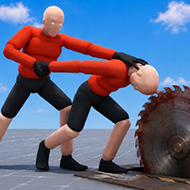






























 2694
2694

