
 For Boys
 For Girls
 For Kids
 Top Games
 My Games
 Top Games
 My Games


20 More, Somehow Even Smaller, Mazes Game Online

Description
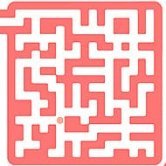
What do you do when the dot refuses to move and the maze is the only thing you can grab? 20 More, Somehow Even Smaller, Mazes is a puzzle game built around that kind of surprise, handing you twenty tiny mazes where the rules quietly change from one board to the next.
How the Stack of Mazes Works in 20 More, Somehow Even Smaller, Mazes
The game drops a stack of small mazes onto your screen, and you drag them around until you find the one you want to try. Nothing is locked behind a menu, so you can abandon a stubborn maze, wander off to another, and return with fresh eyes. The name promises mazes that are somehow even smaller, and that doubles as the main design rule: each board is compact enough to read at a glance, which leaves the twist as the real puzzle.
You do not need the original 20 Small Mazes to follow along.
Thinky-game veterans will recognize the pattern right away, a simple rule bent in a new direction every time. Casual players can treat the pile as a coffee-break puzzle, since most people finish in about an hour. Early in the game the dot and the exit look familiar, and that familiarity is exactly what the next few boards take apart. A good habit is to solve what you can, step away from what you cannot, and let the stack do the pacing for you.
Where Beginners Get Stuck in 20 More, Somehow Even Smaller, Mazes
Shattered mazes. One maze explodes into pieces, yet you can still move through it no matter where on the screen the pieces end up. Beginners panic and try to rebuild the board before moving, when the path was never broken in the first place.
The fixed dot. In another maze the dot does not move at all, and you push it toward the exit by moving the maze instead. Many players keep clicking the dot before they try anything else, because every other game has taught them that the dot is the thing you control.
Shrinking scale. One maze turns out smaller than the name warned you to expect, and it is easy to overlook while you are hunting for something dramatic. The lesson from all three is the same: check what you are allowed to grab before you plan a route.
Why the Twists Matter More Than the Size
The mazes are pretty tricky, and a few boards will have you leaning back and staring at the screen. Some players love working a puzzle out alone, while others find the cryptic ones frustrating. Because the whole collection is short, a few people also wish it were longer, though many reviewers say the brevity is the point.
The small shock of dragging a maze aside and realizing it can be carried somewhere else is the moment most players remember.
That feeling is what the thinky crowd calls an aha moment, and the game delivers it twenty times without padding. Players on Steam have rated it overwhelmingly positive, and the praise keeps returning to the same idea: every board teaches one clever trick and then gets out of the way.
Quick Answers for New Solvers
- Do I need to play 20 Small Mazes first? No. This sequel works on its own, and the original is a separate set of twenty mazes for anyone who wants more afterwards. Neither one depends on knowledge from the other.
- How long does it take to finish? Most players need around an hour to clear all twenty boards. A single stubborn maze can stretch that if you keep stepping away and coming back to it.
- What if the dot will not move? Grab the maze instead of the dot. One board is solved by pushing the dot toward the exit with the maze itself, and another breaks into pieces that still work as a path wherever you drag them.
20 More, Somehow Even Smaller, Mazes rewards the player who keeps poking at the rules. Whether the dot is stuck in place, a shattered maze is scattered across the screen, or the exit sits on a board smaller than expected, each of the twenty boards asks a different question and trusts you to find the answer.

 1
 Puzzle



























 2710


