
 For Boys
 For Girls
 For Kids
 Top Games
 My Games
 Top Games
 My Games


Dystopia: The Jester’s Obsession Game Online
Description
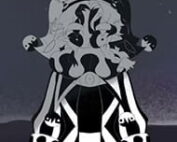
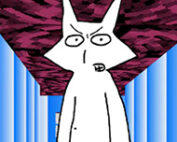
Dystopia: The Jester’s Obsession looks like a soft, hand-drawn dating sim but plays like a slow psychological trap dressed up in black and white. You wake in a void with no memory of how you got there, and the only other presence in the room is Fai, a jester who introduces himself as your friend before the game gives you any reason to trust that word. Everything that follows is built on that tension — is he protecting you, or is he the reason you can’t leave?
Waking Up Beside Fai
The opening of Dystopia: The Jester’s Obsession drops you straight into unease. There’s no tutorial, no explanation of the void you’re standing in, just Fai leaning in close and asking questions that feel a little too personal for someone you just met. Early dialogue choices seem harmless, but the game is already tracking how you respond to him, and that tracking becomes the backbone of everything that happens later.
Most players get comfortable too fast. Fai’s writing leans playful and a little clumsy on purpose, which makes it easy to forget he’s the only character in the room controlling the pace of the scene. By the time the atmosphere shifts from cute to unsettling, you’re already several choices deep into a relationship you didn’t fully agree to.
What sells this opening is restraint. There’s no jump scare, no dramatic music sting — just Fai’s expression holding a beat too long, or a line of dialogue that repeats itself with a slightly different tone. Players who’ve finished a route describe it as the kind of discomfort that creeps up on you instead of announcing itself.
Affection Points and the Dialogue They Unlock
Underneath the story sits a straightforward points system: your responses to Fai raise or lower an affection value, and certain dialogue only appears once you’ve crossed an invisible threshold. You won’t see a number on screen telling you where you stand, so most of the community relies on trial and error to figure out which lines push Fai toward warmth and which push him toward something colder.
Affection thresholds gate specific scenes rather than unlocking them gradually, so a handful of key choices matter far more than the dozens of smaller ones surrounding them. This single mechanical layer is doing most of the work in a game that otherwise has very little traditional gameplay.
Newer players tend to treat every choice as equally important and end up with a route that feels muddled, neither fully affectionate nor fully hostile. Reading Fai’s micro-reactions — a pause, a change in his sprite’s posture — is the closest thing this game gives you to feedback, and it rewards a second playthrough more than a first.
Four Endings Behind One Smile
Dystopia: The Jester’s Obsession currently locks four distinct endings behind the choices you make with Fai, ranging from outcomes where you lean into his obsession to ones where you try, and fail, to pull away from him. None of the four are framed as a clean “good” ending, which is part of what keeps players replaying the demo instead of stopping after one run.
The CGs tied to each ending are where the black-and-white art direction pays off hardest. Color is used so sparingly elsewhere in the game that its appearance in an ending screen carries real weight, and players in the comments regularly point to specific CG panels as the moment the whole thing clicked for them emotionally.
What players tend to debate is whether four endings feel like enough for a demo this short. Some argue the branching is tight and purposeful; others want more room between the extremes before the full release. Both readings are fair given how early this build still is.
The Black-and-White Style Nobody Mentions Upfront
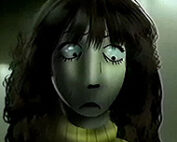
Nothing about the store description prepares you for how committed the visual direction is. Every background, every character sprite, every CG in the current build stays locked to black, white, and shades of gray, which makes Fai’s expressions do more emotional lifting than color ever could.
It’s a deliberate constraint, and the developer has talked about it as a stylistic choice tied to the void setting rather than a technical limitation. The flat palette also makes the eventual introduction of a Carnival-themed route, teased for a future update, feel like it will land as a genuine tonal shift rather than just a new background.
Choosing Pronouns Without Choosing Your Fate
One quality-of-life detail players bring up constantly is the pronoun selection at the start of the demo, which lets you set how the game refers to your character without altering how Fai treats you. It’s a small addition, but it removes a friction point that a lot of otome-adjacent titles skip entirely, and it’s earned Dystopia: The Jester’s Obsession goodwill from players who don’t usually see themselves represented in this genre.
Community shorthand already calls the game TJO, and that abbreviation shows up constantly in comment sections and fan art tags. It’s a small sign of how quickly this demo built a recognizable identity despite being a jam-scale project made largely by one person.
One honest limitation worth naming: on mobile, dialogue text currently gets cut off mid-line, a bug the developer has acknowledged but not yet fixed. It doesn’t break the game, but it’s the kind of rough edge that comes with playing something this early in development.
Common Questions About Dystopia: The Jester’s Obsession
- How many endings does the current demo have? There are four endings in the present build, each shaped by how your affection choices with Fai accumulate across the playthrough rather than by a single late decision.
- Is this a finished game or still a demo? It’s an in-development demo. The developer has outlined additional content, including a planned Carnival and restaurant-set route, but none of that is in the current release yet.
- Do dialogue choices actually change how Fai treats you? Yes — his responses are tied to an affection and points system, meaning specific lines of dialogue only trigger once you’ve pushed the relationship in a particular direction.
Dystopia: The Jester’s Obsession works because it never lets you fully relax around Fai, even in the moments designed to feel sweet. It’s a short demo with a narrow palette and an even narrower cast, but the tension it builds between comfort and dread is doing more with less than most full-length visual novels manage.

 4
4
 For Boys
  For Girls



























 2668
2668


