
 For Boys
 For Girls
 For Kids
 Top Games
 My Games
 Top Games
 My Games


Lancer Tactics Game Online

Description
What happens when your carefully built pilot finally overheats their frame in the middle of a firefight? In Lancer Tactics, that question isn’t hypothetical, it’s the moment most matches actually turn.
| Genre | Tactical RPG, mech combat |
| Setting | Verdevilla, Dawnline Shore |
| PC mech frames | 29 |
| Modes | Instant Action, Module Editor, Tutorial |
| Multiplayer | Not currently planned |
Building a Pilot and Frame in Lancer Tactics
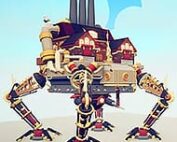
The starting point for nearly everything in Lancer Tactics is the pairing between a pilot and their frame, the mech chassis they climb into before a fight. With 29 PC frames available, the range runs from nimble, evasive builds to slow chassis loaded with heavy artillery, and the choice shapes almost every later decision about talents and weapons.
Newer players often pick a frame based on looks or flavor and then struggle in their first Instant Action skirmish because the loadout doesn’t match how they actually want to play. Someone who wants to dash behind an enemy line and finish a target in one turn needs a fundamentally different frame than someone who wants to sit at range and grind down structure over several turns.
This is also where the game leans hardest on its tabletop roots. Recreating a build from the pen-and-paper version, or testing one out here before bringing it back to a tabletop session, is a workflow a lot of longtime players specifically mention enjoying.
Talents, Core Bonuses, and Loadout Choices
Beyond the frame itself, Lancer Tactics layers in Talents and Core Bonuses, both of which push a pilot toward a specific role rather than a generic damage stat increase. Talents tend to unlock situational abilities, while Core Bonuses are the passive backbone of a build, quietly shaping things like accuracy, mobility, or survivability across an entire campaign or Instant Action run.
With more than 500 abilities across the full pilot and frame system, the sheer volume can be overwhelming at first. Most experienced players recommend picking one archetype, a stealthy strike build or a heavily armored anchor, and committing to it for several matches before branching out into hybrid loadouts.
Sitreps and What Instant Action Actually Tests
Instant Action is the fastest way into a fight, dropping a squad into a mission built around a specific sitrep, the objective type that defines what winning even means for that encounter. Some sitreps reward aggressive pushes, others punish anyone who doesn’t hold a defensive line, and learning to read which one you’re in before committing a frame is a skill in itself.
Players who came from the tabletop side of Lancer tend to recognize sitreps immediately, since the terminology carries straight over. Players new to the system usually need a couple of losses before the objective types stop feeling arbitrary.
Heat, Structure, and the Cost of Overextending
A frame that overheats or loses too much structure stops being an asset fast. Overextending a mech into enemy range without a clear exit plan is the single most common way squads fall apart in the middle stages of a fight, especially once an opponent’s NPC kit includes anything built around focused fire.
By the time a campaign scenario introduces tougher NPC classes, players usually already know which of their frames can absorb a bad turn and which ones can’t. That knowledge only comes from actually losing a mech in a fight you thought you had under control.
The Module Editor and Community Scenarios
Lancer Tactics ships with a Module Editor that lets players build their own branching scenarios, maps, and scripted encounters rather than waiting purely on official campaign content. It’s become the main outlet for creators who want more structured story content than Instant Action provides on its own.
One divisive point that comes up often in community threads: pilots can’t currently act independently outside their frames in combat, since the developers have been open that running that fantasy well would require far more automated judgment calls than the system currently supports. Some players want it anyway; others agree it would dilute the mech-focused core of the game.
Frames Worth Learning First
Among the 29 available, a handful get recommended constantly to newcomers for being forgiving to pilot while still teaching the core heat and structure tradeoffs. Starting with one of these before branching into more specialized, high-risk frames tends to save a lot of frustration in early Instant Action runs.
- Can you play as your pilot outside the mech in Lancer Tactics? Not in combat. The team has stated it’s unlikely to ever be fully supported, though map and module creators can script limited pilot interactions on a case-by-case basis, as seen in the tutorial.
- How many mech frames does Lancer Tactics have? There are 29 PC frames, alongside a full set of NPC classes and kits used to build out enemy squads in campaigns and Instant Action.
- Is Lancer Tactics multiplayer? No. Multiplayer and human-run GM tools are not currently on the roadmap, since the focus has stayed on solo campaigns, Instant Action, and the Module Editor.
Lancer Tactics rewards the same patience the tabletop game always demanded, just compressed into faster turns and a Module Editor built for anyone who wants to keep designing fights for their favorite frame long after the main campaign runs out.

 2
2
 1 Player
  For Boys































 2671
2671


