
 For Boys
 For Girls
 For Kids
 Top Games
 My Games
 Top Games
 My Games


Tag Game Online

Description
You spot the arrow over your friend’s head half a second before they see you, and in Tag that half-second is everything. One clean touch and the roles flip — you’re no longer running, you’re the one hunting, and everyone else scatters. It’s the oldest playground game there is, rebuilt for a shared keyboard and a countdown clock, and the panic it creates hasn’t lost a bit of its charge.
| Genre | Local multiplayer party/chase |
| Players | 2 to 4 on one screen |
| Platform | Browser |
| Round length | Timed rounds |
The core loop in Tag is almost insultingly simple to explain and surprisingly hard to master. One player starts marked as “it,” identified by the small arrow floating above their head so nobody at the table can pretend they didn’t see it. That player’s only job is to close the distance and tag someone else before the round timer hits zero. The moment contact happens, the arrow jumps to the newly tagged player, and the chase reverses direction instantly — the hunter becomes prey mid-stride.
Reading the Arena in Tag
Maps in Tag are compact by design, and that’s the whole point. A bigger arena would let a skilled runner simply out-space the chaser for the full round, so the tight layout forces constant contact. Corners, choke points, and the occasional obstacle become the entire strategic layer of the game — you’re not managing resources or leveling up a character, you’re managing angles and distance in real time.
New players usually lose their first few rounds by running in straight lines. A straight line is predictable, and predictable is exactly what a chaser wants. The players who last longest as a runner are the ones who cut hard around corners and force the “it” player to commit to a direction before reversing.
Casual groups tend to play Tag with the volume up and trash talk flying, since the whole appeal is watching a friend’s face when they realize the arrow just landed on them. Competitive-minded players treat it differently, timing their tags for the literal last second of the round so the person who’s “it” gets stuck holding the role when the buzzer sounds.
Controls and Who’s Playing What
- Player one typically runs on W, A, D
- Player two uses the arrow keys
- Player three takes I, J, L
- Player four gets T, F, H
Because everyone shares one keyboard, elbow room becomes a real variable in Tag. Four-player rounds in particular reward players who know their own key cluster cold, since a fumbled reach for the wrong key at the wrong moment is often what turns a clean escape into a tag.
Why the Last Ten Seconds Change Everything in Tag
The timer is the real opponent. Early in a round, the player who’s “it” can afford to feint and bait a reaction. With ten seconds left, that patience disappears, and chases turn into straight sprints toward whoever is closest, regardless of position. This is the moment most players in the community bring up when they talk about Tag — the scramble at the buzzer, where getting caught with one second on the clock feels worse than getting caught at the start.
One thing players are honestly split on: some find the small map size claustrophobic after a dozen rounds, arguing it limits how creative the chases can get compared to a wider layout. Others say that’s exactly why it works, since a bigger space would just turn every round into a boring footrace with no tension.
What happens if nobody gets tagged before time runs out?
Whoever is currently “it” when the timer hits zero loses the round outright, which is why the final stretch of a match is almost always the most chaotic part — nobody wants to be caught holding the arrow.
Can two people be “it” at the same time?
No — Tag only ever has one active chaser at a time, and the arrow transfers the instant a tag connects, so there’s no overlap or shared chasing period.
Is there a way to practice without three other people?
Tag is built specifically around 2 to 4 players sharing a keyboard, so the timing and spacing skills mostly come from playing actual rounds against people rather than solo practice.
Tag doesn’t try to be more than what it is, and that restraint is exactly why groups keep coming back to it. Watching the arrow snap from one head to another mid-scramble, with everyone at the keyboard yelling over who saw the tag first, is the whole appeal — and it’s a feeling this specific version of Tag delivers better than almost any other chase game on a shared screen.

 20
20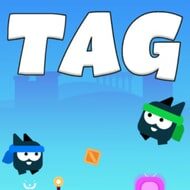
 For Boys
  For Girls






























 2679
2679


