
 For Boys
 For Girls
 For Kids
 Top Games
 My Games
 Top Games
 My Games


Baldi’s Doppelganger Game Online
Description
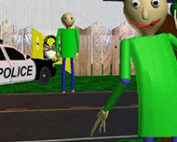
You step into a corridor where Baldi’s ruler sound should be predictable, but in Baldi’s Doppelganger even that familiar rhythm starts to bend, and what feels like safety turns into constant hesitation as you try to confirm what you are actually hearing.
| Genre | Stealth horror with sound deception |
| Core Loop | Collect notebooks while tracking unreliable audio cues |
| Main Characters | Baldi, Playtime, Principal of the Thing, Gotta Sweep |
| Goal | Escape the school after collecting notebooks |
Baldi’s Doppelganger and Audio Misdirection
The central mechanic in this game is not just avoiding Baldi, but interpreting whether what you hear is real. The Doppelganger introduces delayed sound replication, meaning footsteps and ruler slaps no longer match precise movement. This forces players to constantly double-check hall positioning instead of reacting instinctively.
Early rooms still feel familiar, but the moment you collect the second notebook, timing distortions begin. The “ghost delay” effect, as players call it in community discussions, makes every turn a potential misread of enemy position.
Players who rely heavily on audio memory struggle most because Baldi’s presence is no longer tied to consistent rhythm patterns.
Movement Control in Baldi’s Doppelganger Corridors
Movement in this game requires controlled hesitation rather than speed. Sprinting through corridors increases risk because Playtime’s jump rope and Gotta Sweep’s hallway clearing become harder to predict when sound cues overlap.
By the time you reach mid-map classrooms, players often adopt “corner checking,” a community term describing slow peeking before committing to direction changes.
This approach is especially important when Baldi and the Doppelganger appear to converge near intersecting hallways.
Common Mistakes Players Keep Repeating
Audio Blind Trust — players assume the first ruler sound is real Baldi, which often leads them directly into the Doppelganger’s path.
Over-Sprinting — running continuously reduces reaction time when Playtime interrupts movement paths unexpectedly.
Notebook Rush Behavior — collecting notebooks without mapping escape routes causes early corner traps once Baldi accelerates.
Difficulty Scaling After Notebook Four
Once the fourth notebook is collected, Baldi’s speed increase combines with the Doppelganger’s delay system, creating overlapping threat timing. This is where many runs collapse because both real and fake cues occur within seconds of each other.
Veteran players refer to this phase as “desync pressure,” where memorized routes lose reliability and improvisation becomes necessary.
Item usage becomes more strategic, especially BSODA timing near long corridors.
How do you distinguish Baldi from the Doppelganger in late game?
The real Baldi maintains consistent ruler cadence that matches corridor distance, while the Doppelganger introduces micro-delays between sound and movement. Experienced players watch corner spacing rather than relying on audio alone.
Why does movement feel less responsive after notebook three?
Because multiple systems overlap at once, including Playtime interruptions and sound delay distortion. This creates perceived input lag even though movement speed remains unchanged.
What is the safest strategy for collecting late notebooks?
Staying near intersecting hallways allows faster escape options when Baldi or the Doppelganger appears. Players often save BSODA specifically for emergency corridor resets.
Baldi’s Doppelganger becomes most memorable when a single hallway encounter with Playtime and a delayed ruler sound forces split-second decisions, especially near the Faculty Rooms where Gotta Sweep can completely reset positioning.

 87
87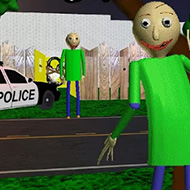
 For Boys
  For Girls





























 2697
2697


