
 For Boys
 For Girls
 For Kids
 Top Games
 My Games
 Top Games
 My Games


Baldi’s Basics It’s All Gone Game Online
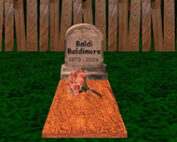
Description
What happens when every familiar mechanic disappears the moment you expect it to work in Baldi’s Basics It’s All Gone, and your usual strategies fail within the first minute?
Rule Removal in Baldi’s Basics It’s All Gone
Baldi’s Basics It’s All Gone removes the predictable structure players rely on from the original formula, turning known mechanics into unreliable tools. Notebooks still exist, but their behavior changes in subtle ways such as inconsistent question patterns or altered feedback, which disrupts expectation-based play. The game constantly shifts rules without directly telling you, forcing players into a reactive mindset from the start.
Baldi no longer follows consistent speed scaling tied to wrong answers, which means you cannot rely on ruler slap timing as an audio tracker. This unpredictability is what players often call “silent pressure,” because tension builds without clear signals. Players who depend on rhythm-based tracking struggle heavily once this system breaks down.
Even basic navigation feels off because hallways behave inconsistently across runs, sometimes looping in ways that feel almost randomized. By the time you collect several notebooks, memorization stops being useful and adaptation becomes the only viable approach.
Character Behavior Changes
Characters like Playtime and Principal of the Thing behave differently here, often appearing at unexpected intervals that do not follow the original pacing. Playtime’s jump rope timing can desync mid-sequence, which means even experienced players miss jumps they would normally land without effort. This creates frustration, especially for players who rely on muscle memory.
The Principal of the Thing enforces rules that sometimes do not trigger properly, creating moments where players feel safe running in halls or entering faculty rooms when they are not. This inconsistency leads to what players describe as “false safety,” where expected punishments fail and then suddenly return later.
Adaptive players who constantly reposition tend to survive longer, while route planners struggle because their paths become unreliable. Once multiple characters overlap, unpredictability compounds quickly.
Environmental Instability in Baldi’s Basics It’s All Gone
Rooms shift layouts between attempts, and item placements like BSODA, Safety Scissors, and Quarter spawns are inconsistent enough to prevent planning. The game removes the comfort of known item routes, which many players depend on in standard gameplay. Exploration becomes risky rather than rewarding.
Exploration-focused players struggle here because memorization does not help much, while reactive players adapt faster by making decisions in real time. This difference highlights a major divide in how people approach the game.
One notable detail is how door sounds sometimes fail to play, removing an important feedback loop that players use to track movement. This small change has a huge impact during chase sequences.
Community Reactions and Friction
Some players enjoy the chaos, calling it a “true randomizer feel” that forces constant attention and adaptation. Others criticize the lack of consistency, arguing that skill expression is reduced when mechanics behave unpredictably. This debate is common in community discussions.
Speedrunners generally avoid this version because runs cannot be optimized reliably, while casual players often enjoy the unexpected outcomes. This split shows how differently the game appeals depending on playstyle.
Despite that, many agree the first two minutes feel disorienting in a memorable way, especially when familiar cues fail one after another.
Why do items feel weaker in this version?
Items like BSODA depend heavily on timing and positioning, both of which are altered in this variant. Because Baldi’s movement is less predictable and acceleration varies, the same item usage no longer guarantees distance. Safety Scissors also lose reliability when Playtime’s timing becomes inconsistent.
How do you avoid Baldi without sound cues?
You need to rely more on visual awareness and map positioning rather than audio tracking. Watching hallway intersections and keeping escape routes open becomes more important than listening for ruler slaps. Experienced players often keep moving in wider loops instead of tight routes.
Is there a consistent strategy to win?
There is no fully consistent strategy because mechanics shift between runs, but flexible routing improves survival. Conserving items like BSODA and avoiding unnecessary risks with Principal of the Thing increases your chances. Adapting to each run instead of forcing a plan is key.
Baldi’s Basics It’s All Gone stands out because even familiar tools like BSODA and encounters with Playtime behave just differently enough to force constant adjustment, especially during late notebook collection when overlapping characters create unpredictable pressure.

 72
72
 For Boys
  For Girls






























 2694
2694


