
 For Boys
 For Girls
 For Kids
 Top Games
 My Games
 Top Games
 My Games


Labyrinth.os Game Online

Description
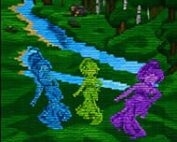
Labyrinth.os looks like a digital maze simulation but plays like a self-editing system that rewrites its own corridors while you are inside it, and Labyrinth.os never guarantees that the path you saw a moment ago will still exist when you return. From the first node entry, the game challenges your sense of spatial logic rather than reflex, forcing you to question whether memory or structure is more reliable.
| Genre | Procedural Maze Logic Game |
| Main Mechanic | Self-modifying procedural labyrinth paths |
| Key Zone | Root Sector Grid |
| Core Challenge | Tracking shifting node connections under real-time rewrite |
Node Rewriting System in Labyrinth.os
The central mechanic in Labyrinth.os is the Node Rewrite Cycle, where corridors shift after every completed traversal loop. Early sections of the Root Sector Grid are predictable, but instability increases once loop thresholds exceed five completions. At that point, even familiar routes begin to degrade mid-movement.
Players often refer to “ghost routing” when discussing paths that exist visually but collapse upon entry. This phenomenon becomes more common as system entropy increases, especially in high-density node clusters.
A notable moment occurs when audio pings lag behind visual corridor updates, creating a mismatch that experienced players use as a navigation advantage. This delay window becomes a core skill in advanced routing strategies.
Traversal Logic and Labyrinth.os Progression
Progression in Labyrinth.os depends on decoding pattern persistence rather than memorizing maps. By the time you reach the Delta Node Clusters, routes begin to branch unpredictably even within a single traversal session. This forces constant re-evaluation of previously trusted paths.
Strategic player types excel here because they can track node probability chains, while reactive players often struggle with sudden corridor collapses. The game subtly rewards analytical thinking over fast movement in these later stages.
Some players criticize the unpredictability spike in mid-game zones, arguing it reduces long-term planning effectiveness. Others argue this is exactly what makes Labyrinth.os distinct from traditional maze games.
Advanced Routing Techniques in Labyrinth.os
Advanced techniques include “anchor pinging,” where players repeatedly trigger node markers to stabilize temporary pathways. This becomes essential in high-entropy sectors where routes vanish within seconds, especially near cluster intersections.
Another method involves reading system latency shifts, which often signal upcoming structural rewrites before they visually occur. Experienced players use this to pre-move into safer nodes before collapse begins.
Why do nodes disappear in Root Sector Grid?
In Labyrinth.os, nodes disappear due to entropy-based rewriting cycles that reset corridor connections after repeated traversal loops. This ensures no route remains permanently stable across extended exploration.
What causes ghost routing errors?
Ghost routing in Labyrinth.os occurs when visual corridors persist briefly after structural removal, misleading navigation decisions. Players often mistake these residual visuals for safe paths.
How does Delta Node Cluster change difficulty?
The Delta Node Cluster in Labyrinth.os increases path volatility, forcing real-time adaptation instead of memorized route dependency. This is where most players first experience full system instability.
Labyrinth.os ends where routing logic breaks down into pure adaptation, and the Root Sector Grid becomes a memory test rather than a map, leaving Labyrinth.os defined by its shifting corridors and unstable node behavior alongside systems like anchor pinging and Delta Node Cluster volatility.


 65
65
 For Boys
  For Girls































 2697
2697


