
 For Boys
 For Girls
 For Kids
 Top Games
 My Games
 Top Games
 My Games


Baldi’s Basics: Teaching on Twos Game Online

Description
You grab a notebook and hear Baldi counting faster than usual, and in Baldi’s Basics: Teaching on Twos the rhythm already feels wrong before you solve the first problem. This game twists the familiar classroom chase by forcing every number interaction into doubled logic, which immediately disrupts how you normally move through hallways and plan escapes, especially when the first incorrect hesitation triggers Baldi’s ruler sound earlier than expected.
| Genre | Horror / Edutainment Parody |
| Core Mechanic | Solve math problems while evading Baldi using altered counting rules |
| Perspective | First-person |
| Objective | Collect notebooks and escape the school |
Baldi’s Basics: Teaching on Twos Changes Number Flow
In the base formula, solving notebooks is about speed and accuracy, but this game forces you to think in increments of two, which breaks instinct in a way that feels subtle at first but becomes overwhelming. Early in the game, when you pick up your first notebook, the problems look simple, yet the answers demand adjusted counting patterns that slow you down just enough for Baldi to close distance even if you never actually answer incorrectly.
That delay is everything because Baldi’s movement speed scales with mistakes, and hesitation counts almost the same as getting answers wrong. Players often call this “double lag,” where mental recalculation costs you steps in the hallway, and those steps translate directly into danger once Baldi starts chaining speed increases after each notebook.
Once Baldi accelerates, even a one-second pause becomes dangerous, especially after the third notebook where the pacing shift becomes obvious.
Hallway Movement in Baldi’s Basics: Teaching on Twos
The school layout remains recognizable, but navigation feels tighter because timing is offset by your own thinking process. You move through faculty rooms, corners, and long corridors expecting normal pacing, yet every interaction—doors, notebooks, even turning—feels slightly misaligned due to the mental load of recalculating answers.
By the time you reach later notebooks, the pressure stacks: Baldi is faster, and your brain is still adjusting to the doubled structure, which creates a constant mismatch between intention and execution. Speedrunners often refer to this as “desync movement,” where your route is correct but your timing fails because your attention is split.
Exploration-focused players tend to struggle here because stopping to think becomes a liability, while aggressive runners who rely on instinctive movement adapt faster to the rhythm shift.
What Players Misread Early
Beginners assume the mechanic only affects answers, but it also impacts decision-making speed, which is why many early runs fail before the midpoint. That misunderstanding leads to early captures, especially near corners where Baldi’s audio cues get louder and harder to interpret correctly.
Answer buffering — players try to pre-think solutions before opening notebooks, but in this game the variation makes that unreliable, because each notebook subtly changes how quickly you can process the numbers.
Reaction-based players adapt faster because they commit quickly rather than calculating perfectly, while perfectionists often get caught due to overthinking simple problems.
Escalation and Audio Pressure
Sound plays a bigger role here than expected, especially Baldi’s ruler slaps, which create a rhythm that clashes with your counting pattern. The game intentionally creates this mismatch, making it harder to stay consistent once the pressure builds.
By mid-run, you rely more on sound than visuals, especially when navigating long corridors where you cannot see Baldi but can hear his approach clearly. Players often describe this as “sound tracking,” where each slap becomes a timing marker for movement decisions.
This creates a subtle tension where your brain is juggling two rhythms at once, and that mental split is what makes this version feel more stressful than the original structure.
FAQ
Why are the math problems harder in Baldi’s Basics: Teaching on Twos?
The problems themselves are not always more complex, but the requirement to think in increments of two changes how quickly you process them. This interacts with Baldi’s speed scaling, meaning even correct answers can feel punishing if they take too long, especially after the third notebook where his pace noticeably increases.
How do you avoid Baldi when solving notebooks?
You need to minimize hesitation by committing to answers quickly, even if imperfect, while positioning yourself near exits before opening a notebook. Managing distance through hallway positioning and using doors strategically matters more than perfect accuracy when Baldi is already accelerating.
Is this version harder than the original structure?
Most players agree it feels harder because the altered counting disrupts muscle memory developed in the original school layout. The first two minutes are especially noticeable, where even experienced players misjudge timing and get caught earlier than expected.
Baldi’s Basics: Teaching on Twos stands out because the pressure is not just from Baldi but from your own hesitation, especially when a simple notebook near the faculty room turns into a timing trap that echoes through every hallway decision you make afterward.

 63
63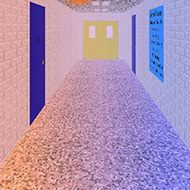
 For Boys
  For Girls





























 2697
2697


