
 For Boys
 For Girls
 For Kids
 Top Games
 My Games
 Top Games
 My Games


Signal Garden Game Online

Description
In Signal Garden you start with fragmented reception across Verdant Relay, where every plant node behaves like a broadcasting point rather than a decorative element, and the Signal Bloom already shifts intensity before you place your first connection wire. The garden does not feel passive; it reacts to alignment choices in real time, as if every node remembers previous configurations. In Signal Garden, early stability is misleading because the system is already adapting to your layout decisions.
| Genre | Signal Routing Puzzle Simulation Game |
| Main Mechanic | Redirecting living signal nodes across botanical network paths |
| Core Zone | Verdant Relay Garden Grid |
| Key Systems | Signal Bloom, Relay Roots, Frequency Drift |
Verdant Relay Path Logic in Signal Garden
The Verdant Relay grid operates as a living circuit where each plant node modifies signal strength based on adjacency. Unlike static puzzle grids, paths degrade or strengthen depending on repeated use patterns.
Players quickly realize that Signal Bloom intensity changes routing efficiency, making identical layouts behave differently across cycles. This forces continuous redesign rather than memorization.
A detail experienced players notice is how leaf shimmer frequency increases just before Frequency Drift events, a cue often called “green static” in community discussions.
Signal Bloom Interaction Layers in Signal Garden
Signal Bloom is not just visual feedback; it represents hidden data amplification across connected nodes. Strong Bloom clusters can override weaker relay paths entirely.
Once multiple Bloom nodes synchronize, the garden begins self-adjusting routing priorities without player input. This creates both optimization opportunities and unexpected breakdowns.
Some players deliberately overconnect Bloom clusters to trigger high-output cascades despite instability risks.
Relay Root Network Expansion in Signal Garden
Relay Roots form the structural backbone of the garden’s signal transmission system, expanding underground as routing complexity increases. These roots determine long-range signal stability.
As expansion continues, cross-root interference begins to appear, forcing players to redesign entire sections instead of local adjustments.
This mechanic is often described by optimization-focused players as “root drift pressure,” reflecting how structure shifts under load.
Frequency Drift Instability Events in Signal Garden
Frequency Drift occurs when overlapping signal paths exceed stable modulation thresholds, causing partial rerouting across Verdant Relay zones. It can either improve efficiency or collapse routing entirely.
By mid progression, Drift events become predictable in timing but unpredictable in impact, depending on Bloom density.
Advanced players sometimes intentionally trigger Drift cycles to reroute inefficient networks into high-yield configurations.
Garden Synchronization Loops in Signal Garden
Synchronization loops form when multiple Signal Blooms begin reinforcing each other, creating self-sustaining signal highways. These loops reduce manual routing needs but increase fragility.
Breaking a loop without planning often collapses entire sections of the garden, forcing rebuilds from Relay Roots upward.
This creates a strategic divide between stable builders and experimental optimizers.
Why does Signal Bloom change routing behavior?
In Signal Garden, Signal Bloom alters node priority weighting in Verdant Relay, which directly changes how paths are selected during transmission cycles.
How do Relay Roots affect late game stability?
Relay Roots in Signal Garden determine long-range signal integrity, and weak root distribution causes cascading Frequency Drift across connected zones.
What triggers Frequency Drift events?
In Signal Garden, Frequency Drift is triggered when overlapping signal channels exceed stable modulation thresholds within Bloom clusters.
Signal Garden ends each cycle with Verdant Relay recording your final network shape against Signal Bloom history, and Signal Garden ultimately evaluates mastery through how efficiently you managed Relay Roots under Frequency Drift pressure.

 62
62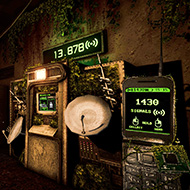
 For Boys
  For Girls































 2697
2697


