
 For Boys
 For Girls
 For Kids
 Top Games
 My Games
 Top Games
 My Games


Snacktorio Game Online

Description
Snacktorio looks like a charming cooking simulator but plays like a demanding automation puzzle. The objective is not simply preparing meals; the challenge comes from designing production systems capable of feeding hungry beasts while managing contamination, timing, and ingredient behavior. Early levels appear approachable because recipes remain simple, yet complexity increases steadily as new machines and production requirements appear. Players quickly learn that efficiency matters just as much as creativity.
| Genre | Factory automation |
| Main Goal | Feed beasts through automated food production |
| Levels | More than 55 levels across 6 islands |
| Core Mechanic | Building scalable cooking factories |
Building Production Chains in Snacktorio
The first levels introduce mixers, ovens, boilers, fryers, and sorting systems. Individually these machines appear straightforward, but complexity grows as recipes become larger and ingredient interactions become more demanding. Understanding how products move between machines is often more important than understanding the recipes themselves. Small inefficiencies accumulate rapidly once production expands.
Many beginners treat each recipe as an isolated task. The better approach is designing reusable infrastructure capable of supporting multiple production lines at once. Players who separate transportation, processing, and storage systems usually find later levels easier to manage. Factory layouts that appear oversized during the opening stages often become necessary later.
Automation enthusiasts often spend significant time refining layouts even after a level can technically be completed. Optimization-minded players regularly rebuild entire sections to remove bottlenecks. Community discussions frequently use the term “throughput” when comparing factory performance and production efficiency.
Ingredient Rules That Shape Snacktorio
Ingredients behave according to specific rules. Dairy can curdle under heat, allergens can spread through production lines, and dough changes over time. A game session frequently turns into a logistics challenge rather than a cooking challenge. Understanding ingredient behavior becomes essential because even efficient factories can fail when contamination spreads unexpectedly.
The learning curve becomes noticeably steeper once contamination risks enter the equation. Efficient factories require both throughput and cleanliness. New players often discover that increasing production speed without improving organization creates more problems than benefits. Careful planning eventually becomes more valuable than raw expansion.
Players commonly refer to “factory spaghetti” when discussing layouts that technically function but become difficult to maintain. The phrase usually describes conveyor systems that evolved through constant improvisation rather than deliberate design. Reaching a point where rebuilding becomes easier than repairing is a familiar moment for many players.
Across the Islands and Beast Orders
By the time you reach later islands, new ingredients and production constraints force major redesigns. Strategies that worked earlier may become inefficient or completely unusable. The transition between islands consistently introduces fresh logistical problems that require different solutions. Progress depends on adaptation rather than repetition.
The Head Chef’s requests gradually reveal additional systems, while beast orders introduce unusual requirements and restrictions. Certain objectives encourage players to prioritize efficiency, while others emphasize precision and contamination control. Completing these tasks often requires examining an entire factory rather than adjusting a single machine.
A distinctive detail recognized by experienced players is the moment a carefully balanced production chain fails because a single contamination source spreads through multiple machines. Veteran players often identify the problem immediately because similar failures happen throughout advanced stages. Recovering from these situations becomes an important skill.
Advanced Factory Thinking
Throughput Planning becomes essential during advanced stages. Instead of solving immediate bottlenecks, successful players design systems capable of handling future expansion before demand increases. Anticipating growth allows factories to absorb new requirements without requiring complete reconstruction.
Optimization-focused players enjoy maximizing output rates, while creative builders often experiment with unconventional layouts that prioritize aesthetics. Another group of players focuses on compact factory design, attempting to achieve high efficiency within limited space. Each approach interacts differently with the game’s production challenges.
One criticism occasionally raised by community members is that late-game factories can become visually busy. Supporters argue that managing that complexity is part of the appeal. The debate remains active because both perspectives reflect genuine aspects of advanced gameplay. Once Matter Manipulators become part of large production networks, organization becomes significantly more important.
How do allergens affect production lines?
Allergens can spread through connected systems and create unexpected failures. Careful separation of ingredients and production paths helps prevent contamination from affecting finished meals. Advanced factories often dedicate specific conveyor routes and processing areas to high-risk ingredients in order to maintain consistent output.
What are Matter Manipulators used for?
Matter Manipulators transform ingredients and void-related materials into special resources. They become important when advanced recipes require unusual components that cannot be gathered through normal production. Players often redesign major portions of a factory once these machines enter the production chain because resource flow changes significantly.
Why do players redesign factories so often?
Each island introduces new mechanics and constraints. Expanding production without restructuring existing systems often leads to inefficient layouts and transportation bottlenecks. Rebuilding allows players to improve throughput, reduce contamination risks, and prepare for future objectives connected to beast orders.
Snacktorio succeeds because every machine, from a basic fryer to a complex Matter Manipulator setup, contributes to a larger production puzzle. Keeping beasts satisfied while scaling food output across multiple islands creates challenges that remain engaging long after the first factory begins operating smoothly. The Head Chef’s objectives, contamination systems, and increasingly demanding production chains ensure that progress always feels tied to meaningful factory growth.

 47
47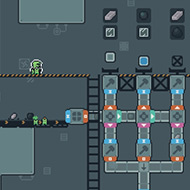
 For Boys
  For Girls
































 2680
2680


