
 For Boys
 For Girls
 For Kids
 Top Games
 My Games
 Top Games
 My Games


Froglegs Game Online
Description
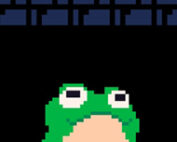
Froglegs gives you two buttons. Not two buttons and a jump, not two buttons and a crouch — just two buttons: one moves you left, one moves you right. The game is a PICO-8 platformer built around a frog navigating an underground complex, and the entire challenge of Froglegs comes from learning what two-button movement can actually accomplish once you understand how a frog’s body, weight, and bounce physics interact with the environment. The tagline “Jump your way out of this one, bucko” is not ironic. That is exactly the problem, and it is harder than it sounds.
| Genre | Precision Platformer |
| Platform | Browser (PICO-8), Windows, macOS, Linux |
| Controls | Z and X on keyboard (or O and X on PICO-8/mobile) |
| Setting | Underground complex |
| Price | $3 |
How the Two-Button System Works in Froglegs
In Froglegs, Z and X are your entire vocabulary. One goes left, one goes right. The frog jumps when it hits a surface, bounces when it lands, and accumulates momentum in the direction of whichever button you last pressed. The game’s description references the second law of thermodynamics — entropy, the idea that energy in a closed system dissipates — which is a specific and unusual thing to teach through a platformer, and Froglegs commits to it. Momentum you build in one direction does not disappear when you switch input. It compounds, bleeds off, redirects. Understanding what your frog will do on any given bounce requires understanding where its energy currently lives.
This makes Froglegs feel disorienting to beginners in a specific way that is different from most precision platformers. Most platformers with punishing difficulty are at least transparent about what caused you to fail — you jumped at the wrong moment, you misjudged a gap, you held the button too long. Froglegs deaths feel arbitrary at first because the frog’s behavior is shaped by three or four inputs back. The bounce that sends you into the wall on the left side came from a right-press you made two landings ago that added leftward bleed into your momentum. Once that cause-and-effect chain becomes legible, the game opens up significantly. Until it does, it will seem random when it is not.
Players in the PICO-8 community who picked up Froglegs consistently describe the moment their intuition aligned with the physics as one of the more satisfying turning points they have had in a game of this type. The precision platformer community uses the phrase “reading the bounce” to describe the skill Froglegs is building — the ability to project forward from a current state and know where the frog will be three landings from now based on what inputs you are giving now.
The Underground Complex and What It Tests in Froglegs
The underground complex in Froglegs is not an open world — it is a structured series of platforming challenges that escalate the demand on your momentum management as you progress. Early sections of the complex are generous about surface placement: walls and floors are close enough together that a mismanaged bounce usually lands you somewhere you can recover from rather than in a gap. By the time Froglegs puts you in the deeper sections of the complex, the platforms narrow and space between them widens until the margin for a poorly timed bounce collapses almost to zero.
The game’s subversive reputation in the PICO-8 community comes from how it handles this escalation. Most precision platformers introduce difficulty gradually and visibly — harder sections are clearly harder before you enter them. Froglegs works differently. Sections that look visually similar to earlier ones turn out to require significantly tighter control because the distance between surfaces changes in ways that are not immediately obvious until you have already committed to a bounce. Players who approach the deeper sections of the complex with the same rhythm they used in the opener get corrected quickly.
One specific moment that players describe as the game’s defining experience: reaching a section of the underground where the correct path requires bouncing between two walls in rapid succession using momentum that has to be pre-loaded several platforms back. There is no way to improvise through it on reflex. You have to understand the physics well enough to set up the correct momentum state before you arrive. That section exists roughly two-thirds of the way through Froglegs, and the comment threads around the game include multiple players noting that reaching it is when they realized what Froglegs was actually teaching them.
What Beginners Get Wrong in Froglegs
The most consistent error in the first few minutes of Froglegs is treating Z and X as left and right walk inputs the way they would be in a standard platformer. Players who are accustomed to games where left means “move left at a fixed speed” press Z expecting the frog to simply move left at a walking pace. The frog’s response is more lateral and bouncy than that expectation predicts, and the first three or four deaths usually happen before the player has updated their mental model from “walking game with two buttons” to “momentum game with two directional inputs and no brakes.”
Second common mistake: stopping inputs entirely and waiting for the frog to land before pressing anything again. Because Froglegs rewards continuous input management — the momentum state is always changing, even in the air — taking your hands off the controls between bounces means you are giving up the ability to shape what the next landing does. Experienced players are pressing inputs throughout the arc, not just at the moment of takeoff.
Players who enjoy speedrunning will find Froglegs rewarding in ways that casual players miss. The two-button constraint that makes the game feel limiting at first becomes a precise instrument at speed, because optimal routing through the underground complex requires building specific momentum chains across multiple platforms in sequence. The speedrun community around PICO-8 games has engaged with Froglegs specifically because the constraint-based movement system makes routing genuinely interesting: finding the fastest path is not just about taking the short route but about finding the sequence of inputs that generates the correct momentum states at every platform along it.
Froglegs in the Context of PICO-8 Precision Platformers
Froglegs sits in a specific niche within the PICO-8 community: constraint-based platformers that derive their difficulty from the gap between what the control scheme appears to offer and what it actually does. Games in this tradition — including several entries in the wider PICO-8 catalogue — use hardware limitations or deliberate design restrictions to create challenge from simplicity rather than from complexity. Froglegs’ two-button system is the most constrained version of this approach that the platform’s audience discusses regularly, and that constraint is the reason the game has a long tail in community lists of recommended PICO-8 platformers.
The honest conversation about Froglegs in player communities includes acknowledgment that the game is not for everyone. Players who need visible difficulty ramps — clear signals that the next section will be harder before they enter it — find the underground complex’s subtler escalation frustrating rather than satisfying. The game does not tell you that the next section requires tighter control. It puts you in the next section. Whether that is good design or omission is genuinely contested, and both sides of the argument tend to agree on the underlying fact: Froglegs does not hold your hand, and it does not warn you when it is about to stop forgiving you.
The second law of thermodynamics reference is accurate, by the way — entropy in the Froglegs physics manifests as the way aggressive directional inputs carry costs in the opposite direction that arrive later than you expect. Managing that cost across the underground complex is the game’s real curriculum, taught entirely through the frog’s body and two buttons.
Frequently Asked Questions About Froglegs
What exactly do the two buttons do in Froglegs?
In Froglegs, Z and X (or O and X on PICO-8 and mobile) control left and right directional momentum for the frog. They do not function as simple walk-left and walk-right commands — they apply directional force to a frog that is always in motion, bouncing off surfaces in the underground complex. Holding one button biases momentum in that direction, but the frog’s actual trajectory at any moment is the result of accumulated momentum from previous inputs. Treating the buttons as direction keys rather than as momentum inputs is the primary reason new players find Froglegs harder than it initially looks.
Is Froglegs possible to complete without knowing the physics system deeply?
The earlier sections of Froglegs’ underground complex are forgiving enough that instinct gets you through them, but the deeper sections of the complex require intentional momentum management that cannot be improvised on reflex. Players who complete the full run without developing some understanding of how momentum accumulates and bleeds off between landings are in the minority. Most players who finish Froglegs describe a specific moment where the physics clicked — usually around the wall-bounce section in the latter portion of the underground — and found the rest of the game significantly more playable after that point.
How does Froglegs compare to other PICO-8 platformers in terms of difficulty?
Froglegs occupies a harder-than-average position in the PICO-8 platformer catalogue because its constraint-based movement system creates a longer learning curve than most entries in the genre. Games like Celeste Classic established the precision platformer standard on the platform; Froglegs uses a more unusual control scheme that adds a second layer of learning on top of normal platformer skill. Players who found Celeste Classic at the easier end of challenging will find Froglegs more demanding. Players new to the PICO-8 precision platformer space should expect Froglegs to take longer than its compact underground-complex format suggests.
Froglegs is a short game that will take most players longer than a short game should — and that gap between expected and actual time is exactly the kind of thing the underground complex was built to create. The two buttons are the whole game. Learning what two buttons can do is the whole challenge. The moment you stop pressing Z and X and start pressing the momentum into the shape you need is the moment Froglegs becomes the game it always was, and the underground complex opens up in a way that makes you want to run it again from the beginning just to see how much of it you can now read before it happens.

 46
46
 For Boys
  For Girls






























 2694
2694


