
 For Boys
 For Girls
 For Kids
 Top Games
 My Games
 Top Games
 My Games


Baldi’s basics but every step one thing deletes Game Online

Description
What happens to Baldi’s basics but every step one thing deletes when the game itself can’t be trusted to keep any single piece intact from one move to the next? That’s the entire premise — you take a step, and something is gone. Not damaged, not hidden. Gone.
The First Deletion in Baldi’s basics but every step one thing deletes
The base loop is familiar to anyone who’s played the original school-corridor formula: collect notebooks, answer questions, avoid getting caught, find the exits. What’s different here is that every single step you take triggers a random removal — an item, a wall, a sound cue, sometimes a whole character, gone the moment your foot lands. Early runs feel almost normal for the first few tiles before the first deletion lands, and that gap between “this feels fine” and “wait, where did that go” is where the demo hooks people.
Beginners consistently make the same mistake: they treat the first few steps like a normal playthrough and keep moving in straight lines toward the nearest door, not realizing that every step spent backtracking is a step spent gambling with something else disappearing.
Baldi, the Ruler Slap, and What Survives the Culling
Baldi himself can be deleted, which sounds like a mercy until you realize his ruler-slap warning sound often goes with him, meaning you lose the audio cue that normally tells you he’s close. Losing Baldi doesn’t mean the run gets easier — it means the run gets quieter, which is arguably worse, since the community’s whole strategy around vanilla play depends on tracking his footsteps and slaps before he’s in visual range.
Ghost mechanics: the term players use for a deleted element that still half-functions — a wall that’s visually gone but still blocks movement, or a sound cue that plays with nothing behind it. It’s become one of the more distinctive pieces of vocabulary specific to this variant, since it doesn’t exist in the base game at all.
Notebooks, BSODA, and the Elements Most Often Lost
Notebooks and BSODA cans are both on the deletion table, and losing either one hits differently. A deleted notebook can outright end a run’s win condition if it vanishes before you’ve collected it, while a deleted BSODA removes your only real defensive tool against Baldi once he’s aggravated. Long-time players of the format have started keeping mental tallies of which categories — items, walls, sounds, or characters — seem to get hit most often, though nobody’s confirmed the deletion pool is weighted rather than flat random.
Principal of the Thing, Gotta Sweep, and Random Removal
Secondary characters like Principal of the Thing and Gotta Sweep aren’t safe either, and their disappearance changes the risk profile of the whole map. Principal of the Thing normally punishes rule-breaking behavior like running in the halls; delete him early and players describe runs that suddenly feel looser, almost too permissive, until they remember nothing else got easier — just one more layer of consequence went missing.
By the time you’ve taken 20 or 30 steps, most runs have lost enough elements that the map barely resembles the one you started in.
How Deletions Stack as You Push Toward the Exits in Baldi’s basics but every step one thing deletes
Difficulty here doesn’t ramp the way it does in the base game, where Baldi simply gets faster over time. Instead, difficulty is a function of accumulated loss — the more steps you’ve taken, the more of the game’s supporting systems have quietly vanished, and the actual danger comes from not knowing which safety net is still there until you reach for it and it isn’t. Once It’s a Bully or Arts and Crafters gets deleted, a hallway that used to have a predictable obstacle suddenly has none, which sounds like a win until you realize you’ve also lost whatever cue used to tell you danger was nearby.
Why Some Runs Become Unbeatable
This is the most common frustration in comment sections: enough bad luck with deletions and a run becomes mathematically unwinnable, usually because a required notebook or exit-related object got wiped before it could be collected. It’s a fair criticism. The random deletion gimmick is fun exactly because it’s unpredictable, but that same randomness means the format doesn’t guarantee every run is fair, and players who’ve sunk real time into a run only to hit a dead end because of bad luck rather than bad play are understandably frustrated by it.
Community Debate Over Fair vs Unfair Deletions
Most of the ongoing discussion around the format centers on exactly this tension — whether deletions should be weighted to protect win-condition items, or whether the chaos is the entire point and protecting anything would defeat the premise. There’s no consensus, and that’s probably fine, since the appeal for a lot of players is watching a familiar game slowly cannibalize itself one step at a time rather than clearing it cleanly every attempt.
Baldi’s basics but every step one thing deletes isn’t trying to be fair, and that’s the whole joke of it — every step forward is a small bet against the game quietly taking something back, and whether that something is Baldi’s ruler slap, a notebook, or Gotta Sweep himself, you won’t know until it’s already gone.

 41
41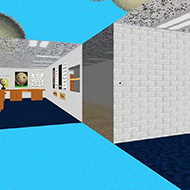
 For Boys
  For Girls





























 2697
2697


