
 For Boys
 For Girls
 For Kids
 Top Games
 My Games
 Top Games
 My Games


Your Happy Place Game Online

Description
The first dark room in Your Happy Place has eyes in it, and if you try to follow them the way your instincts tell you to, you’ll spend several minutes wandering in circles before realizing the game wants something else from you entirely.
| Genre | Liminal Space / Horror |
| Perspective | First-person |
| Average Session | About half an hour |
| Style | VHS-filtered, dreamcore |
Waking Up Inside Your Happy Place
There’s no lengthy tutorial easing you into Your Happy Place — you’re placed directly into an unfamiliar, empty environment and left to figure out where you’re going through observation rather than instruction. That lack of hand-holding is deliberate, and it’s part of why the opening stretch feels disorienting in a way that liminal-space fans specifically look for.
What beginners get wrong early on is rushing. The pacing rewards slowing down and actually looking at each space rather than sprinting toward whatever exit seems obvious, since several of the game’s small puzzles hide their solutions in details you’d otherwise walk right past.
The empty, quiet quality of these opening rooms is exactly what makes later shifts in tone land as hard as they do.
The VHS Filter and Why Your Happy Place Looks the Way It Does
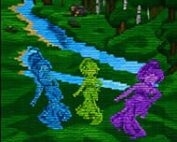
Every scene in Your Happy Place is rendered through a camcorder-style filter, complete with the soft focus and light bleed you’d associate with an old home tape. Players consistently point to this as the game’s defining visual trait — it’s not just a nostalgic aesthetic choice, it actively affects how much you can make out in darker rooms, which ties directly back into the exploration-first pacing.
One frequent point of community discussion is how the darkness interacts with the filter. Some players find the resulting low visibility part of the atmosphere; others find it genuinely frustrating when a room is dark enough that basic navigation becomes guesswork. It’s a fair criticism and one the community brings up often enough that it’s worth going in aware of it.
Exit Signs, Eyes, and Reading the Environment in Your Happy Place
- Exit signs mark safe, intentional progression points between areas
- The eyes in early dark rooms are an environmental detail, not a literal path to follow
- Recurring visual motifs across rooms often hint at what to do next
Learning to trust exit signs rather than second-guessing them is one of the first adjustments new players make, since the game is generally willing to let you look around fully before it expects you to move forward.
Swimming Pools, Dreamscapes, and Backrooms-Style Rooms
The environments in Your Happy Place shift between distinctly different registers — an empty swimming pool one moment, a dreamlike open space the next, and stretches that lean straight into familiar Backrooms-style corridor design after that. Each area is short enough that the game avoids overstaying its welcome in any single mood before moving you into the next one.
By the time you’ve moved through three or four of these distinct spaces, the pattern becomes clear: Your Happy Place is less interested in a single sustained scare than in stacking a series of different eerie moods back to back.
Community reaction has singled out how varied the rooms feel for a project built around one core visual gimmick.
The Chase Sequence Near the End
Once you reach the game’s closing stretch, Your Happy Place shifts hard into a chase sequence, and it’s the one part of the game that consistently gets singled out by players who otherwise describe the experience as slow and contemplative. The immersion built up over the quieter rooms is exactly what makes that final push feel effective rather than like a genre-standard jump scare tacked on at the end.
Comparing Your Happy Place to My Happy Place
Players who spent time with the earlier “My Happy Place” a few years back describe this as a clear evolution of that original idea rather than a simple sequel — a longer, more fleshed-out take on the same liminal concept, built with noticeably more environmental variety and a stronger sense of place than the original had room for.
Is Your Happy Place a long game or a short one?
It’s on the shorter side, with an average playthrough sitting around half an hour, which fits the liminal-space genre’s tendency toward tightly paced, single-sitting experiences rather than sprawling ones.
Does Your Happy Place have combat or a way to fight back?
No — there’s no combat system. The tension comes entirely from exploration, environmental puzzles, and the closing chase sequence rather than any weapon or defense mechanic.
What’s the hardest part for new players?
The dark early rooms trip up the most people, particularly the first room featuring the eyes, since the instinct to chase them directly runs against what the game actually wants you to notice.
Your Happy Place earns its reputation less from any single scare and more from how deliberately it stacks distinct moods — an empty pool, a dreamscape, a Backrooms-style hallway — behind that same VHS haze, before finally cashing in all that quiet tension during the chase near the exit.

 51
51
 For Boys
  For Girls






























 2697
2697


