
 For Boys
 For Girls
 For Kids
 Top Games
 My Games
 Top Games
 My Games


The Cat in the Hat (Analog Horror) Game Online
Description
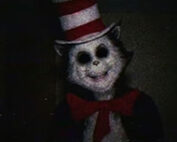
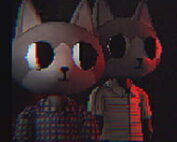
You press play on the first tape and the timestamp in the corner jitters before settling. Emily’s bedroom looks normal for about four seconds. Then a shape behind her, tall and striped, tilts its head at an angle no neck should allow, and you realize this is not a rerun of the story you remember from childhood. The Cat in the Hat has been rebuilt here as a found-footage nightmare, and the first thing it teaches you is that the familiar red-and-white stripes were never the comforting part.
What Night One Establishes in The Cat in the Hat
The setup is deliberately mundane. Emily’s parents leave for a two-night business trip, the kind of premise horror fans recognize instantly as a countdown. Night One plays almost like a home movie: static bursts, a hallway light that flickers on a delay, a voice downstairs that sounds warm until you notice it repeats itself word for word. Players and viewers who treat this stretch as filler tend to miss the audio cue buried under the household ambience, a soft thumping rhythm that returns later at a much worse volume.
What makes the opening effective is restraint. There’s no jump scare in the first several minutes, just wrongness accumulating in small increments. The tracking lines on the tape distort exactly when the Cat is about to enter frame, which becomes the single most useful visual tell once you’ve sat through the full game a couple of times.
Newcomers usually rush through this segment looking for a scare and end up missing context that matters later. The pacing here rewards patience the same way analog horror always has, letting dread build instead of announcing it.
The Cat’s Voice Cues and Why They Matter
Every appearance of the Cat is preceded by a vocal pattern: a sing-song greeting that gets one syllable shorter each time it repeats. Community discussion threads call this the “countdown line,” and tracking it is the closest thing the game has to a survival mechanic. Once the phrase drops to a single word, something in the environment changes, usually a door that was locked a moment earlier.
- The greeting phrase shortens with each loop, signaling proximity
- A delay between the voice and Emily’s reaction indicates a corrupted tape segment
- Background thumping intensifies right before a room transition
Sound design carries most of the tension in this game, more than any visual reveal. Muting the audio, something newer viewers occasionally try to reduce anxiety, strips out nearly every warning signal the experience provides.
The Red Box and Its Role Across Both Nights
A recurring object, a red box glimpsed in the corner of several frames, ties directly back to the source material’s Thing 1 and Thing 2 reveal, except here it’s never opened on camera. That absence is the point. Forum threads speculate endlessly about what the box represents, whether it’s a literal container or a stand-in for whatever the Cat keeps promising to show Emily. No version of The Cat in the Hat gives a direct answer, and that ambiguity is one of the more divisive aspects among longtime followers, since some viewers want closure while others argue the mystery is the entire appeal.
Reading Night Two Without Missing the Warning Signs
By the time Night Two begins, the household feels different even before anything visibly changes. The kitchen light now flickers on the same delay the hallway light had on Night One, a small continuity detail that rewards viewers who paid attention early. This is also where the countdown line first drops below three words, and that shift alone tells you the tone has moved from unsettling to actively dangerous.
Casual viewers tend to treat Night Two as a repeat of the first segment with better effects. It isn’t. The Cat’s behavior becomes more direct, addressing Emily by name in a register that never appears earlier, and the tape degradation itself starts working almost like a character, swallowing entire seconds of footage at moments that feel intentional rather than accidental.
Speedrunning through both nights back to back is a popular way to experience the game in one sitting, and it does change the pacing considerably compared to spacing the two segments out.
Community Theories Splitting Viewers of The Cat in the Hat
Some corners of the fandom read the entire game as a metaphor for a home invasion dressed in nostalgia, while others insist the found-footage framing means everything on screen is staged by Emily herself. Neither camp has anything close to confirmation, and the creators have stayed quiet on purpose. Terms like “static tell” and “countdown line” show up constantly in comment sections, evidence of how much of this game’s identity lives in fan vocabulary rather than official lore drops.
What is the deal with the red box in The Cat in the Hat?
The red box is never opened on screen, and most viewers connect it to the Thing 1 and Thing 2 reveal from the original story without the game ever confirming that link directly. It appears briefly in background shots on both nights, and its presence tends to precede a shift in the Cat’s behavior.
How do you know when the Cat is about to appear?
Watch for the countdown line, the sing-song greeting that loses a syllable with each repetition, paired with tracking distortion on the tape. Once the phrase shortens to a single word, a change in Emily’s surroundings usually follows within seconds.
Is Night Two harder to sit through than Night One?
Yes, by most accounts. The Cat addresses Emily directly for the first time, the countdown line compresses faster, and tape degradation eats larger chunks of footage at pivotal moments, which makes the second segment feel considerably more aggressive than the first.
The Cat in the Hat works because it trusts silence and repetition more than spectacle, letting a single striped figure and a red box neither viewers nor Emily ever get to open carry two nights of mounting dread. Anyone approaching it expecting a quick jump scare should slow down instead, since the tapes reward exactly the kind of attention the story pretends its household setting doesn’t deserve.

 50
50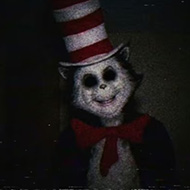
 For Boys
  For Girls























 2688
2688


