

 For Boys
 For Girls
 For Kids
 Top Games
 My Games
 Top Games
 My Games


Money Under The Bed Game Online

Description
Money Under the Bed looks like a cozy premise about unexpected good luck, but it plays like a slow-motion trap you agreed to walk into. You complain about money troubles to a roadside statue, wake up to a jar of coins under your bed, and from that point every dollar you spend chips away at how normal your apartment stays. The game never announces this trade-off outright — you learn it the way the character does, by making a small decision and watching the consequences arrive a few scenes later.
| Genre | Choice-driven psychological horror RPG |
| Perspective | Top-down, narrative-focused |
| Endings | Five, based on choices |
| Status | Demo available, full release pending |
The Jar, the Statue, and the First Real Decision
The setup is deliberately small. There’s no tutorial dungeon or combat system explaining itself — just a jar of coins and a decision about what to do with it. Beginners often spend the money immediately out of curiosity, not realizing that spending is the mechanic driving the entire transformation of the apartment, not a neutral action. The statue itself only appears once, in the opening complaint scene, but its presence is referenced constantly afterward, as though the coins are a favor that’s still being collected on.
Each purchase nudges the environment further from normal. Hallways get a little darker, familiar neighbors stop appearing, and structures shaped like giant hands clutching playing cards start showing up in places that used to just be empty corners. It’s a gradual shift rather than a single reveal, which is part of why the dread builds instead of spiking. Players who track their own spending closely tend to notice the pattern faster than players who click through purchase prompts without reading them, since the game rarely calls attention to a change the moment it happens.
What makes the early decision harder than it should be is that Money Under the Bed gives you no indication of a “safe” amount to spend. Cautious players ration the coins like a limited resource, spending only when a specific need arises in the story, while impulsive players tend to burn through the jar within the first couple of scenes just to see what happens next. Both approaches are valid, but they lead to noticeably different early apartments — one still mostly familiar, one already showing the first giant hand structures.
A small detail that only shows up if you linger on the opening scene rather than rushing past it: the statue’s expression appears to shift slightly between visits, a change the game never explains directly but which regulars bring up constantly when discussing the opening hour.
Consulting Friends Without Fully Trusting Them
Money Under the Bed gives you a small circle of friends to lean on, and asking them for advice is framed as a lifeline rather than a guaranteed good call. Each friend has their own read on what you should do with the coins, and their suggestions actively shift the story rather than just flavoring dialogue. One friend tends to push toward spending freely and enjoying the windfall, another leans cautious and suspicious of where the coins came from, and a third mostly deflects, which players often interpret as its own kind of warning sign.
Players who treat every friend’s advice as trustworthy tend to spend faster and see the apartment shift sooner, while more cautious players hoard the coins and explore how much of the story unfolds without spending at all. Both paths lead somewhere different, and that branching is the game’s clearest strength. Completionist players in particular gravitate toward replaying the opening hours specifically to hear every friend’s take on the jar before locking in a spending pattern for a full run.
Talking to a friend isn’t free of cost either, even though no coins change hands during the conversation — visiting one friend often means skipping the window to visit another before the next story beat locks in, so the choice of whose advice to prioritize functions as its own resource management decision. This is a detail the game never states outright, and it’s one of the more common points confused first-time players raise, since it isn’t obvious until a missed conversation quietly closes off a dialogue branch.
One detail worth flagging honestly: because the demo only covers an early slice of the full arc, some of the friend interactions currently read as setup rather than payoff, and the community discussion around this is mixed — some see it as promising groundwork, others want to see more consequence before committing further playtime. It’s the kind of criticism that comes up in almost every thread discussing the demo, usually alongside praise for how unsettling the apartment shifts already feel this early.
What Changes as the Apartment Becomes Unstable
By the time you’ve spent the coins a few times, the apartment stops functioning as a normal space. Rooms rearrange, unfamiliar residents replace the neighbors you’d started to recognize, and finding your way back to something resembling home becomes its own puzzle. This is where the game asks its real question: not whether the money is cursed, but what it reveals about how you handle sudden, unexplained power. Once the giant hand structures start appearing in hallways that used to be empty, the apartment stops reading as a place you live and starts reading as a place actively working against you.
The five endings branch from how freely you spent, which friends you leaned on, and whether you ever tried to track down who actually left the coins. None of the paths are flagged as “correct,” which keeps the moral framing open rather than judgmental — a choice that answers one of the more common questions players ask before starting. Players comparing notes online use shorthand like “hoarding run” or “spend-everything run” to describe which of the five endings they were chasing on a given playthrough, and the terminology has already caught on faster than most other details from the demo.
What happens if you never spend the coins at all is one of the most searched questions about the game, and the answer is that restraint doesn’t stop the story — it reshapes it, leading toward an ending built around suspicion and unresolved curiosity rather than consequence from spending. That path trades the visual horror of a warping apartment for a slower, more paranoid tone, since the neighbors and structures stay mostly familiar while the tension shifts entirely onto not knowing who left the jar in the first place.
Exploration-focused players tend to favor this restrained route specifically because it keeps the apartment layout stable enough to fully map, while horror-focused players usually spend early and often just to see how far the environmental decay goes before the story forces a choice. The gap between those two experiences is wide enough that comparing notes with someone who played differently can feel like discussing two different games built from the same opening scene.
Money Under the Bed doesn’t need monsters to make its point — the giant hands clutching playing cards and the slow disappearance of familiar neighbors do that work quietly, and every choice about the coins keeps circling back to the same uneasy question about what you’d do with money nobody can explain.

 30
30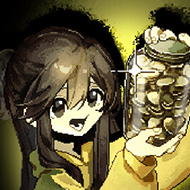
 Puzzle



























 2673
2673


