

 For Boys
 For Girls
 For Kids
 Top Games
 My Games
 Top Games
 My Games


Culdcept BEGINS Game Online

Description
You roll the dice, watch your piece land on an open plot, and suddenly have to decide whether summoning a creature here is worth the card in your hand or better saved for a stronger tile further around the board. That single decision, repeated dozens of times a match, is the entire pulse of Culdcept BEGINS — a board game and card game welded together so tightly that neither half works without the other.
| Genre | Board and card game hybrid, strategy |
| Setting | The continent of Bavrashka |
| Card Count | Over 400 cards |
| Match Length | Roughly 30 minutes |
Rolling, Claiming, and the Royal Cept Academy in Culdcept BEGINS
The story opens at the Royal Cept Academy, where Kamru trains alongside his friend Ishara and his rival Tarhunt to master the stone tablets known as Culds. Culdcept BEGINS uses this school setting to teach its systems gently, walking new players through movement, territory claims, and basic card play before the plot widens into a larger conflict involving the Abyss.
Beginners consistently underestimate how much a board’s layout shapes strategy. Claiming a plot isn’t just about grabbing territory — it locks in a creature that can battle any rival who lands there later, so a weak early claim can quietly become a liability once stronger cards start circulating. Players who rush to claim every open tile without matching creature strength to position often find themselves losing toll income to a rival’s better-defended plots by the midgame.
A moment almost every returning player mentions: the tension of landing on a heavily defended plot with only a middling creature in hand, forced to decide between an unfavorable battle and skipping the claim entirely. That single dice roll, and the decision it forces, is where Culdcept BEGINS earns its reputation as a strategy game people describe as impossible to put down after just one more match.
Elements, Creatures, and Deckbuilding Around Kamru’s Journey
Cards in Culdcept BEGINS are split across five elements, and building a deck around one or two of them rather than spreading evenly tends to produce more consistent results, since matching elemental strengths against a board’s terrain has a real mechanical payoff. New players often build unfocused decks early on, grabbing whatever looks powerful in isolation, and only later realize that elemental cohesion matters more than raw individual card strength.
Item cards exist specifically to support creatures already on the board, and knowing when to hold one back rather than use it immediately is a skill that separates players comfortable with the game from players still learning it. Deckbuilders who enjoy min-maxing gravitate toward narrow, elementally focused builds, while more casual players often keep a broader mix of Water, Fire, Air, and Earth cards just to stay flexible against whatever board they draw.
Once Tarhunt starts appearing as a recurring rival rather than a background classmate, matches begin demanding sharper deck choices, since his encounters are built to punish the same unfocused strategies that worked fine during the Academy’s early lessons.
Story Stakes Beyond the Board in Culdcept BEGINS
King Dagar’s unification of the elemental kingdoms sets the political backdrop, but the story stays personal through Kamru’s search for his father and his growing rivalry with Tarhunt. Culdcept BEGINS keeps its narrative threaded through actual matches rather than isolating it in cutscenes, so story beats tend to land right as the mechanical difficulty ramps up alongside them.
The community term “cepting” gets thrown around constantly in discussions of the game, shorthand for the back-and-forth plot-claiming exchanges that define a competitive match. It’s used almost as often as any official terminology, and it’s a decent signal of how quickly this revival has built its own vocabulary.
One honest criticism that comes up often: matches can run long, and the grind-heavy progression toward unlocking the full 400-plus card pool doesn’t suit everyone, especially players expecting a faster session than the roughly half-hour a single match typically takes.
What happens when you land on a plot claimed by Tarhunt or another rival?
You’re forced into a toll battle where your creature faces off against theirs, and losing costs you money rather than the plot itself, though a strong enough win can let you take over the territory entirely.
How many elements do Culd cards use in Culdcept BEGINS?
Cards draw from five elements, and pairing your deck’s elemental focus with the terrain you expect to encounter on a given board matters more than simply picking the strongest individual cards available.
Is Culdcept BEGINS a good entry point if you’ve never played the earlier Culdcept games?
Yes — the Royal Cept Academy setting is built specifically to teach movement, claiming, and card battles gradually, easing newcomers in without assuming any prior knowledge of the series’ older mechanics.
Culdcept BEGINS earns its dice rolls and card battles honestly, tying Kamru’s search for his father to every plot claimed around Bavrashka, and it’s that fusion of story stakes and board tension that makes one more match against Tarhunt so hard to turn down.

 27
27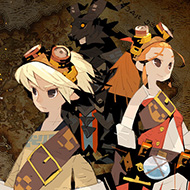
 For Boys
  For Girls






























 2675
2675


