
 For Boys
 For Girls
 For Kids
 Top Games
 My Games
 Top Games
 My Games


Songs of Conquest Game Online

Description
In Songs of Conquest you start as a Wielder with a small starting army and a mostly unexplored map, and that opening imbalance between what you control and what’s out there is exactly the tension the entire game is built around.
| Genre | Turn-Based Strategy / Tactical RPG |
| World | Aerbor |
| Playable Factions | Arleon, Rana, Barony of Loth, Barya |
| Modes | Single-player, co-op, online and local multiplayer |
Wielders and the Essence That Powers Songs of Conquest
Wielders are the commander units you build a run around — magicians who explore the map, expand territory, and lead armies into battle. Combat magic in Songs of Conquest runs on Essence, gathered at the start of a fight based on your Wielder’s skills and then generated turn by turn depending on which essence type your individual units produce. Spells only exist inside combat, which means army composition becomes a puzzle about which units generate the essence your Wielder actually needs, not just which units hit hardest, and a beginner who ignores essence generation entirely will find their Wielder’s most powerful spells permanently locked behind troops they never bothered to recruit.
Leveling a Wielder means choosing between deepening a skill they already know, learning something new, or unlocking additional army slots, and the skills on offer are tied directly to that Wielder’s class. This branching matters more than it looks — a Wielder built around Destruction essence plays completely differently from one leaning into Creation or Order, and players who specialize early tend to snowball harder than those who spread their skill choices thin trying to stay flexible.
Story-focused players tend to gravitate toward whichever Wielder’s campaign narrative resonates most, while competitive players in skirmish and multiplayer lobbies build around whichever essence combination punishes the current popular faction. That split between narrative and optimization is one reason the same four starting factions can feel like entirely different games depending on who you ask, and it’s part of why the community vocabulary around “essence builds” gets thrown around constantly in strategy discussions.
Arleon, Rana, Loth, and Barya Play Nothing Alike
Arleon leans on knights allied with the Faey, generally considered the most balanced entry point for players new to the genre, offering straightforward Order and Chaos essence output without requiring the player to juggle unusual unit interactions right away. Barony of Loth pulls its strength from necromancy, raising the dead to rebuild a fallen empire, and its Destruction-heavy essence generation makes it one of the more aggressive spellcasting factions once a player understands how to keep their Necromancer units alive long enough to matter. Rana unites swamp-dwelling tribes — Ravagers, the wise Chelun, and the more secretive Eth’dra — under a single banner, and its blend of Destruction, Creation, and Arcana essence puts it in serious contention with Loth for the title of strongest spellcasting faction in the base game.
Barya rounds things out as a mercenary and merchant faction allied with the Harima, leaning on gunpowder units and an unusually strong Order essence economy that gives them explosive early turns. Their Dreaths in particular are known for swiftly neutralizing weaker enemies before a fight has really begun, and paired with well-placed Pikemen and mines securing key resource nodes, an early Barya push can end a skirmish before the opponent has even finished scouting the map.
That early strength comes with a real cost the community debates often: Barya’s units tend to run below-average defense, so an aggressive Barya opener that isn’t backed up by careful positioning can fall apart just as fast as it started once an opponent survives the initial rush. It’s one of the more honest trade-offs in the faction design rather than a case of one faction simply being better, and tier-list discussions among the game’s community consistently note that Barya’s ranking shifts heavily depending on whether you’re facing AI or a human opponent who knows how to weather the opening burst.
Managing Gold, Wood, and Stone Without Losing the Map
Kingdom management runs on the familiar trio of gold, wood, and stone, spent on buildings, unit recruitment, and Wielder upgrades. Early in the game, resource decisions feel forgiving since there’s rarely more than one settlement to manage, but by the time you reach a contested border region with a rival faction encroaching, every building choice starts competing directly with army upkeep, and a town built purely for economy can suddenly find itself defenseless when a rival Wielder’s scouts arrive earlier than expected.
New players commonly overbuild economy structures before securing map control, only to find a rival Wielder has already claimed the resource nodes and mines that would have made those buildings worthwhile. Once a second or third town enters the picture, planning which settlements specialize in troops versus economy becomes the actual strategic layer, well above anything happening on the battle grid itself, and players who treat every town identically instead of assigning each one a clear purpose tend to fall behind by the mid-game regardless of how well they fight individual battles.
Players who enjoy the exploration side of the genre tend to prioritize scouting neutral resource sites and artifact locations over early combat, while players focused purely on conquest push toward a rival’s capital as fast as their essence economy allows, and both approaches are viable depending on the map’s win conditions. This is part of why Conquest maps, built for head-to-head play, and Challenge maps, built as fixed strategic puzzles, attract fairly different segments of the player base.
Hex-Grid Battles Where Tags Actually Matter
Combat plays out on a hex grid, and troop abilities interact with unit tags in ways that reward planning ahead rather than just fielding your strongest units. A unit’s creature type — Human, Faey, Undead, Beast, Harima, or Rana creature, among others — determines which research bonuses apply to it, so an army built without checking tags can end up missing buffs a player assumed were universal, a mistake experienced enough that it comes up regularly in the game’s official discussion boards.
Riders of the Swamp and the Chelun Elders are a good example of how deep this goes: both carry dual tags that let them benefit from more than one research category, and community discussion threads exist purely to sort out which units quietly qualify for overlapping bonuses like this. Once you’ve researched the relevant Beast and Rana upgrades, a stack of Riders of the Swamp can end up meaningfully stronger than a player who only checked one of its two tags would expect.
This tag system rewards the kind of player who enjoys optimizing army composition down to the individual unit rather than treating troops as interchangeable damage sources, and it’s a large part of why Songs of Conquest gets recommended so consistently to fans of classic tactical strategy titles built around similarly granular unit interactions.
Choral Campaigns and the In-Game Map Editor
Each faction’s campaign is built around a unique song that unfolds as you complete missions, with the full track only playable once the campaign is finished — a framing device that ties the game’s title directly to its structure rather than being a throwaway name. Completing a chapter unlocks the next verse rather than the whole song at once, which turns finishing a campaign into something closer to unlocking an actual piece of music than simply watching a credits roll.
Once you’re done with the campaigns, the in-game map editor uses the same tools the developers relied on to build them, letting players script events, control the soundtrack, and write their own dialogue for entirely custom scenarios. This isn’t a stripped-down fan-facing version of the toolset either — it’s genuinely the same editor, which is part of why a modding community has grown up around sharing custom maps built with it.
Conquest maps support head-to-head battles against other players, while Challenge maps function more like strategic puzzles with a fixed solution to find, and the split between the two covers a surprisingly different set of player intentions under one game. Players who enjoyed the campaign’s storytelling side tend to gravitate toward custom scenario maps built in the editor, while purely competitive players skip straight to Conquest maps designed for balanced multiplayer skirmishes.
How many playable factions does Songs of Conquest launch with?
The base game ships with four — Arleon, Rana, Barony of Loth, and Barya — each with its own campaign built around a distinct choral theme, with additional factions like Vanir and Roots added afterward as expansions rather than being part of the original release.
Is Songs of Conquest playable solo, or does it require multiplayer?
The majority of maps, including every campaign, are built to be completed entirely single-player, though the same maps generally also support co-op or online multiplayer if you’d rather tackle a Conquest map or Challenge puzzle with someone else instead.
Do unit tags actually affect gameplay, or are they just flavor?
They’re functional — research bonuses in Songs of Conquest are tied to creature-type tags like Beast, Undead, or Harima, so two units on the same faction can benefit from completely different research trees depending on what tags they individually carry, which is why experienced players check a unit’s tags before assuming it qualifies for a bonus.
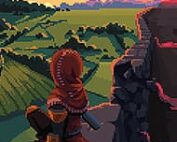
Songs of Conquest asks you to treat Essence, tags, and terrain as seriously as raw troop numbers, and by the time a Wielder built around the Chelun Elders is holding a contested border against a Barya rush, it’s clear the game’s strategic depth was never just decoration around a pretty pixel-art world.

 30
30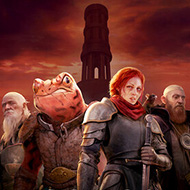
 For Boys






























 2680
2680


