

 For Boys
 For Girls
 For Kids
 Top Games
 My Games
 Top Games
 My Games


Shift At Midnight Game Online
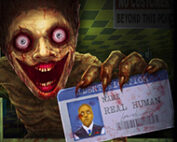
Description
You clock in, flip the sign to open, and within minutes a car pulls up outside the gas station. The customer walks in normal enough, but the computer flags a scar on their ear that doesn’t match their ID photo, and now you have about thirty seconds to decide whether to let them leave or lock the doors. That decision, repeated with variations all night, is the entire game.
| Genre | Co-op Horror / Simulation |
| Players | Up to 3 (online co-op) |
| Setting | 1990s gas station |
| Core Loop | Serve customers, detect doppelgangers, survive the night |
Working the Register in Shift At Midnight
Before anything supernatural enters the picture, Shift At Midnight is a store management game. You’re stocking shelves, ringing up gas and snacks, and keeping the place presentable, and none of that busywork is optional filler — a messy store and slow service both affect how the shift plays out. The retro 90s dressing isn’t just aesthetic either; it shapes what tools you have available, since there’s no modern scanner tech to lean on.
New players often underestimate how much of the tension comes from ordinary customers. Most people who walk in are exactly what they claim to be, and treating every single one like a threat wastes time you don’t have.
The store itself becomes familiar fast — where the shelves are, where the panic button sits, which aisle blocks the door camera. That spatial knowledge matters once things go wrong.
Cross-Checking IDs and Spotting a Doppelganger
The core detection loop runs through the store’s computer terminal. You pull up a customer’s ID, cross-reference the details against what the system has on file, and look for mismatches — a scar that shouldn’t be there, an age that doesn’t line up, details that don’t add up under a second look. Doppelgangers aren’t obviously monstrous on sight; the whole point is that they’re built to pass a casual glance.
Speedrunners and completionist players tend to treat every ID check as a puzzle to solve as fast as possible, while more cautious players slow down and double-check everything, and both approaches are viable depending on how confident you are reading the tells.
Once you’ve spotted enough doppelgangers, you start noticing the game’s tells even before pulling up the terminal — a flat affect, a slightly wrong answer to small talk, the kind of thing you’d only catch after a few shifts.
The Five-Question Interrogation Routine
- Ask about their day or reason for stopping in
- Question anything that doesn’t match their ID
- Ask about visible injuries, scars, or bandages
- Probe for inconsistencies in their answers
- Make the final call before they reach the door
You’re limited to five questions per customer, which forces prioritization — you can’t ask about everything, so figuring out which question actually matters for a given customer is a skill that develops over repeated shifts.
Traps, Boarding Up, and the Blood Moon
Make one wrong call and the consequences aren’t immediate — they escalate. A doppelganger that slips past you returns later, and once the blood moon effectively begins, you’re boarding up windows, laying traps, and hiding rather than serving customers. This is where Shift At Midnight shifts hardest from management sim into survival horror, and the tonal whiplash is intentional.
Combat during these sequences is deliberately messy rather than polished — traps can misfire, monsters behave semi-chaotically, and players openly debate whether that roughness adds tension or just frustration. It’s one of the more divisive aspects of the design.
By the time you reach the later shifts in Story Mode, the creatures that return bring friends, each with different weaknesses, which changes how you approach boarding up the store.
Proximity Chat and Co-op Roles in Shift At Midnight
With up to three players, proximity chat becomes the actual engine of the horror. Splitting tasks — one person on the register, one running the terminal, one watching the door — only works if you can actually communicate, and losing that communication because someone’s out of range at the wrong moment is a common way shifts fall apart.
Solo play is possible but noticeably different; juggling every role alone raises the stakes on every decision since there’s no one to double-check your read on a customer.
Story Mode’s Thirteen Shifts
Story Mode runs across thirteen randomly generated shifts, meaning no two playthroughs line up exactly the same way even if the broad structure repeats. Early shifts ease you into the ID system with fewer doppelgangers in the mix; later ones stack the odds against you and demand faster, more confident calls.
Community discussion around the endgame tends to focus on how steep that difficulty curve feels once the later shifts stop giving you room to second-guess yourself.
Endless Mode and Replay Value
Endless Mode strips away the fixed thirteen-shift structure entirely, throwing unlimited nights at you with no scripted ending. It’s aimed squarely at players who finished Story Mode and want the detection-and-survival loop without a stopping point, and a planned update is set to expand it with exclusive customers, weapons, and traps.
What Beginners Get Wrong Early On
The single most common beginner mistake is over-relying on gut instinct instead of the terminal. The visual tells are real, but they’re supporting evidence, not proof, and players who skip the cross-check step tend to let doppelgangers through simply because a customer “seemed fine.”
- How many players can join a single shift in Shift At Midnight? Up to three players can play together online, with proximity chat as the main communication tool during a shift.
- What happens if I let a doppelganger leave the store? They come back later during the night, and the game escalates into a survival sequence where you have to board up, set traps, and hide rather than continue normal service.
- Is Story Mode different every time I play? Yes — while the overall thirteen-shift structure stays the same, the shifts themselves are randomly generated, so the specific customers and doppelganger encounters change between playthroughs.
Shift At Midnight earns its reputation less from any single scare and more from the accumulation of small, deniable details — a bandage that doesn’t match a scar, an ID that’s just slightly off — building across a full night’s worth of shifts. Once the blood moon forces you into boarding up windows and setting traps, the store you spent the whole shift stocking and cleaning becomes the thing standing between your team and whatever’s outside.

 61
61
 3 Player
  Survival











 2675
2675


