
 For Boys
 For Girls
 For Kids
 Top Games
 My Games
 Top Games
 My Games


sys:tan restore Game Online

Description
What happens when the shape you just cleared drops a fragment that immediately gets scooped up by a skill you didn’t know one of your caretakers had? That’s the moment sys:tan restore usually clicks for new players — not the tutorial, but the first accidental synergy they trip over mid-run.
At its core, sys:tan restore is an incremental shape-blaster: you’re assembling a small party of computer caretakers, each with their own skill tree, and sending them after clusters of shapes that represent problems infesting a broken system. The framing is a fake anti-virus program with an anime aesthetic, but the mechanical skeleton underneath is closer to an auto-battler crossed with an RPG class system than a straightforward clicker, and that combination is exactly why the game gets recommended in incremental circles despite its small footprint.
Beginners typically make the same mistake early: they equip duplicate skills across their caretakers instead of merging them. The game is built so that merging two copies of a skill to level it up produces a much bigger power jump than just stacking two separate instances side by side. Someone who spends their first hour hoarding duplicates instead of merging them will hit a wall well before someone who’s been consolidating from the start, and that wall shows up right around the point where shape density starts scaling.
Difficulty in sys:tan restore doesn’t ramp in a straight line. Early rooms are forgiving almost to a fault — you can clear them without thinking much about positioning. Once entity status effects start appearing on the shapes themselves, though, damage, poison, and healing all start interacting in ways that punish a party built purely around one caretaker’s skill tree. This is the point where players who ignored status effects entirely tend to get stuck, sometimes for a while.
Party Composition and Skill Trees in sys:tan restore
Each caretaker in sys:tan restore is built as a merge of a classic RPG archetype with a themed cleaning role, and their skill trees branch out from that combination rather than from a generic shared pool. Tag bonuses — a term the community uses constantly in comments and devlogs — reward you for building around shared tags across your party instead of picking whichever skill looks strongest in isolation.
New players often build a party of favorites without checking whether those caretakers’ tags actually overlap, and end up with a roster that looks powerful on paper but underperforms in practice. The game doesn’t punish this loudly; it just quietly caps how far you can push before a status-effect-heavy encounter exposes the gap.
Support-minded players tend to gravitate toward the healing and defense branches once they show up, while players chasing faster clears lean hard into raw damage tags even at the cost of survivability. A third group treats the whole roster as a puzzle to optimize rather than a set of favorites, and that group is usually the one posting build breakdowns in the comments.
Shape Density and the Deep Clean in sys:tan restore
The “deep clean” framing isn’t just cosmetic — it maps onto how shape density escalates the longer a run goes. Clusters get denser, status effects stack faster, and by the time you’re several waves in, a party without a defense or healing option starts losing ground even if its raw damage output looks fine on paper.
Percentage-based stats like critical chance and life-leech duration hit their upper bounds relatively early compared to flat damage, which keeps runs from turning into pure number-stacking exercises. Once a caretaker’s crit chance approaches its ceiling, further investment there stops paying off, and the smarter move is redirecting resources into whatever’s still scaling.
This ceiling design is one of the more debated aspects in community threads — some players like that it forces variety, others feel it makes late-run decisions less exciting once the obvious percentage caps are hit.
Common Early Bugs and Fixes for sys:tan restore
Because the game is still actively updated, a handful of players have reported startup issues — a version briefly shipped without visible text due to a font rendering problem, which was patched quickly after being flagged. Another recurring issue affects Linux users running the game through compatibility layers, where mouse input can fail to register until switching to a different Wine build or forcing DirectX 11.
None of this is unusual for a strategy title still labeled as in development, and it hasn’t stopped sys:tan restore from holding a strong rating from its player base so far. Most reports get acknowledged and resolved within days rather than lingering.
If you hit a dark screen after changing resolution settings, that’s a known quirk tied to the rendering pipeline rather than a sign your save is broken — restarting the game usually clears it.
- Why does merging skills matter more than collecting duplicates in sys:tan restore? Merging two copies of the same skill produces a much bigger stat jump than keeping them separate, so consolidating your caretakers’ skill trees early prevents you from hitting a damage wall once status effects start stacking.
- What causes text to disappear on startup in sys:tan restore? An early build shipped with a font rendering bug that left the interface blank for some players; this was identified through community bug reports and patched shortly after in a follow-up update.
- Why does sys:tan restore run poorly on Linux through Wine? Mouse input can fail under a stable Wine build; switching to Proton or a development Wine branch, or forcing DirectX 11, resolves the issue for most reported cases.
sys:tan restore keeps its incremental loop honest by tying almost every meaningful decision back to how your caretakers’ tags and skill trees interact rather than to raw stat inflation, and that’s what keeps the deep-clean framing from feeling like a coat of paint over a generic clicker.

 31
31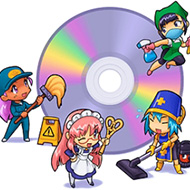
 For Boys
  For Girls






























 2677
2677


