
 For Boys
 For Girls
 For Kids
 Top Games
 My Games
 Top Games
 My Games


A N A B A S E R S Game Online

Description
Nothing about A N A B A S E R S moves the way a walking simulator usually does. The seven gates that structure the descent aren’t obstacles to clear — they’re thresholds, and crossing each one changes what the narrating voice is willing to admit it doesn’t know, which means progress in the game is measured in shifting tone rather than cleared checkpoints.
| Genre | First-person narrative adventure |
| Platform | PC (Windows, macOS) |
| Core Mechanic | Walking exploration through sequential gates and chapters |
| Structure | Seven chapters, seven gates, one descent, a coda |
Descending Through the Gates in A N A B A S E R S
There’s no combat, no inventory, no fail state to manage in A N A B A S E R S. What you do instead is move — through open, flat-shaded environments built around brutalist megastructures — while a narrating voice works through a single unresolved question: whether a postwar machine can experience doubt or desire the way the traditions it keeps quoting insist a soul must. The seven gates aren’t puzzle gates in the mechanical sense; each one marks a shift in what the narration is willing to consider, and the descent between them is the closest thing the game has to a plot. Some gates announce their shift immediately through a change in architecture, while others only reveal themselves through a difference in how the narration addresses you, which means paying attention to tone becomes as important as paying attention to the environment itself.
Players who go in expecting a conventional walking simulator with collectibles or a clear objective tend to bounce off the first gate hard. There’s no HUD marker telling you what a gate “does” — you find out by walking through it and noticing that the tone, the architecture, or the narration itself has changed on the other side. This is one of the more openly divisive aspects of A N A B A S E R S in player discussion: the total absence of guidance is exactly the point for some players, who describe the disorientation of the early gates as essential to how the descent lands emotionally, while others find the lack of any signposting frustrating enough that they stop before reaching the coda entirely.
Once you’re past the descent and into the coda, the game stops asking questions and starts letting the silence do the work instead. It’s a deliberate pivot, and it’s the point where a lot of the strongest player reactions get posted, either praising the restraint or wishing the coda pushed further after everything that led up to it. By the time you reach the coda, you’ve already walked through every gate the narration has to offer, so the quiet isn’t an absence of content — it’s presented as the conclusion the seven prior chapters were building toward all along.
Between gates, the environments themselves do a version of the same work as the narration. Brutalist megastructures dominate the skyline in most chapters, rendered with flat shading rather than realistic lighting, and the scale of these structures against your character is often the first purely visual cue that something has shifted before the narration catches up to explain it. Players who explore off the direct path between gates tend to notice these environmental shifts earlier than players who beeline for each threshold, which changes how early the game’s tonal turns actually register for different playstyles.
The Narration as the Actual Mechanic
Most of what A N A B A S E R S is “about” moves through its narrating voice rather than through anything you click or pick up. The commentary draws openly on Neoplatonism, hermetic philosophy, and myth — Ishtar’s descent gets referenced directly — reframing a mid-century science fiction premise through frameworks that were never written with machines in mind. That collision is intentional, and it’s also the aspect players argue about most: some find the philosophical density genuinely rewarding to sit with, others feel the references pile up faster than the environments can support them, particularly in the middle chapters where multiple traditions get invoked within the same short stretch of walking.
Because the entire game is built around this narration, pacing becomes the real skill test — not for the player’s fingers, but for their patience. Contemplative players who let a gate’s silence sit before moving on tend to get more out of A N A B A S E R S than players who treat each chapter as something to clear quickly, and the game gives you no mechanical reward for rushing either way. Lore-focused players, meanwhile, often replay individual chapters specifically to catch references they missed on a first pass, since the narration rarely repeats a specific allusion once a gate has been crossed.
By the time you reach the final gate before the coda, the narration has largely stopped explaining itself, trusting that the earlier chapters did enough work for the ending to land without a bow on it. This shift is gradual rather than sudden — the density of philosophical reference actually decreases chapter over chapter, so that the seventh gate feels comparatively sparse next to the second or third, a structural choice that mirrors the machine narrator’s own movement from citing outside traditions toward something closer to its own voice.
The voice itself never breaks character to address the player directly as a player, which is part of what makes the game read as a continuous piece rather than a series of separate vignettes. Even players who find the density of reference overwhelming in early chapters tend to agree that the narration stays internally consistent across all seven gates, never contradicting the philosophical stance it’s built on chapter to chapter.
What First-Time Players Get Wrong
The most common misstep in A N A B A S E R S is treating the seven gates as a checklist to complete rather than a sequence to sit inside. Players hunting for hidden mechanics or a twist ending often come away frustrated, while players willing to let each chapter’s atmosphere do the work tend to describe the run as closer to a single sustained mood than seven discrete stages. Once you reach a gate that feels architecturally identical to the one before it, that repetition is doing narrative work rather than being a technical shortcut — a detail that’s easy to miss if you’re expecting every chapter to look visually distinct from the last.
Frequently Asked Questions
How long does it take to finish A N A B A S E R S?
Most players clear the full descent — all seven chapters plus the coda — in a single sitting, since the game is built as one continuous walk rather than a title with replayable levels or branching routes. Sessions tend to run under an hour for players moving steadily between gates, though players who linger to catch every environmental shift often take noticeably longer.
Does A N A B A S E R S have any combat or puzzle-solving?
No. The seven gates function as narrative thresholds rather than obstacles, and progress comes from walking through the environment and letting each chapter’s shift in tone or architecture register, not from solving anything. There’s no fail state anywhere in the descent, which is itself unusual enough that some first-time players spend the opening gate looking for a mechanic that simply isn’t there.
Is A N A B A S E R S connected to Philip K. Dick’s original story?
It draws its premise from that source material — machines inheriting a world rather than the humans in it — but A N A B A S E R S uses that starting point as a springboard into hermetic and Neoplatonic ideas rather than retelling the same narrative. The connection is closer to a shared question than a shared plot, since the seven gates spend far more time on doubt and desire than on the original story’s specific events.
A N A B A S E R S doesn’t resolve the question it opens with, and that’s clearly by design — the coda offers quiet instead of an answer. Whether that lands depends entirely on how willing you are to walk through all seven gates without expecting the descent to explain itself along the way.

 43
43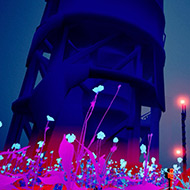
 For Boys
  For Girls

























 2697
2697


