
 For Boys
 For Girls
 For Kids
 Top Games
 My Games
 Top Games
 My Games


Dispatches 1940 Game Online

Description
You open the OKW dispatch on turn six and half a sentence has already vanished under a grey bar, the words eaten away because your Manpower reserve slipped below the line that keeps a report legible. That is the moment most players remember first from Dispatches 1940, and it tells you everything about how the game wants to be played: not as a map with arrows, but as a stack of paper that visibly rots as your position worsens.
| Genre | Turn-based strategic command simulation |
| Setting | European theater, World War II |
| Commands | OKW (German), STAVKA (Soviet), SHAEF (Western Allied) |
| Total endings | 88 distinct named outcomes |
The Three Commands of Dispatches 1940
Every playthrough of Dispatches 1940 begins with a choice of high command rather than a choice of army list. German High Command puts you behind OKW’s desk, Soviet High Command drops you into STAVKA’s chair, and Western Allied Command hands you SHAEF’s paperwork. Each command opens on a specific historical date with a specific person’s actual decision in front of you, not a generic scenario briefing.
Players coming from broader grand-strategy games sometimes expect to jump between fronts freely. Dispatches 1940 refuses that. You are locked to one command’s perspective, and the reports you receive only ever reflect what that command would plausibly have known on that day, which is part of what gives the game its documentary weight.
Where the historical record is settled, Dispatches 1940 simply presents the settled record as narration. Where serious historians still argue about what would have happened, the game hands the outcome to a dice roll instead of pretending certainty it doesn’t have.
Reading the Logistical Triangle
Manpower, Fuel, and Time form what regulars in the itch.io comments call the Logistical Triangle, and none of the three behave like an ordinary resource bar. They’re tracked against the historical baseline for your command, so falling behind isn’t just a soft penalty, it’s a hard gate. An army without Fuel doesn’t fight worse in Dispatches 1940, it loses the option to launch an offensive at all.
This is where players who enjoy tight resource-management games tend to click with the systems fastest, since the Triangle rewards the same instinct to hoard and ration that shows up in supply-heavy wargames. Story-first players, by contrast, often burn through Fuel chasing a specific branch and get blindsided when the option simply disappears from the menu.
How Paper Degradation Signals Trouble
The physical document on screen degrades along with your position. Manpower strain triggers word redaction, blocking out characters in words five letters or longer while short words stay untouched, which keeps the sentence scannable even while it’s being censored. At the worst tier this redaction caps at 13% of eligible words, so the report stays readable but visibly wounded.
Fuel shortages work differently. Instead of redaction, low Fuel produces water stains, brownish radial gradients laid over the paper and blended so they darken the page rather than sit on top of it like a sticker. Once you’ve seen a report soaked through with stains by the time you reach the winter turns, you stop treating the meters as abstractions.
Contested Rolls and Where History Gets Uncertain
Contested Rolls are the game’s answer to genuine historical disagreement. Instead of scripting a single “correct” outcome, Dispatches 1940 weights dice based on how well or badly you’ve managed the war up to that point, so your odds shift dynamically rather than sitting fixed. This is also the aspect players argue about most in community threads, since a bad roll on a Contested Roll can undo turns of careful Triangle management, and some feel it trades away agency right at the moments that matter most.
That tension is intentional rather than a bug. The game is explicit that where historians disagree, it isn’t going to fake certainty just to make the player feel in control.
Branching Paths Toward 88 Endings
The 88 named endings aren’t cosmetic variations on the same few outcomes. STAVKA players can find themselves racing the British into Greece, trying to secure Athens before the other side arrives, a branch that only opens once specific STAVKA conditions are met. SHAEF players can hit a full war cabinet crisis over whether Britain seeks terms with Germany, a genuinely different multi-chapter path rather than a flavor-text detour.
Completionist players tend to replay each command several times just to see how far the branching goes, and the game rewards that curiosity since early Manpower or Fuel choices quietly lock certain chapters out long before you notice.
Common Mistakes in the Opening Turns
- Spending Fuel early to unlock flashy narrative branches instead of banking it against future offensives
- Ignoring Time as a resource because it doesn’t visibly degrade the paper the way Manpower and Fuel do
- Treating Contested Rolls as pure luck rather than a reflection of accumulated management decisions
- Assuming all three commands share tuning, when STAVKA’s early Manpower pressure is noticeably harsher than SHAEF’s
How does the paper degradation mechanic work in Dispatches 1940?
Paper degradation ties directly to your Manpower and Fuel levels. Manpower strain triggers word redaction on longer words, capped at 13% of eligible words at the worst tier, while Fuel shortages layer brownish water stains across the document instead. Both are read as diegetic warning signs rather than separate UI elements.
How many endings does Dispatches 1940 have?
Across its three commands, Dispatches 1940 features 88 distinct named endings, including major branches like the STAVKA race for Athens and the SHAEF war cabinet crisis over seeking terms with Germany.
What’s the difference between the three commands in Dispatches 1940?
OKW, STAVKA, and SHAEF each start from a specific historical command position with different starting pressures on the Logistical Triangle, different Contested Rolls, and entirely separate sets of named endings, so switching command changes far more than the map you’re looking at.
Dispatches 1940 isn’t trying to be a comprehensive WWII sandbox, and it’s better for staying narrow. Whether you’re watching the Athens branch open up as STAVKA or nursing a Fuel-starved SHAEF report through a water-stained final turn, the Logistical Triangle keeps forcing the same question: which resource are you willing to let run out first.

 24
24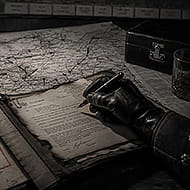
 For Boys
  For Girls

















 2689
2689


