
 For Boys
 For Girls
 For Kids
 Top Games
 My Games
 Top Games
 My Games


Five Nights at the Loud House Game Online

Description
You begin a night shift with limited awareness of what is moving through the hallways, which is exactly why Five Nights at the Loud House creates tension so quickly. The game adapts the familiar survival structure of security-camera horror and places it inside the Loud House setting, where familiar faces become the source of danger rather than comfort. Every hour requires attention to movement patterns, camera checks, and resource management. Players who underestimate the opening minutes often discover that surviving until morning requires far more planning than simple reaction speed.
Monitoring the House in Five Nights at the Loud House
The central objective revolves around tracking members of the Loud family as they move between rooms and approach dangerous positions. Lincoln Loud remains the visual center of the setting, but the real challenge comes from monitoring several characters simultaneously. Looking away from a critical camera for only a short period can create a chain of mistakes that becomes difficult to recover from.
Many players entering the game for the first time spend too much time watching a single camera feed. Experienced players quickly learn that information has value only when it helps predict future movement. Knowing where a character currently stands matters less than understanding where that character is likely to appear next.
One detail recognized immediately by regular players is the feeling of returning to a camera and noticing that a familiar position is suddenly empty. That moment often creates more anxiety than actually seeing a character because it means movement has already occurred somewhere else in the house.
Survival-focused players tend to develop fixed camera routes that reduce unnecessary checking. Exploration-oriented players frequently spend additional time observing movement behavior and often lose valuable seconds as a result.
The game rewards consistency. Random camera switching rarely produces reliable results because several threats can advance while attention remains divided.
Movement Patterns and Pressure in Five Nights at the Loud House
Different characters create different kinds of pressure. Leni Loud, Luna Loud, Lori Loud, Lucy Loud, and other members of the family may follow distinct routes or timing rules depending on the night. Learning those patterns becomes one of the most important skills for long-term success.
Community discussions often use the term route tracking when describing the process of predicting where a character will move next. Players who master route tracking generally survive longer because they react before a threat reaches a critical location.
As the nights become harder, safe routines begin to break down. A strategy that works comfortably during an early night may fail once several characters become active at the same time. The increase in simultaneous threats is one reason later nights feel dramatically different from the opening portion of the game.
One commonly debated topic involves difficulty balance. Some players enjoy the unpredictable pressure created by multiple active characters, while others argue that certain nights rely too heavily on memorization. Both opinions appear regularly in community discussions.
By the time several family members begin moving within a narrow timeframe, even small mistakes can create serious problems. A delayed camera check may be enough to allow a threat to reach a dangerous position.
Recognizing Threat Windows in Five Nights at the Loud House
Advanced players often focus on identifying threat windows rather than simply reacting to movement. A threat window is the period when a character has reached a position that requires immediate attention. Understanding those moments reduces panic and helps preserve resources.
One of the most useful lessons involves accepting that not every camera can be monitored continuously. Successful players prioritize information. Instead of trying to see everything at once, they focus on locations most likely to produce immediate danger.
A recognizable player moment occurs when several cameras appear normal and then a sudden movement forces a rapid response. Those situations create the memorable tension that keeps many players returning for additional attempts.
Challenge-seeking players often enjoy testing custom difficulty settings and intentionally increasing pressure. More cautious players generally prefer mastering consistent survival patterns before experimenting with harder configurations.
Once multiple movement routes begin overlapping, prediction becomes more important than observation alone. Understanding behavior patterns often provides more value than another camera check.
Why do later nights feel much harder?
Later nights increase pressure because more characters become active and movement opportunities occur more frequently. Leni Loud, Luna Loud, Lori Loud, and Lucy Loud can create overlapping threats that require faster decisions. A strategy that works early may need significant adjustment as activity levels increase.
What is route tracking?
Route tracking refers to following likely movement paths rather than watching only current positions. Players use previous camera information to predict where characters will appear next. The technique helps reduce wasted camera checks and improves reaction timing.
How can players survive sudden pressure spikes?
Survival becomes easier when attention remains focused on the most dangerous locations rather than every available camera. Understanding threat windows and recognizing movement patterns from characters such as Lori Loud and Lucy Loud allows earlier responses before a situation becomes critical.
Five Nights at the Loud House remains memorable because familiar characters such as Lincoln Loud, Lori Loud, and Lucy Loud are transformed into sources of constant tension. The combination of route tracking, camera management, and escalating pressure creates nights that feel increasingly demanding even after many successful attempts.


 78
78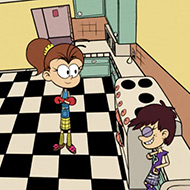
 For Boys
  For Girls




























 2693
2693


