
 For Boys
 For Girls
 For Kids
 Top Games
 My Games
 Top Games
 My Games


Forgive or Finalize Game Online
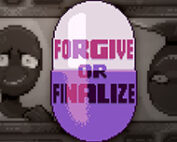
Description
Forgive or Finalize looks like a simple choice-based narrative, but every decision quietly alters how characters remember you, even when the consequences are not immediately visible. The game builds tension not through action but through the accumulation of subtle shifts in dialogue and behavior.
Choice Memory System in Forgive or Finalize
The defining mechanic revolves around persistent memory tracking. Characters like Elena Voss and Marcus Hale do not just react to your last choice; they remember patterns across multiple interactions, which changes how conversations evolve over time.
Early in the game, forgiving a mistake seems harmless, but repeated forgiveness shifts dialogue tone and unlocks different paths that may close off confrontational options later. This creates a layered decision system that rewards consistency.
Players often call this the “soft lock,” where your behavior gradually limits future options without obvious warning.
Branching Paths and Irreversible Outcomes
The Crossroads District is where the first major divergence occurs. Choosing whether to support Elena Voss or confront Marcus Hale determines access to entire narrative branches, including different locations and dialogue sequences.
Once you pass this point, some outcomes become permanently unavailable, which adds weight to each decision and encourages careful consideration. The game does not provide a way to undo choices, reinforcing the importance of commitment.
Completionists often replay this section multiple times to see every variation, while story-focused players tend to stick with their initial path.
Dialogue Pressure and Timing
Dialogue choices are timed, and hesitation can default to unintended responses. This system creates pressure, especially during confrontations in the Archive Hall where delays can change the tone of the entire interaction.
Advanced players memorize dialogue trees to predict outcomes, while new players rely on instinct and often face unexpected consequences. The timing element adds urgency that is not present in many similar narrative games.
The system is divisive, with some players enjoying the tension and others finding it restrictive because it limits reflection time.
Morality Without Clear Metrics
Unlike typical systems, the game avoids showing a morality bar or alignment indicator. Actions are judged contextually, making it difficult to predict results and forcing players to interpret character reactions carefully.
This ambiguity leads to discussions about whether decisions are truly fair, especially when outcomes differ from player expectations.
It also makes each playthrough feel personal, as there is no single “correct” path.
Can you see all endings in one playthrough?
No, the structure of Forgive or Finalize prevents that by design. Key decisions in the Crossroads District lock entire branches, particularly those involving Elena Voss and Marcus Hale. Multiple runs are required to explore all possible outcomes.
Do choices really matter long term?
Yes, the memory system tracks patterns rather than isolated decisions across the entire game. Repeated actions influence how characters respond later, especially in scenes inside the Archive Hall where past behavior affects dialogue options.
What is the hardest decision point?
The confrontation between Elena Voss and Marcus Hale is widely considered the most difficult because it determines future narrative direction. Players must commit without knowing the long-term consequences, which creates lasting tension.
Forgive or Finalize stands out because its impact comes from subtle shifts in character behavior, and moments involving Elena Voss and Marcus Hale in the Crossroads District continue to influence every interaction that follows.

 72
72
































 2694
2694


