
 For Boys
 For Girls
 For Kids
 Top Games
 My Games
 Top Games
 My Games


POPPY PLAYTIME: CHAPTER 0 Game Online

Description
You reach for the GrabPack and the conveyor belts suddenly come alive, forcing you to react before the machinery pulls something important out of reach. POPPY PLAYTIME: CHAPTER 0 opens with that kind of pressure, where timing and awareness matter more than speed, and every early mistake feels intentional rather than accidental. The opening minutes already teach that hesitation is punished, especially when the environment starts moving faster than expected.
| Genre | Puzzle Horror |
| Core Mechanic | Environmental interaction using GrabPack |
| Main Threat | Huggy Wuggy |
| Key Location | Playtime Co. Factory |
Early Factory Flow in POPPY PLAYTIME: CHAPTER 0
The game introduces the Playtime Co. Factory in a stripped-down way compared to later chapters. You move through tight corridors, testing the GrabPack on simple switches before more complex wiring puzzles appear. The pacing is deliberate, and players often underestimate how quickly those systems escalate once multiple power nodes are active at the same time.
One common beginner mistake is ignoring cable routing. In this game, wires are not just visual; they define puzzle solutions, and their physical placement matters. Early in the game, when connecting power nodes in the maintenance corridor, players who rush tend to trap themselves in dead-end routes that require full resets, which slows progress significantly.
Speedrunners often call this section “the warm loop,” because it teaches routing discipline that becomes critical later. Players who memorize the shortest cable paths can reduce puzzle time by nearly half, which is noticeable even outside speed-focused playstyles.
Huggy Wuggy Behavior Patterns
Unlike later encounters, Huggy Wuggy in this game appears less frequently but with more controlled scripting. The first time you hear the vent rattle near the storage wing, it is not random—it signals a forced movement sequence that tests your awareness of exits and your ability to stay calm under pressure.
Players often debate whether Huggy Wuggy feels less threatening here. The tension actually comes from anticipation rather than chase mechanics, because you know something is coming but cannot predict exactly when. This creates a slower, more psychological form of pressure compared to constant pursuit.
Stealth-focused players tend to overprepare and move cautiously, while aggressive explorers trigger encounters earlier by pushing into restricted zones too quickly. Both approaches work, but the game subtly rewards players who listen for audio cues rather than relying on visual confirmation alone.
GrabPack Puzzle Scaling
The GrabPack starts simple but quickly introduces dual-hand coordination. By the time you reach the generator room, you are expected to manage distance, angle, and timing simultaneously while also tracking cable tension. This is where many players hit their first real difficulty spike.
Advanced players use what the community calls “snap routing,” where they pre-aim the GrabPack before moving, reducing wasted motion and avoiding awkward repositioning. This technique becomes essential once puzzles require chaining multiple connections in a single sequence.
The biggest frustration comes from unclear feedback when a connection fails, which is a common criticism among players. When the GrabPack disconnects without obvious reason, it can feel unfair, especially during time-sensitive sequences.
Sound Cues and Player Awareness
One detail only noticeable after playing is how audio signals guide progression. The hum of inactive machinery versus active circuits tells you whether a puzzle step is complete without needing visual confirmation, which becomes important in darker sections of the factory.
Once the alarm tone shifts pitch near the assembly line, experienced players immediately know Huggy Wuggy is about to reposition. This moment is subtle, but it creates a clear link between sound design and gameplay response.
Audio learners benefit heavily from this system, while visual-only players often miss critical hints and end up reacting too late during key sequences.
How do you avoid getting stuck in early puzzles?
Focus on wire direction and GrabPack reach limits rather than trial and error. In POPPY PLAYTIME: CHAPTER 0, each connection point is placed to guide movement flow, especially in the generator room where space is limited. Watching how cables bend and stretch helps predict correct solutions before committing.
When does Huggy Wuggy first become dangerous?
The real danger begins near the storage wing when vent sounds start appearing. Huggy Wuggy transitions from background presence to active threat, forcing movement through specific corridors that limit escape routes. Players who ignore audio cues usually get caught off guard during this shift.
What is the hardest section for beginners?
The generator puzzle is the most common failure point because it combines movement, timing, and spatial awareness. Managing both GrabPack hands while navigating limited space creates pressure that builds quickly. Most players fail here because they move before planning their cable route.
POPPY PLAYTIME: CHAPTER 0 stands out because it builds tension through structure rather than constant threat, and moments like hearing Huggy Wuggy shift behind the Playtime Co. walls while managing the GrabPack create a lasting sense of unease that defines the entire factory sequence.

 96
96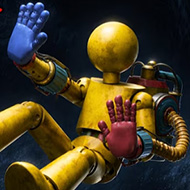
 1 Player

























 2697
2697


