
 For Boys
 For Girls
 For Kids
 Top Games
 My Games
 Top Games
 My Games


Grail Game Online
Description
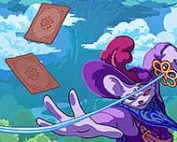
You draw your first card, drop a single point of energy into it, and watch nothing happen. Then next turn you drop another point in, the pips fill, and the card fires on its own — that’s the moment Grail stops feeling like a normal deckbuilder and starts feeling like something you’re steering rather than piloting.
| Genre | Fantasy autobattler / deckbuilding roguelite |
| Mode | PvE runs with asynchronous PvP battles |
| Core Mechanic | Cards fill with energy over turns and play automatically once full |
| Objective | Climb from blade-for-hire to master of the auto-battling arts and reach the Grail |
Energy Pips and the Automatic Turn in Grail
The core loop sounds simple until you’re three fights deep and realizing you don’t actually choose what happens each turn. You draw one card, you assign one energy point to a card already in your hand, and whichever card fills its pips first goes off. There’s no targeting, no confirm button — the game plays your deck for you, and your job is to have built a deck worth playing.
Most people’s first mistake is treating this like a normal card game where they can react. You can’t. A card like Jab, a two-energy attack, will always want two turns of feeding before it swings, and if you’re spending your points on something else that turn, Jab just sits there. Beginners often spread energy too thin across several cards instead of committing to finishing one.
New players who come from turn-based tactics games tend to struggle here the most, since Grail punishes hesitation by design — there’s nothing to hesitate over, only sequencing to plan two or three turns ahead.
- Energy is shared across your whole hand, not assigned per card in advance
- A card only resolves once every pip on it is filled
- Drawing order matters more than raw card power early on
Jab, Apple, and Your First Day on the Road
Every run starts small. Your opening deck usually includes Jab and Apple, a one-energy heal that also strips a slice of status equal to a tenth of whatever it heals. That second effect is easy to miss on a first playthrough, but it ends up mattering the moment status effects like bleed or poison start stacking against you a few days in.
A third starter card can show up depending on the opening bonus you’re handed, which is one of the small randomization touches that makes two runs of Grail rarely play identically.
Players who enjoy min-maxing tend to reroll openers looking for a strong third card, while more casual runners just take whatever the game gives them and adapt on the fly. Both approaches work, but the min-maxers usually bank more of the six daily player battles that decide your standing.
The Blacksmith: Stickers, Enchants, and Upgrades
Once you’ve got a functioning early hand, the blacksmith is where runs actually get won or lost. Upgrading, enchanting, and stickerizing cards lets you push basic effects into something closer to a combo engine — a Cleaver that starts as a flat damage card can scale hard once stickers start stacking on top of it.
This is also where the game’s balance patches show up most. Big carrot’s max health gain and Cleaver’s damage numbers have both been tuned down since launch, and cards like Cooking pot had their energy cost lowered to make them viable at all. If you’ve read older guides, expect the numbers to be off.
By the time you reach the Farmlands event, your blacksmith choices from the first few days start to show their weight — a thin, focused deck usually out-scales a bloated one, even though bloated decks feel safer in the moment.
One honest criticism players raise a lot on the Grail forums is that expensive rare cards can stall your whole engine if you draft them too early, since they eat energy without paying it back fast enough. It’s a real tension between deck power and deck speed that never fully goes away.
Reading Zappy and the Final Boss Fight in Grail
Zappy’s deck has been rebalanced more than once, and once Zappy appears as your final boss, the fight is usually a check on whether your deck can close things out before the fight’s forty-turn bleed-out kicks in and ends the match regardless of health totals.
Community vocabulary calls this “bleeding out,” and it’s a real threat — a slow, defensive deck can technically survive a fight forever and still lose on the clock. Players chasing a true ending, the kind some runners describe on a character like Mabel, need both survivability and a finishing line, not just one or the other.
How does energy work in Grail if I can’t choose what my deck plays?
You still choose which card gets fed energy each turn, you just don’t choose the moment it resolves — that happens automatically once its pips are full. Planning which card to feed, and when, is the actual skill layer underneath the automation.
What happens if a Grail fight runs too long?
Fights that drag past the forty-turn mark resolve through bleed-out rather than continuing forever, which usually favors whichever side has done more net damage. It’s the game’s way of punishing decks that are all defense and no finisher.
Is it worth rerolling for a stronger starting deck?
It can be, especially if you’re aiming to bank all six daily player battles, but plenty of strong runs come from adapting Jab and Apple rather than chasing a perfect opener every time.
Grail rewards patience more than reflexes, and the runs that stick with you are usually the ones where a single upgraded Big carrot or a lucky Blueprint copy turned a shaky opening into a real shot at the true ending.

 19
19
 For Boys
  For Girls

























 2697
2697


