
 For Boys
 For Girls
 For Kids
 Top Games
 My Games
 Top Games
 My Games


The Garden Path Game Online
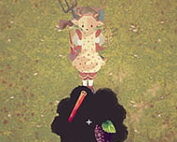
Description
What happens the first time you hand ten collected journal pages to Thom, only for the game to insist your inventory is empty? It’s one of the first real friction points new players hit in The Garden Path, and it says a lot about how the whole experience is built: quiet, easy to enjoy, and occasionally stubborn about explaining itself.
| Genre | Slice-of-life gardening sim |
| Platform | PC, Nintendo Switch |
| Core Loop | Real-time daily errands, fetch quests, fishing, and trading across a 15-acre garden |
| Day Length | One in-game day mirrors a 24-hour real-world clock |
Meeting Thom and Augustus for the First Time
Your earliest hours revolve around two characters. Augustus, a scout cub who patrols near a small shrine, sends you looking for his broken secateurs and, later, ten sprigs of bracken before he’ll trade with you. Thom shows up shortly after, lends you a trowel, and starts you on the seed-buying, seed-sowing loop that everything else in the garden builds on.
Beginners often skip equipping the trowel Thom hands over before trying to sow, which quietly blocks the handoff until you dig back through your bag and gear it properly. It’s a small thing, but it trips up more new players than any of the fishing mechanics do.
Once both quests are cleared, the game unlocks your first real freedom: wandering the acres with no assigned task at all.
Following the Dust Flies to the Right Plant
Telling plants apart early on is genuinely difficult, and the game leans on a specific tool to help: dust flies that drift toward whatever plant matches your current objective. Watching for them, rather than guessing at foliage, is the difference between a five-minute harvest and a frustrating lap around the same acre.
This is also where the game’s community vocabulary starts to show up in guides and comments — players talk about “chasing flies” the way other sims talk about following a quest marker, and it’s become the shorthand for the whole identification system.
Larto, Song-Fish, and the Fishing Loop
Fishing belongs to Larto, who sits quietly near the river until you approach and hands you your first rod along with an explanation of song-fish. The mechanic itself is forgiving by sim standards: keep the note inside the orange circle and the catch reels in, with none of the punishing timing windows longtime fans of the genre have learned to dread.
Casual players who only have ten or fifteen minutes a day tend to gravitate toward fishing sessions specifically because Larto’s loop doesn’t demand a long, uninterrupted sitting the way a full harvesting or trading run does.
Song-fish releases also feed into a separate progression track tied to constellations, which rewards patience over grinding.
Guide Stones and the Star Map
Every new discovery — a first fish, a first conversation, a first harvested plant — has a chance to hand you a guide stone fragment. Combine two fragments into a full guide stone, and you can place it at the stones beside the Old Gardener statue, gradually filling out a star map that tracks your history in the garden rather than a simple checklist of tasks completed.
Completionists chasing every constellation will recognize The Root, the specific pairing formed once you’ve completed both the New Gardener and Old Gardener storylines and connected their stars together.
Getting the Encyclopedia from the Old Gardener Statue
- Bring Thom the mysterious letter you start the game with
- Return to the Old Gardener statue to retrieve the other half of the note
- Hand the completed note back to Thom, who asks for ten more pages
- Find pages by knocking on trees marked with a faint star, or digging up marked circles with a shovel bought from Augustus
- Return to Thom and plant a Memory Seed to complete the questline
Pages hiding on trees are easy to miss if you’re not scanning trunks carefully, which is exactly the kind of light-touch guidance The Garden Path leans on throughout — plenty of hints, very few direct instructions.
Trading, the Community Board, and Conkers with the Veggie Folk
The starting acre, centered around the community board and compost bin, stays fixed between playthroughs even though the surrounding fifteen acres shuffle every time you begin a new garden. Vendors trade for specific item categories rather than a universal currency, and figuring out who wants what is half the early puzzle.
Once you’ve built a rapport with enough vegetable-headed visitors, you can challenge them to a round of conkers, a small diversion that exists purely for personality rather than progression.
Co-op players sharing a single inventory in local multiplayer tend to divide labor here — one gardening, one trading — since combined efforts speed up quest turnaround considerably.
Between Thom’s trowel, Larto’s song-fish, and the slow filling of the star map with guide stones, The Garden Path earns its reputation as a game you check in on rather than binge through, and few sims make a missing character or a stubborn inventory bug feel this forgivable.

 22
22
 For Boys
  For Girls




























 2697
2697


