
 For Boys
 For Girls
 For Kids
 Top Games
 My Games
 Top Games
 My Games


Gumball’s Nightmare Game Online

Description
An ordinary night at the Watterson house turns into the kind of scene nobody in Elmore ever survives. Gumball’s Nightmare strips away every cartoon safety net the family usually relies on and replaces it with a single unbroken thread of dread: something has gotten inside, and by the time the credits roll, none of them are getting out.
The Watterson Family Under Siege in Gumball’s Nightmare
The premise is deliberately simple. It’s a night like any other in the Watterson house until an intruder breaches the home, and from that point forward the game commits fully to the idea that this family’s usual chaos-and-comedy formula won’t save them. Gumball, Darwin, Anais, Richard, and Nicole are all present, and unlike the source series they’re adapted from, none of them get to walk away from this one unscathed.
What makes this hit harder than a typical horror riff on a cartoon family is how faithfully it holds onto their established dynamics right up until it doesn’t. Gumball still acts like Gumball, Richard still fumbles every attempt to help, and that familiarity is exactly what the game weaponizes once things start going wrong.
Players and viewers coming in expecting a parody quickly realize this isn’t playing the premise for laughs. The tonal commitment is total, and that’s the detail most first-time viewers bring up afterward — there’s no wink to the camera anywhere in it.
Who — or What — Broke Into the Watterson House
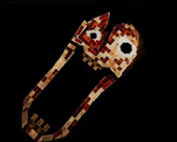
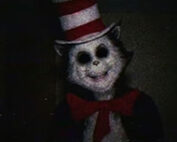
The intruder is never given a tidy origin or a name the family recognizes, and that ambiguity is part of what makes the threat land. It doesn’t behave like a typical slasher, and it doesn’t announce itself the way a jump-scare mascot would; it simply exists inside the house with them, and the game slowly reveals how thoroughly it’s already taken control of the space before anyone realizes it.
Community discussion around the intruder tends to focus less on what it is and more on how it moves through the house, since its behavior shifts noticeably once it’s aware the family knows it’s there. Once it stops hiding, the pacing of the whole game changes with it.
Nicole, Richard, and the Family’s Failed Defenses
Nicole is typically the family’s strongest line of defense in the wider Watterson universe, and Gumball’s Nightmare deliberately tests that reputation. Watching her competence run up against something that doesn’t respond to intimidation the way ordinary threats do is one of the more unsettling beats in the whole game, precisely because players expect her to be the one who fixes this.
Richard, by contrast, plays almost exactly the role you’d expect from his usual characterization, and the game doesn’t try to redeem that. His attempts to help consistently make things worse, and rather than treating this as comic relief the way the source series would, Gumball’s Nightmare lets those failures carry real weight.
By the time the family realizes barricading themselves inside won’t work, the house itself has stopped functioning as a safe space, and that shift from shelter to trap is where most of the tension in the back half comes from.
Gumball, Darwin, and Anais Trying to Survive the Night
The three siblings split off from their parents at points throughout the game, and each pairing changes how the threat gets framed. Darwin’s loyalty to Gumball keeps the two of them together for most of the runtime, while Anais, usually the most level-headed Watterson, ends up isolated in a way that removes her usual advantage entirely.
- Gumball spends much of the game trying to protect Darwin rather than himself, a reversal of how he’s typically written
- Darwin’s usual optimism gets tested directly by the intruder rather than played for a punchline
- Anais’s isolation from the rest of the family strips away the problem-solving role she usually fills
None of the three get a clean resolution, and that’s consistent with how the whole game is structured — nobody’s competence, courage, or cleverness is enough on its own.
The Tonal Shift From Elmore’s Usual Chaos
Elmore has always been a strange, dangerous place under the surface, full of sentient objects and disturbing creatures the original series usually plays for absurdist comedy. Gumball’s Nightmare takes that same underlying unease and removes the comedic cushioning entirely, which is why longtime fans of the source material describe this game as recognizable and completely alien at the same time.
That contrast is deliberate, and it’s also the most divisive part of the game among viewers — some find the total tonal reversal the most effective thing about it, while others feel it strays too far from what made the Wattersons appealing in the first place.
Why Gumball’s Nightmare Doesn’t Give Anyone a Happy Ending
The complete version of the game runs as a single continuous story rather than an episodic structure, and it commits to its premise through to the end: nobody in the Watterson family makes it out of the house. That finality is unusual for content built around a cartoon family this well known, and it’s precisely why the game gets brought up in horror-fan circles well outside the show’s usual audience.
Whatever side of the tonal debate you land on, Gumball’s Nightmare earns its reputation by refusing to blink — once the intruder is inside the Watterson house, there’s no cutaway, no reset, and no version of Nicole Watterson who’s strong enough to change how the night ends.

 26
26
 For Boys
  For Girls

















 2678
2678


