
 For Boys
 For Girls
 For Kids
 Top Games
 My Games
 Top Games
 My Games


Fortune Mill Game Online

Description
You throw your first dart, it sticks for one measly gold coin, and the MASSIVE RAT blocking the doorway in front of you wants a million of those before it steps aside. That’s the opening minute of Fortune Mill, and it’s a deliberate joke at your expense: the gap between what you’re earning and what you need looks impossible right up until it isn’t.
| Genre | Incremental |
| Core Loop | Earn currency in a mini-game, reinvest in upgrades, unlock automation |
| Setting | A facility divided into guarded rooms |
| Objective | Reach one million in each room to advance and escape |
The Premise Behind Fortune Mill
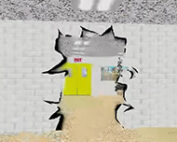
You’re packaged into Box #724 and wake up crawling through a crack in the wall with no idea where it leads. Each chamber you find is guarded by a creature demanding a sizable payout before it lets you through, and how you raise that payout changes from room to room. The Darts Room has you throwing for gold against the MASSIVE RAT. The Scratcher Room puts the GIGA FROG between you and a million dollars in lottery winnings. Later rooms swap in dice and even a sushi-cooking minigame, each with its own currency and its own gatekeeper.
What makes Fortune Mill click is that the rooms aren’t separate islands. Upgrades bought in one chamber boost passive income in the others, so progress never fully stalls even while you’re focused on a single room’s economy. That synergy is the actual game underneath the gimmick of darts and scratch tickets.
None of this is explained with much hand-holding. The game expects you to notice that a Synergy Upgrade purchased in the Darts Room is quietly inflating your Scratcher Room income, and most of the satisfaction comes from spotting those connections yourself rather than being told about them.
Reading the Darts Room Numbers
Your first throw nets a single gold coin. A million gold looks absurd from that starting point, and that gap is the entire design. Buying value-per-throw upgrades, then hiring the Rattling Gunner and later the Machine Gunner Mouse for automated throws, turns that single coin into a throw worth millions within an hour or two of steady reinvestment. Players who try to brute-force the Darts Room by clicking manually the whole way burn out fast; the room is built around the moment you hand throwing duties off to automation and start spending your attention elsewhere.
The MASSIVE RAT doesn’t get easier to pay off, exactly, but the climb stops feeling linear once a few key upgrades land. Early in the game every gold coin matters; by the time the Rattling Gunner is fully upgraded, single throws routinely clear what used to be the entire million-gold target.
Clicker-focused players sometimes resist handing the Darts Room over to automation even after it’s clearly the stronger option, since manually lining up throws against the MASSIVE RAT carries its own satisfaction. That instinct isn’t wrong, exactly, but it does mean those players tend to clear the room slower than someone who commits to the Rattling Gunner early and spends the saved time managing Synergy Upgrades instead.
The Toad Accountant and the Scratcher Room
The Scratcher Room follows the same shape as the Darts Room with different dressing. Your first scratch ticket earns six dollars. Bigger tickets worth tens of thousands eventually become affordable, and hiring a tax-cheating Toad Accountant adds passive scratcher income on top of whatever you’re actively doing. The GIGA FROG guarding this room doesn’t budge for anything less than the full million, which forces a similar reinvest-and-wait rhythm to the one Darts Room veterans already know.
By the time you’ve automated both the Darts Room and the Scratcher Room, the numbers stop being readable as plain digits and start scaling into notation most idle game players already recognize from genre staples.
Idle-focused players generally treat the Scratcher Room as a secondary income stream once the Toad Accountant is hired, checking in only to buy the next ticket tier rather than scratching manually. That hands-off approach works because passive income compounds quietly in the background while attention is spent elsewhere.
- Push value-per-action upgrades before unlocking automation, because a stronger base throw or ticket multiplies everything the Rattling Gunner or Toad Accountant later produces on autopilot.
- Treat early Synergy Upgrades as priority purchases even when a same-room upgrade looks more tempting, since the cross-room boost compounds in ways a single-room upgrade never will.
- Don’t ignore a room once it’s automated, since passive gains still benefit from periodic upgrade sweeps.
- Save big currency dumps for jackpot-style bonuses in the Darts Room rather than spreading spend thin, since concentrating funds there clears the MASSIVE RAT’s demand faster.
Room 3 Dice and Room 4 Sushi
Once the dice room opens, the rhythm shifts again. Rolling for multipliers rewards a more swingy, risk-tolerant playstyle compared to the steady compounding of darts and scratchers, and players who enjoyed the earlier rooms’ predictability sometimes find this room frustrating until they adjust expectations. The sushi room later on leans further into novelty, with unique game-altering effects tied to what you cook rather than a straightforward currency grind.
Early in the game these later rooms feel distant, almost theoretical, because reaching them requires clearing the million-dollar gate in whatever room comes before. Once you do reach them, the jump in scale is noticeable: numbers that felt enormous in the Darts Room start looking like the small change they actually were.
Players who prefer steady, predictable systems often gravitate toward replaying the Darts Room’s familiar loop even after the dice room unlocks, while risk-tolerant players push straight into the swingier rolls for a shot at bigger multipliers. Neither approach is objectively faster, since the dice room’s variance can pay off enormously on a good run or stall out badly on a bad one.
What Fortune Mill Players Argue About
The most common complaint in community circles isn’t difficulty, it’s pacing in the middle stretch, where automation is unlocked but synergy upgrades haven’t caught up yet, leaving a flat patch before momentum returns. Some players also point out that several of the room minigames borrow heavily from other incremental titles rather than feeling fully original, and that criticism shows up often enough in reviews that it’s worth setting expectations around going in.
Clicker-focused players tend to push through the early Darts Room manually long after automation would serve them better, chasing the satisfaction of direct interaction. Idle-focused players go the opposite direction, automating as fast as possible and checking back periodically to sweep up Synergy Upgrades.
The flat patch in the middle is the detail most worth knowing going in, since it’s easy to mistake for a sign that a run has gone wrong rather than a normal stretch every player passes through. Recognizing it for what it is, rather than panic-buying upgrades to try to fix it, tends to be the difference between players who push through smoothly and players who burn resources they’ll need once the next Synergy Upgrade tier opens up.
Achievement Pacing and Higher Difficulties
Completionist players chase every achievement across the rooms, and most report needing somewhere around ten to twelve hours of steady play to fully clear a normal difficulty run. Harder difficulty tiers add more on top, and players who’ve already cleared a standard run describe the jump as less about new mechanics and more about the same systems demanding tighter optimization.
That difficulty curve is part of why opinions split so sharply. Players chasing a relaxed clear often stop after the first difficulty, satisfied with escaping Box #724 once, while achievement hunters treat that first clear as the warm-up before the real grind starts.
NG++ and the difficulty tier beyond it are where the synergy system gets tested the hardest, since the same Synergy Upgrades that comfortably carried a first clear stop being enough on their own. Players returning for a second or third clear usually have to rethink upgrade order entirely rather than simply repeating what worked the first time through.
- How does automation work once unlocked in each room? Automation hires a character, such as the Rattling Gunner in the Darts Room or the Toad Accountant in the Scratcher Room, to act on your behalf at a rate tied to your upgrades. That character keeps earning even while you manage a different room, freeing you to focus on synergy purchases instead of manual clicks.
- Do upgrades from one room actually affect the others? Yes. Synergy Upgrades are built to boost passive income or efficiency across multiple rooms at once, which is why ignoring them for single-room upgrades slows overall progress. A Synergy Upgrade bought in the Darts Room can quietly raise what the Toad Accountant earns next door.
- What’s the fastest way past the early gold wall in the Darts Room? Prioritize value-per-throw upgrades before automation, since a higher base throw value compounds every later purchase. Once the Rattling Gunner is hired on top of those upgrades, the MASSIVE RAT’s million-gold demand becomes a formality rather than a wall.
Fortune Mill earns its hook by making a joke out of its own scale, then following through on the payoff: that first one-gold dart throw really does turn into a torrent once the Rattling Gunner and the right Synergy Upgrades are in place. Whether you escape Box #724 by clicking your way through the Darts Room or by leaning entirely on automation, the game rewards noticing how its rooms connect more than it rewards brute force.

 34
34
 For Boys
  For Girls























 2651
2651


